We strive to prevent news reporting that hurts people already harmed by gun violence. But we also work to advance more coverage focused on evidence-based public health strategies shown to prevent shootings.
So, if we could only raise more funding to promote our work, incentivize more partners and hire more people, we should be able to move faster and prevent more more violence sooner.
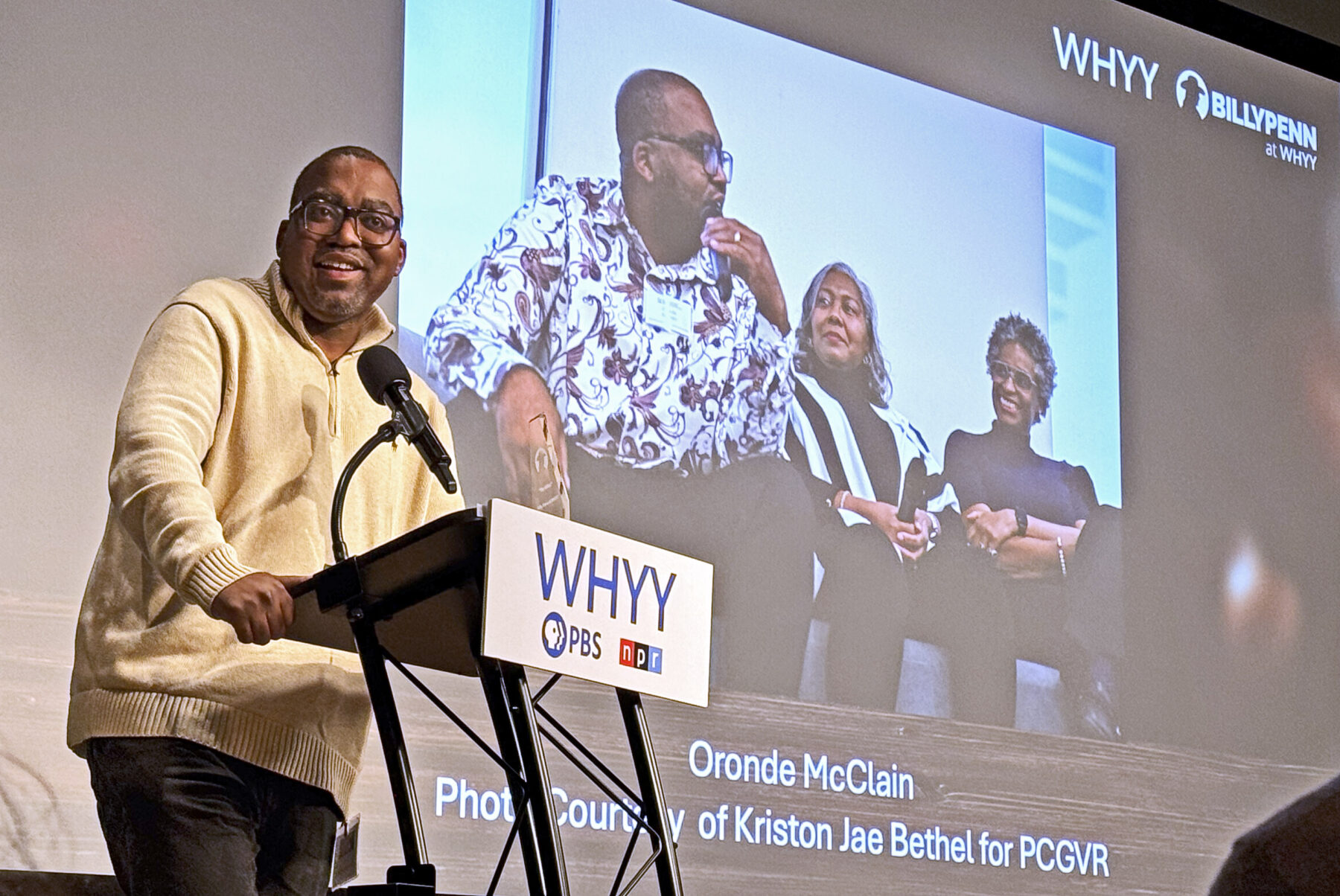
And here’s one way you can help without even opening your wallet: Please watch this video, vote for Oronde and PCGVR and take a minute to tell them about our impact and how much more we could do with this sort of leap in support.
If selected, Oronde will have the opportunity to present during the Ideas We Should Scale Showcase at The Philadelphia Citizen’s 8th Annual Ideas We Should Steal Festival this November in Philadelphia. Thank you.
Wednesday, October 1 at The Hive at Spring Point 30 South 15th Street, Philadelphia 6-8 p.m. Opening reception
Meet the conference faculty, PCGVR leaders and the team from our recently-expanded national Association of Gun Violence Reporters.
Brief comments: Dr. Jessica Beard, PCGVR Director of Research Oronde McClain, PCGVR Survivor Connection Director Eric Marsh, Sr., PCGVR Director of Operations Jim MacMillan, PCGVR Founder and Director
Host: Tamara Cherry, journalist, author of The Trauma Beat and founder of Pickup Communications
Thursday, October 2 at Convene City View 30 South 17th Street, Philadelphia 8 a.m. – 5 p.m.
8:00 a.m. Breakfast
9:00 a.m. Welcome, Goals and Program Overview
Abené Clayton, Reporter for the Guns and Lies in America project at The Guardian and co-director of the Association of Gun Violence Reporters Tamara Cherry, journalist, author of The Trauma Beat and founder of Pickup Communications
9:30 a.m. Kickoff Workshop
10:15 a.m. Coffee break
10:30 a.m. Keynote:
Dr. H. Jean Wright II, Executive Deputy Commissioner, Department of Health and Mental Hygiene, New York City. His talk will help journalists better understand the experiences and perspectives of people who have been harmed by gun violence.
11:30 a.m. The Second Trauma: documentary screening and survivor community panel
Panelists: Prof. Yvonne Latty, Director of the Logan Center for Urban Investigative Reporting at Temple University and producer and director of the film. Oronde McClain, PCGVR Survivor Connection director, Stoneleigh Foundation Emerging Leader Fellow, co-producer and host of film, and a gun violence survivor. Angela Wade and Armond James, who appear in the film.
Moderator: Tamara Cherry, journalist, author of The Trauma Beat and founder of Pickup Communications
12:30 p.m. Lunch
1:30 p.m. Journalism and Trauma
Sammy Caiola, Special Projects Reporter at the Kensington Voice in Philadelphia, co-director of the Association of Gun Violence Reporters, former gun violence prevention reporter at WHYY public radio in Philadelphia and Fellow, Global Center for Journalism and Trauma, formerly the Dart Center.
Prof. Jennifer Midberry, Temple University Department of Journalism, partner in PCGVR multidisciplinary research collaborative and former photojournalist.
3:00 p.m. Coffee break
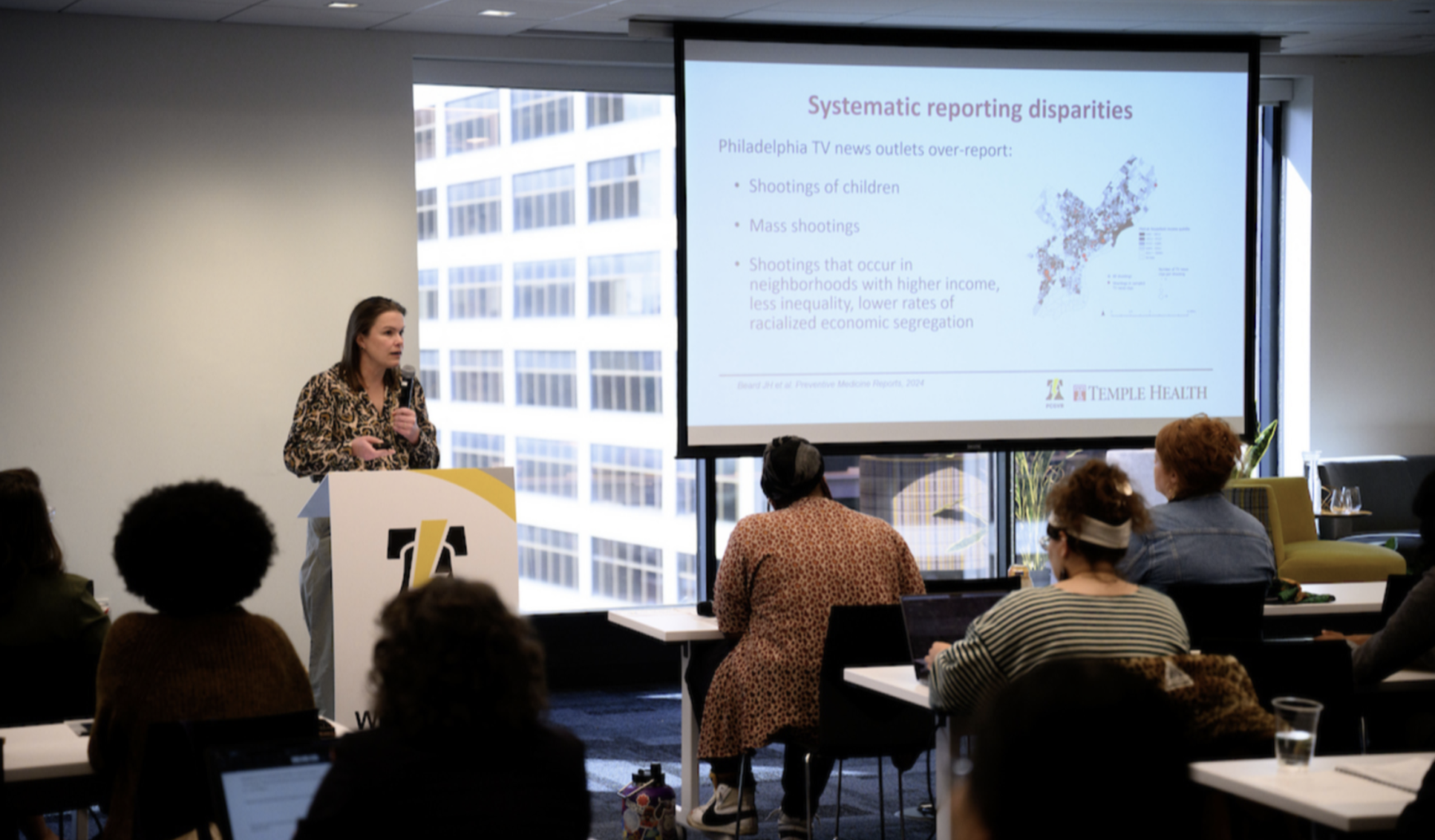
3:15 p.m. Public Health Framing, Prevention, & Gun Violence Prevention Reporting
Dr. Jessica Beard, PCGVR Director or Research, Stoneleigh Foundation Fellow and Temple University Hospital trauma surgeon.
4:00 p.m. Workshop Breakouts
4:45 p.m. Day 1 Wrap Up
5:00 p.m. On your own: Enjoy an evening in Philadelphia
Friday, October 3 at Convene City View 30 South 17th Street, Philadelphia 8 a.m. – 1 p.m.
8:00 a.m. Breakfast
9:00 a.m. Putting ideas into practice, implementing them in them newsroom Cheryl Thompson-Morton, Head of Advisory Programs, Lenfest Institute for Journalism, adjunct faculty member at the Poynter Institute and formerly the Black Media Initiative Director at the Center for Community Media at the Craig Newmark Graduate School of Journalism at CUNY.
9:45 a.m. Prevention Reporting Plan (Small Groups)
10:15 a.m. Prevention Reporting Plan: Group Wrap Up
10:30 a.m. Coffee Break
10:45 a.m. Panel: Association of Gun Violence Reporters
Panelists: Sammy Caiola, Special Projects Reporter at the Kensington Voice in Philadelphia, former gun violence prevention reporter at WHYY and fellow at the Global Center for Journalism and Trauma Abené Clayton, Reporter for the Guns and Lies in America project at The Guardian Jennifer Mascia, founding staff member and senior news writer at The Trace Paige Pfleger, Senior Criminal Justice Reporter at WPLN News, Nashville Public Radio
Moderator: Eric Marsh, PCGVR Director of Operations
11:30 a.m. Closing comments
Dr. Jessica Beard, PCGVR Director of Research Oronde McClain, PCGVR Survivor Connection Director Eric Marsh, PCGVR Director of Operations Jim MacMillan, PCGVR Founder and Director
12:00 p.m. Box lunch; take away or stay and network
We are excited to share that Dr. H. Jean Wright II will keynote our upcoming Gun Violence Prevention Reporting National Certification Conference. His talk will help journalists better understand the experiences and perspectives of people who have been harmed by gun violence when reporting on the topic or covering incidents.
Biography
Dr. H. Jean Wright II, PsyD. MDiv, was appointed as New York City’s Department of Health and Mental Hygiene’s Executive Deputy Commissioner of the Division of Mental Hygiene, which Oversees the Agency’s Work on Mental Health, Alcohol and Drug Use Prevention, Health Promotion for Justice-Impacted Populations, Care and Treatment and Children Youth and Families, Among Other Bureaus on August 23, 2024.
Wright is a clinical and forensic psychologist who brings two decades of transformational leadership experience in behavioral health in government, private practice, rehabilitation, and academia to his new role at the Health Department.
During his time in Philadelphia, Dr. Wright was the Deputy Commissioner for DBHIDS, and the Director for the Behavioral Health and Justice Division at DBHIDS where he helped develop and oversee programs and initiatives to support people returning from state psychiatric hospitalization, state penitentiary, and county jail. This work involved alliance-building across sectors, implementing trauma-focused practices to deliver behavioral health care to target populations, as well as trainings of service providers.
He is an Adjunct Professor at Temple University in the Department of Psychology and has served on a variety of boards, including The Mayor’s Task Force on Reintegration and The Philadelphia Board of Mental Health.
Dr. Wright earned a bachelor’s degree in psychology, English literature, and cultural studies from The Ohio State University, a master’s in divinity from the United Lutheran Seminary, and a doctorate in psychology with focus in clinical and forensic psychology from Wright State University. He continued with post-doctoral work at Wilberforce University and Cincinnati VA Medical Center.
Get your tickets now and join us in Philadelphia this fall for our first in-person national conference since before the pandemic. We are scaling up our Gun Violence Prevention Reporter Certification Workshop with a Wednesday evening reception and a day-and-a-half of programming, meals and networking — as recommended by those who have attended our local workshops — plus a premiere keynote presentation and a session with the new Association of Gun Violence Reporters.
AGENDA
Wednesday, October 1 at The Hive at Spring Point 30 South 15th Street, Philadelphia 6-8 p.m.
Opening reception: Meet the conference faculty, PCGVR leaders and the team from our recently-expanded national Association of Gun Violence Reporters.
Brief comments: Dr. Jessica Beard, PCGVR Director of Research Oronde McClain, PCGVR Survivor Connection Director Eric Marsh, Sr., PCGVR Director of Operations Jim MacMillan, PCGVR Founder and Director
Host: Tamara Cherry, journalist, author of The Trauma Beat and founder of Pickup Communications
Thursday, October 2 at Convene City View 30 South 17th Street, Philadelphia 8 a.m. – 5 p.m.
8:00 a.m. Breakfast
9:00 a.m. Welcome, Goals and Program Overview
Abené Clayton, Reporter for the Guns and Lies in America project at The Guardian and co-director of the Association of Gun Violence Reporters Tamara Cherry, journalist, author of The Trauma Beat and founder of Pickup Communications
9:30 a.m. Kickoff Workshop
10:15 a.m. Coffee break
10:30 a.m. Keynote
Dr. H. Jean Wright II, Executive Deputy Commissioner, Department of Health and Mental Hygiene, New York City. His talk will help journalists better understand the experiences and perspectives of people who have been harmed by gun violence.
11:30 a.m. The Second Trauma: documentary screening and survivor community panel
Panelists: Prof. Yvonne Latty, Director of the Logan Center for Urban Investigative Reporting at Temple University and producer and director of the film. Oronde McClain, PCGVR Survivor Connection director, Stoneleigh Foundation Emerging Leader Fellow, co-producer and host of film, and a gun violence survivor. Angela Wade and Armond James, who appear in the film.
Moderator: Tamara Cherry, journalist, author of The Trauma Beat and founder of Pickup Communications
12:30 p.m. Lunch
1:30 p.m. Journalism and Trauma
Sammy Caiola, Special Projects Reporter at the Kensington Voice in Philadelphia, co-director of the Association of Gun Violence Reporters, former gun violence prevention reporter at WHYY public radio in Philadelphia and Fellow, Global Center for Journalism and Trauma, formerly the Dart Center.
Prof. Jennifer Midberry, Temple University Department of Journalism, partner in PCGVR multidisciplinary research collaborative and former photojournalist.
3:00 p.m. Coffee break
3:15 p.m. Public Health Framing, Prevention, & Gun Violence Prevention Reporting
Dr. Jessica Beard, PCGVR Director or Research, Stoneleigh Foundation Fellow and Temple University Hospital trauma surgeon.
4:00 p.m. Workshop Breakouts
4:45 p.m. Day 1 Wrap Up
5:00 p.m. On your own: Enjoy an evening in Philadelphia
Friday, October 3 at Convene City View 30 South 17th Street, Philadelphia 8 a.m. – 1 p.m.
8:00 a.m. Breakfast
9:00 a.m. Putting ideas into practice, implementing them in them newsroom
Cheryl Thompson-Morton, Head of Advisory Programs, Lenfest Institute for Journalism, adjunct faculty member at the Poynter Institute and formerly the Black Media Initiative Director at the Center for Community Media at the Craig Newmark Graduate School of Journalism at CUNY.
9:45 a.m. Prevention Reporting Plan (Small Groups)
10:15 a.m. Prevention Reporting Plan: Group Wrap Up
10:30 a.m. Coffee Break
10:45 a.m. Panel: Association of Gun Violence Reporters
Panelists: Sammy Caiola, Special Projects Reporter at the Kensington Voice in Philadelphia, former gun violence prevention reporter at WHYY and fellow at the Global Center for Journalism and Trauma Abené Clayton, Reporter for the Guns and Lies in America project at The Guardian Jennifer Mascia, founding staff member and senior news writer at The Trace Paige Pfleger, Senior Criminal Justice Reporter at WPLN News, Nashville Public Radio
Moderator: Eric Marsh, PCGVR Director of Operations
11:30 a.m. Closing comments
Dr. Jessica Beard, PCGVR Director of Research Oronde McClain, PCGVR Survivor Connection Director Eric Marsh, PCGVR Director of Operations Jim MacMillan, PCGVR Founder and Director
12:00 p.m. Box lunch; take away or stay and network
1:00 p.m. Event concludes
Here’s what they said last time:
Thinking about attending our national conference on gun violence prevention reporting? Here’s what participants had to say after our local pilot:
“Every journalist needs to take this training.” “This has been needed for a long time.” “It’s education and insight for everyone.” “This was one of the best trainings I ever went to. Very impactful.” “Engrossing and informative.” “It was a great training with a phenomenal team!” “It was rich with specific, actionable insights.” “I would recommend this training to all of my colleagues who cover crime.” “This training was extremely insightful.” “Today was great. Practical, solutions-focused, honest.” “This training is great and needs to continue.” “Great work! I hope this is offered on a regular basis.” “It was really inspiring to be in community with folks who came at this work from so many different angles.” “This type of work is sorely needed.” “I love what you all are doing. It is groundbreaking work.” “This was a great workshop.”
Here’s what you’ll get:
You will attend presentations, join conversations and participate in workshop activities. You will also get breaks to ingest the experience, to network, recharge, refuel and continue.
You will get certified by the team at PCGVR: the nation’s most recognized thought leaders on gun violence, prevention and the role of the media.
You will also get healthy meals meeting every need in state-of-the-art venues located in the middle of an incredible city.
But most importantly: You will become part of this network of experts and inform our work moving forward. This is PCGVR:
FAQs:
Q: Is this a workshop for crime beat reporters? A: Not especially. Yes, attending this conference will benefit those covering crime, law enforcement, criminal justice or breaking news. But journalists covering health, business, technology, sports, music, arts, travel, education, government and just about any topic can find themselves reporting on gun violence with little or no warning or preparation. We’re here to help. Editors and news execs should sign up too!
Q: Do you have to be a journalist to attend? A: Not at all. We convene journalists, researchers and the survivor community at all of our events but additional experts from public health, prevention and nonprofits, police and fire officials, educators, high school and college students attended our first national conference. We even had one former mayor of Philadelphia in the audience.
Q: Will there be homework? Is there a test? A: Nope. There’s no homework and there are no exams. Certification simply requires attending five sessions and participating in related workshop activities taking place all day Thursday and then again Friday morning. The opening reception is optional, as well as some other sessions.
Q: What’s the goal of this conference? A: We strive to advance more trauma-informed and community-informed journalistic practices and illuminate evidence-based solutions leading to better gun violence reporting and fewer people harmed by gun violence.
Here’s what you can expect:
This will be our first national gathering since our inaugural Better Gun Violence Reporting Summit just before the pandemic in late 2019. Here’s a look back:
AGVR co-director Sammy Caiola, left, and PCGVR director of operations Eric Marsh discussed their work with Loraine Ballard Morrill on What’s Going On at iHeart Radio in Philadelphia. Listen:
• Join the Association of Gun Violence Reporters: AGVR.org
Nearly 100 of our favorite people from the journalism, research, funder and survivor communities joined us in Center City Philadelphia on July 23, 2025 for Five Years of Impact, to reflect on everything we have accomplished together since launching PCGVR in 2020. Photographs by Erin Blewett for PCGVR. Visit: impact.pcgvr.org
We set out to produce our multimedia 5-Year Impact Report for obvious reasons: to recognize what has been working, to encourage continuing support and hopefully find more. At the same, we seem to have accidentally written the book on how to launch a journalism support organization that actually makes a difference. Visit: impact.pcgvr.org
It’s a deep dive, full of submenus and video interviews but also very sharply edited for efficiency and more enriching at every turn, though it’s an even better experience on bigger screens. Please set aside some time to get to know our story, our team and some of our key stakeholders, in alphabetical order:
Dr. Jessica Beard, PCGVR Director of Research, Stoneleigh Foundation Fellow and Temple University Hospital trauma surgeon
Alaina Bookman, Violence Prevention Reporter for Report for America at AL.com
Abené Clayton, reporter for The Guardian and co-director of the Association of Gun Violence Reporters
Maxayn Gooden, PCGVR’s first Credible Messenger community journalist, podcast producer and more
Jim MacMillan, PCGVR founder and Director
Eric Marsh, Sr., PCGVR Director of Operations
Jennifer Mascia, founding staff member at the The Trace and Guns in America team contributor at CNN
Kelly McBride, Senior Vice President and Chair of Craig Newmark Center for Ethics and Leadership at the The Poynter Institute for Media Studies
Oronde McClain, PCGVR Survivor Connection director and Stoneleigh Foundation Emerging Leader Fellow
Cheryl Thompson-Morton, Head of Advisory Programs at the Lenfest Institute for Journalism and Poynter Institute faculty member
But are we making things happen? We have certainly been there at a few important turning points.
The first outcome came early: Several Philadelphia news organizations added resources for the gun violence survivor community to their web sites following the call from Michelle Kerr-Spry, a mother whose son had been taken by gun violence. She was speaking on a panel during our inaugural Better Gun Violence Reporting Summit in late 2019.
In 2020, PCGVR founder Jim MacMillan was invited to consult on developing and then advised the journalists reporting Gun Violence in Missouri, a two-year statewide solutions reporting project supported by Report for America and based at the Kansas City Star.
In 2021, WHYY public radio here in Philadelphia posted a job opening for a Gun Violence Prevention Reporter, a job title we had never seen before, two years after we convened that Summit at their headquarters. They soon hired two and then a third last year.
WHYY’s local news site Billy Penn has shared highlights from our newsletter in their newsletter each Wednesday for five years and added gun violence prevention news to the their main menu.
Philadelphia’s Pen & Pencil Club, the nation’s oldest press club, added a Gun Violence Prevention Reporting category to their Philly News Awards in 2024. They also recognized PCGVR as our city’s “Nontraditional News Provider of the Year” in 2023. Philadelphia Magazine named two PCGVR staffers among their 150 Most Influential Philadelphians last year as well.
When The Trace, the only national news organization focused entirely on reporting gun violence and prevention, announced plans to open a second bureau in 2021, we very aggressively encouraged them to come to Philadelphia, where they now have three reporting staffers.
The Association of Health Care Journalists invited several of us to their Summit in 2022. Soon after, they created a new position called Health Beat Leader for Firearm Violence and Trauma and hired one of the Missouri solutions reporters for the role. In 2025, they added five Firearm Violence Reporting Fellows.
One year after PCGVR director of research Dr. Jessica Beard began her Stoneleigh Foundation Fellowship, the organization committed the entire next class of their Emerging Leader Fellows to gun violence prevention projects, including our Survivor Connection director Oronde McClain, and another class just recently.
Dr. Beard’s NIH grant appears to be the first federal funding to research gun violence prevention and the role of the media, essentially creating a new area of inquiry for others to follow.
An editor at AL.com, the web site representing three Alabama news organizations, informed us that they hired a “violence prevention reporter” in 2023, based on the work of PCGVR. Alaina Bookman got the job and later shared how she brought our workshop guidance into their newsroom.
The Associated Press Stylebook, journalism’s most important reference, now includes our guidance and a link to our web site. Last year we saw young journalists feverishly take notes at the Investigative Reporters and Editors conference, as AP editors introduced our work.
PCGVR staffers Zoomed into dozens of US newsrooms for several years, informing a course titled Transforming Local Crime Reporting Into Public Safety Journalism, led by the Poynter Institute; our nation’s leading media ethics organization.
And we can only imagine what our many college and university visits, virtual and in-person newsroom meetings and journalism and research conference panels would have looked like without us, or if they would have happened at all. Or the reach of 150 news reports that have introduced our work. Or the impact on the hundreds to people who have attended our film festivals and documentary screenings.
We are already beginning to see news reports raising the voices of community experts who have participated in our new Survivor Connection project. And we just launched a new national Association of Gun Violence Reporters, where we are seeing new members are signing up each week.
Shortly before the end of the Biden administration, we had the opportunity to introduce our work the White House Office of Gun Violence Prevention and participate in a webinar hosted by the Center for Disease Control, which hundreds attended.
And we informally learned that the our work was known to the team behind last year’s Surgeon General’s Advisory, which declared firearm violence a public health crisis in America but also shared our concerns, stating in a companion video that:
“Beyond these precious lives that are lost to firearm violence, there are wider ripples of harm to those who are injured, who witnessed the incidents, who live in urban and rural communities where such violence takes place, and who constantly read and hear about firearm violence in the news.“
We don’t know when we will have a federal government focused on gun violence prevention again, but the Commonwealth of Pennsylvania got behind our guidance closer to home just last month, advising in their new Resources for Victims of Gun Violence Initiative:
“Train journalists on trauma-informed reporting and interactions with violence-affected individuals… These efforts could inform residents about community issues and events, available resources and services when violence occurs, and could encourage readers to provide input into neighborhood issues.“
This month marks five years since we launched The Philadelphia Center for Gun Violence Reporting. To date we have counted:
1: Reference in the Associated Press Stylebook 4: Research studies published in scientific journals 4: Websites online: PCGVR, AGVR, The Second Trauma & Survivor Connection 12: Colleges and universities host PCGVR events 12: Journalism students provided with PCGVR support 16: Researchers participating in our multidisciplinary collaborative 40: Participants in our community reporting projects 50: Journalists supported to participate in our programs 140: Survivor community experts now available to journalists 150: News media reports illuminating our projects and impact 200: Community participants at our trauma talks with clinical psychologists 250: Editions of this free newsletter distributed 300: People in attendance for our documentary premiere 350: Survivor community participants provided with PCGVR support 400: People in attendance for our panels at summits and national conferences 400: People in attendance at PCGVR journalism training events 500: Printed copies of our reporting toolkit distributed, plus hundreds more online 550: Posts and pages with news and resources published on our web sites 600: People in attendance at our documentary screenings and film festivals 1,600: Newsletter subscribers 3,000: Email contacts 3,600: Bluesky subscribers
And we have done all of this with a very small staff on a very lean budget. With more support, we could hire more people, conduct more activities and produce more impact, sooner. Please consider making a contribution today.
Today marks five years since we launched the Philadelphia Center for Gun Violence Reporting. Here’s a preview from our upcoming 5-Year Impact Report with some of our favorite people.
More milestones coming up this month
• Publishing: “5 Years of Impact,” an extensive multimedia report • Launching: A new look, logo and more accessible website at PCGVR.org • Announcing: Plans to embrace a new, expanded mission • Gathering: Key stakeholders in Philadelphia • Announcing: Our biggest educational event yet
Just imagine
We have come this far with a very small staff on a very lean budget. With more support, we could hire more people, accelerate activities and produce more impact, sooner. Please consider making a contribution today.
• Oronde McClain, PCGVR Survivor Connection director • Abené Clayton, reporter for Guns and Lies in America at The Guardian and co-director of the Association of Gun Violence Reporters • Maxayn Gooden, who has played several key roles at PCGVR • Kelly McBride, Senior Vice President and Chair of Craig Newmark Center for Ethics and Leadership at the The Poynter Institute for Media Studies • Eric Marsh, Sr., PCGVR director of Operations • Cheryl Thompson-Morton, Head of Advisory Programs at the Lenfest Institute for Journalism and Poynter Institute faculty member • Alaina Bookman, Violence Prevention Reporter for Report for America at AL.com • Jennifer Mascia, founding staff member at the The Trace and Guns in America team contributor at CNN
Above: Photographs from the Better Gun Violence Reporting Summit in 2019, by Kriston Jae Bethel.
Nearly five years have passed since we launched the Philadelphia Center for Gun Violence Reporting and nearly seven since we began laying the groundwork. Our first breakthrough came when nearly 250 people attended our Better Gun Violence Reporting Summit at WHYY in 2019, but we are still seeing outcomes.
Here’s how it started: During a panel that brought together local journalists with women bereaved by gun violence, Michelle Kerr-Spry shared that “We don’t know how to live when our children have been murdered… I was literally dying.”
Dr. Dorothy Johnson-Speight of Mothers in Charge followed up, asking: “Why would it take six months to find out there is a group to support her through her grief and pain? And then added: “That should have been reported in the news. That should have been in the newspaper.”
In response, several local news organizations started sharing resources when reporting on gun violence, including CBS 3 News in Philadelphia, WHYY’s Billy Penn news site and NBC 10, which shared a list from Resolve Philly.
We made our own resource page as well at first but then spent the following year working with The Trace to develop their Philadelphia gun violence info hub and sharing it on our home page: Up the Block.
So, we were exceptionally pleased last week when spotting the Gun Violence Resiliency Needs Assessment from the new Resources for Victims of Gun Violence Initiative introduced by the Pennsylvania Commission on Crime and Delinquency, and finding PCGVR on the short list of recommended resources. And we were encouraged to find the takeaways from our Summit — which was attended by at least one current PCCD leader — closely reflected in the text:
“Train journalists on trauma-informed reporting and interactions with violence-affected individuals. These efforts could inform residents about community issues and events, available resources and services when violence occurs, and could encourage readers to provide input into neighborhood issues.“ – Executive Summary
Philadelphia gun violence survivor Dashawn Walker tells his own story in “Unheard,” a new short documentary he co-produced with filmmaker Jessica Griffin, who is also a photojournalist with The Philadelphia Inquirer. Support was provided by the Credible Messenger Reporting Project at the Philadelphia Center for Gun Violence Reporting. Dashawn was also a 2023 intern here at PCGVR, working with staffer and fellow survivor Oronde McClain, who also appears in the film.