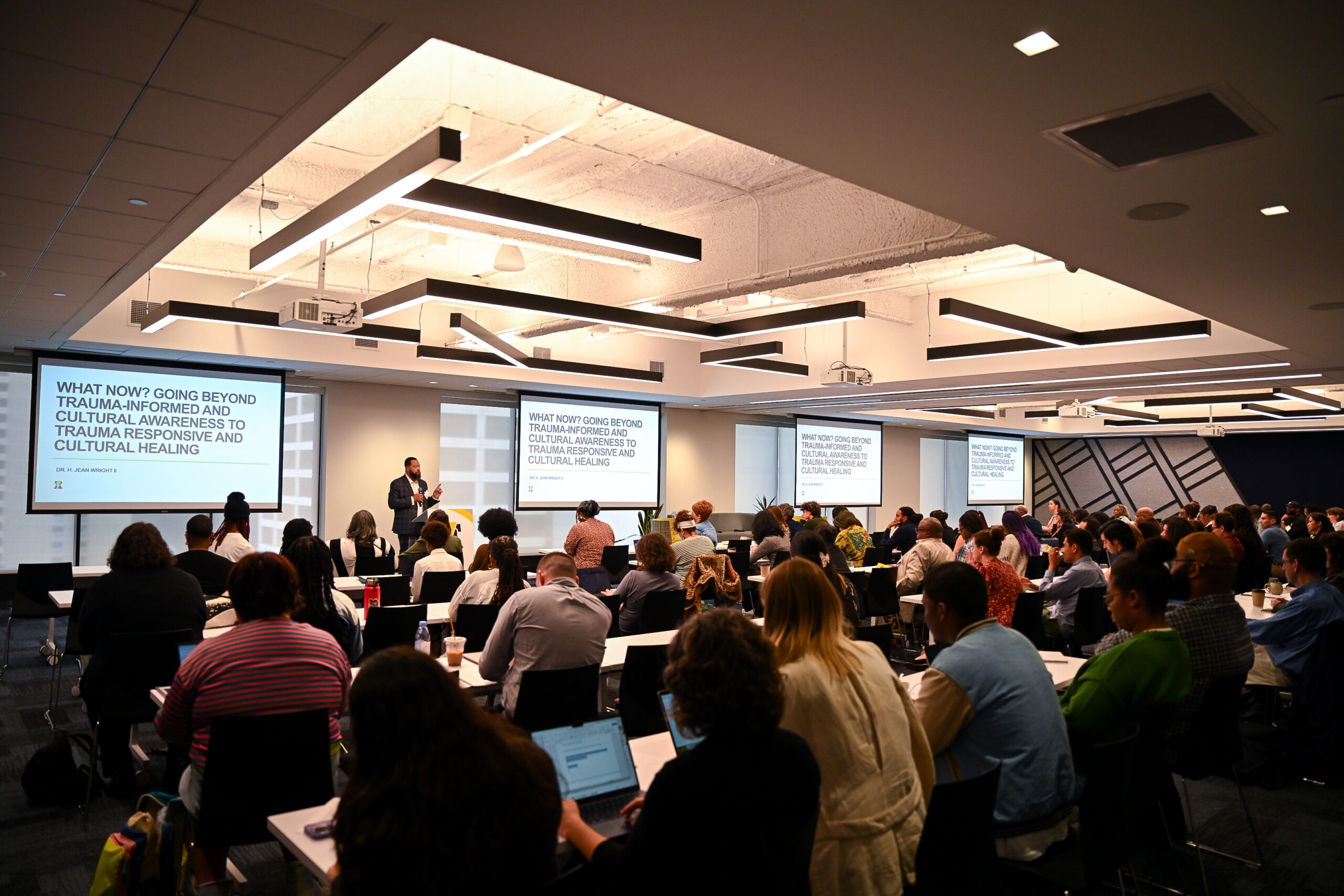
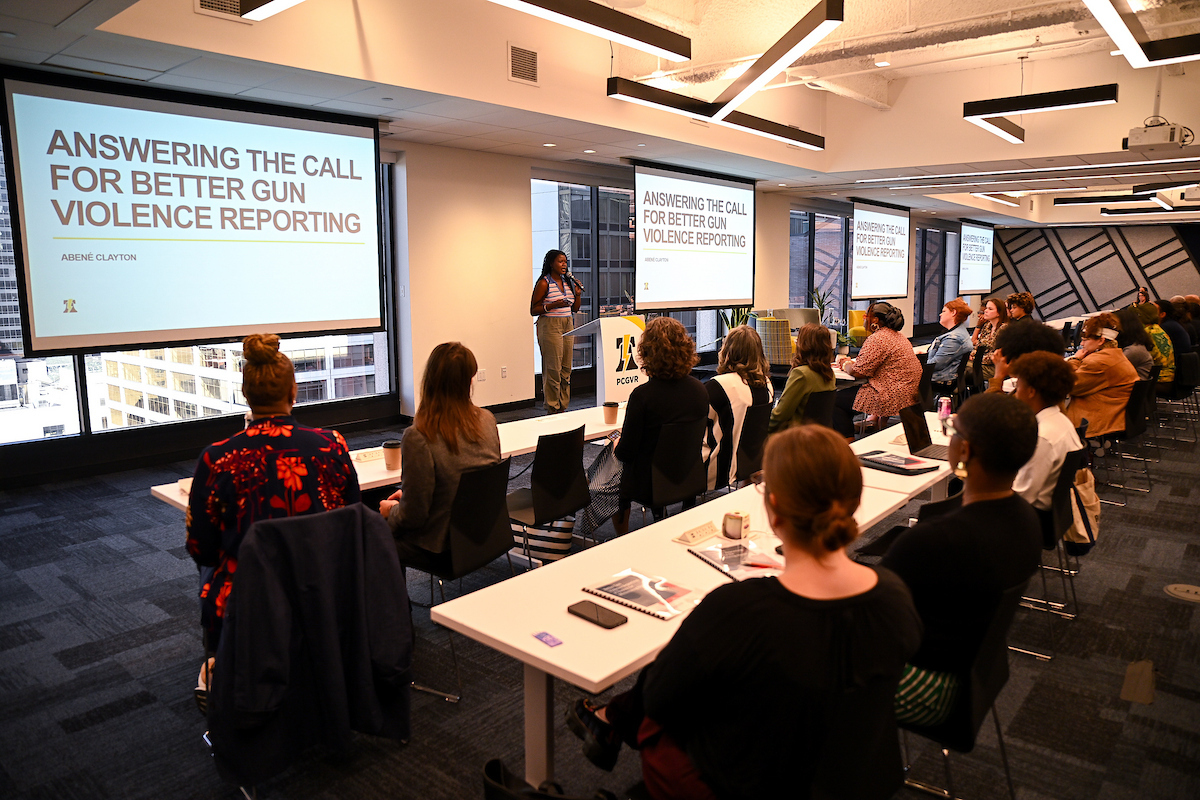
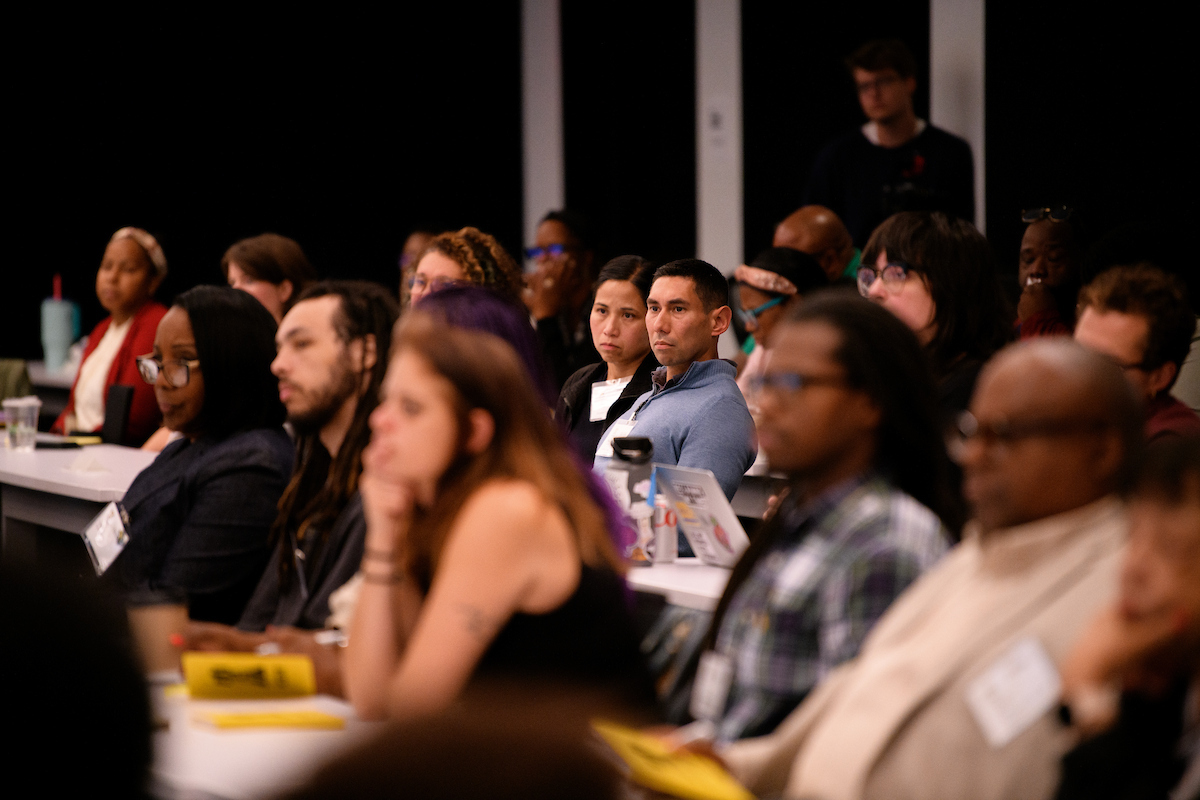
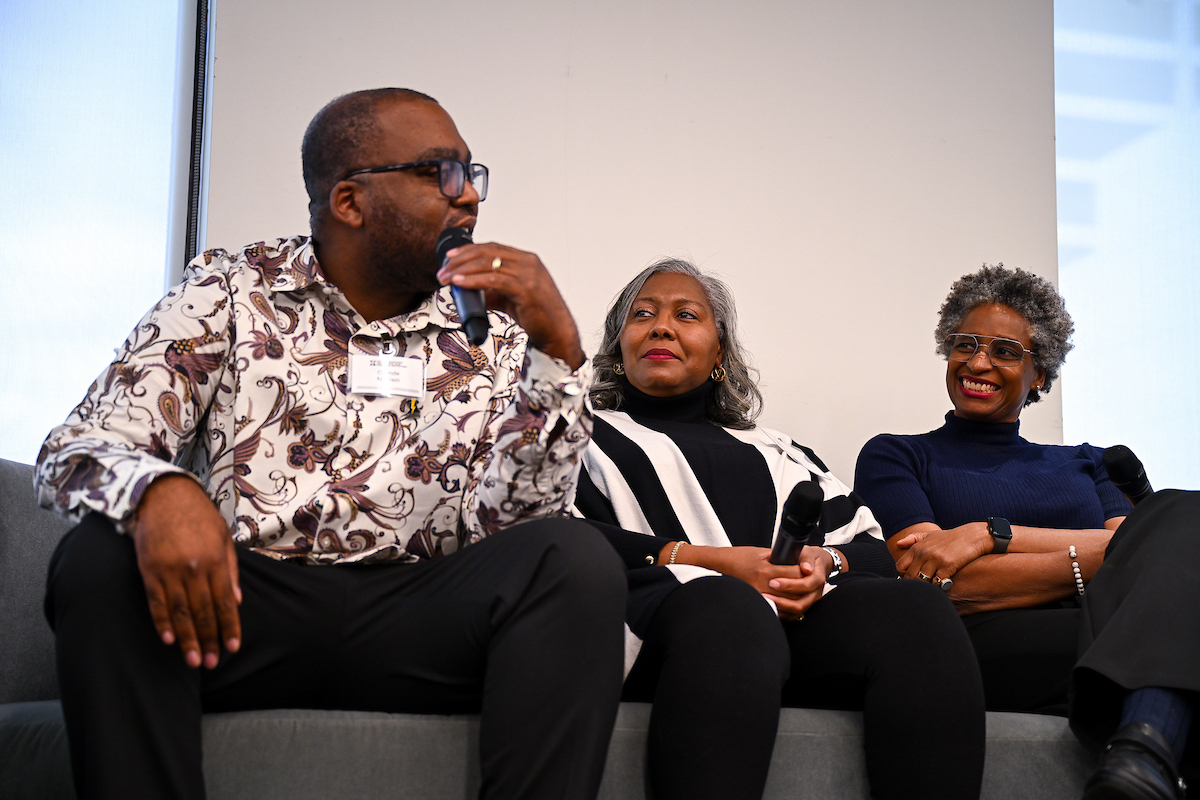
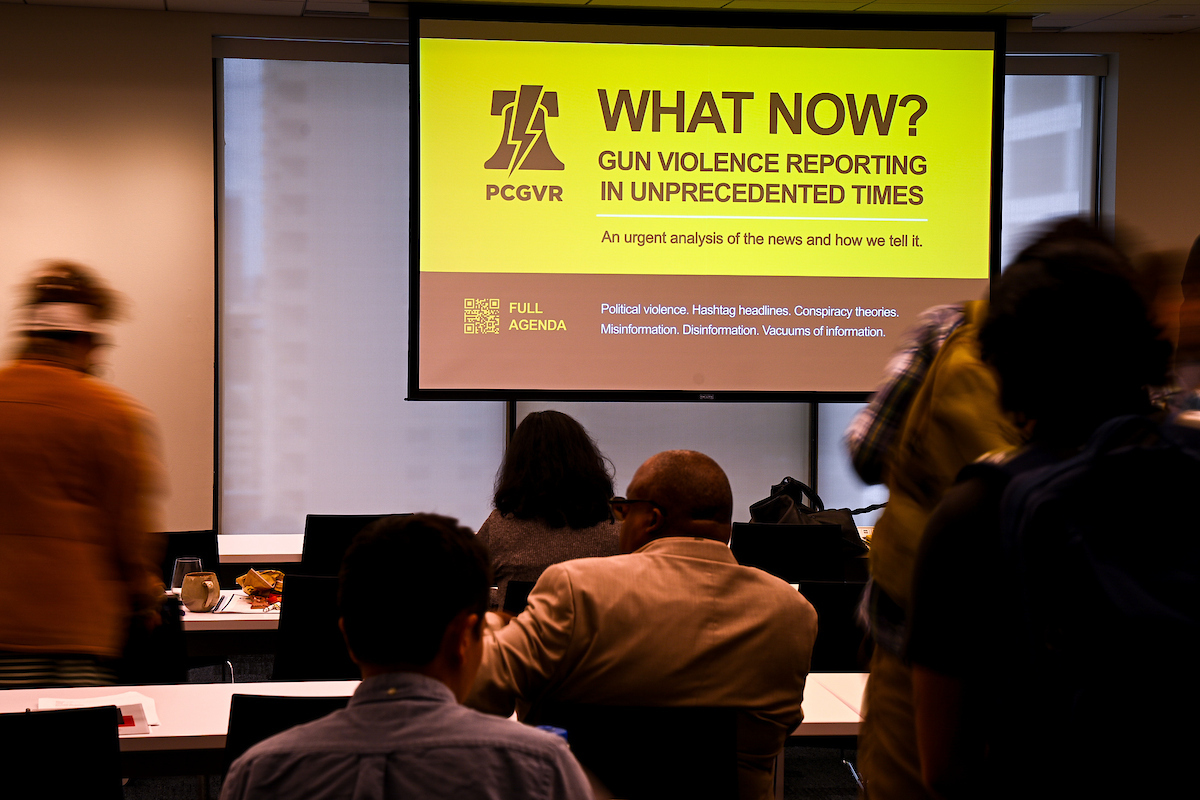
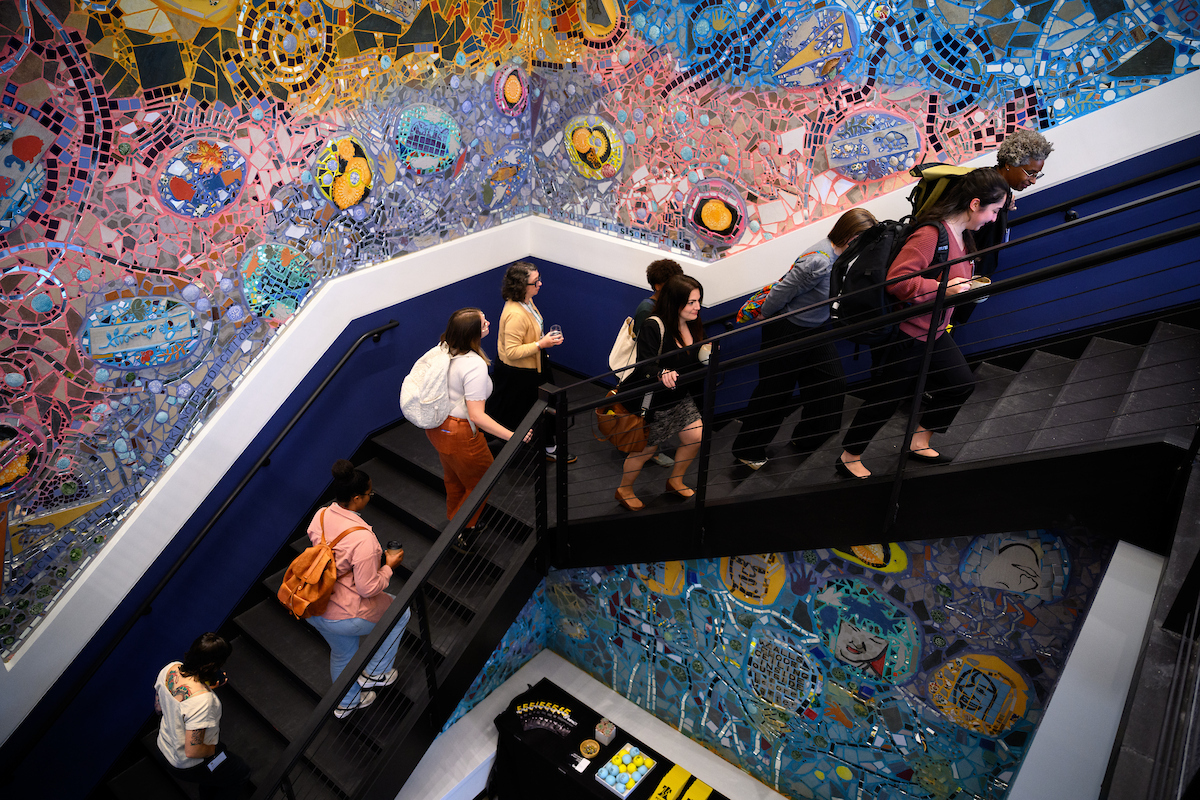
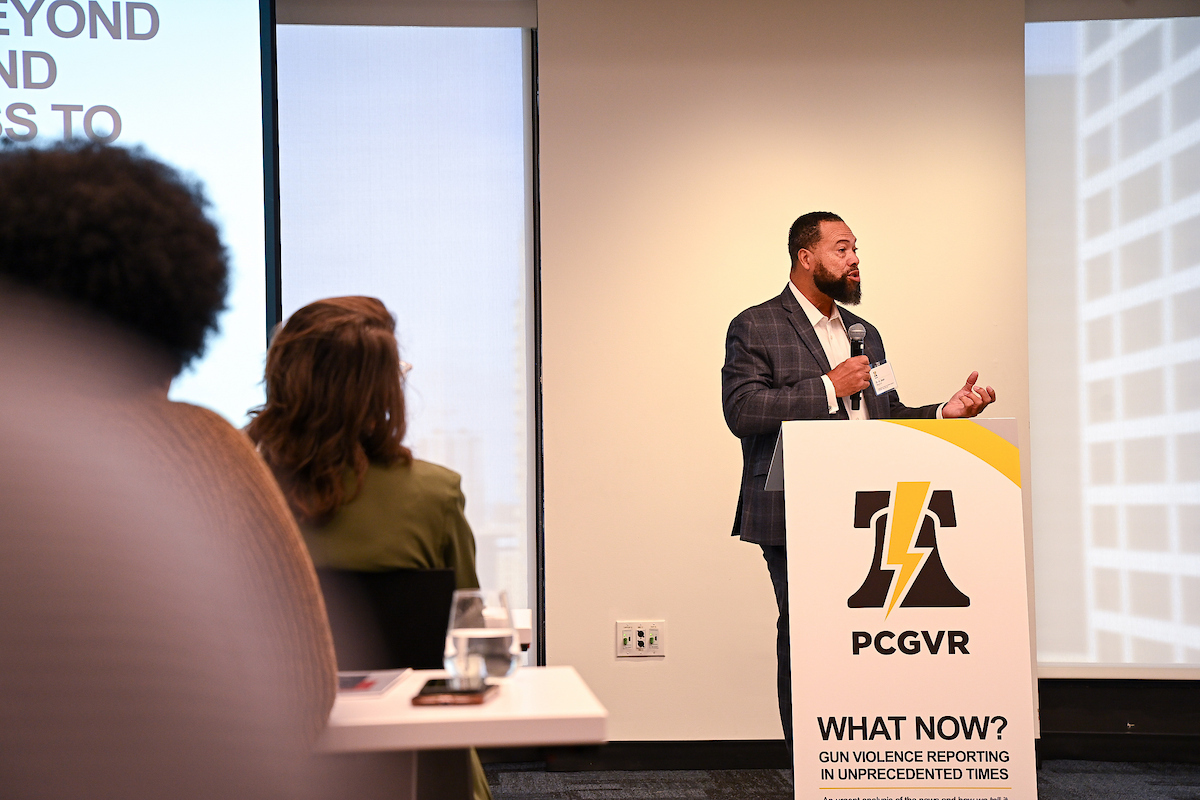
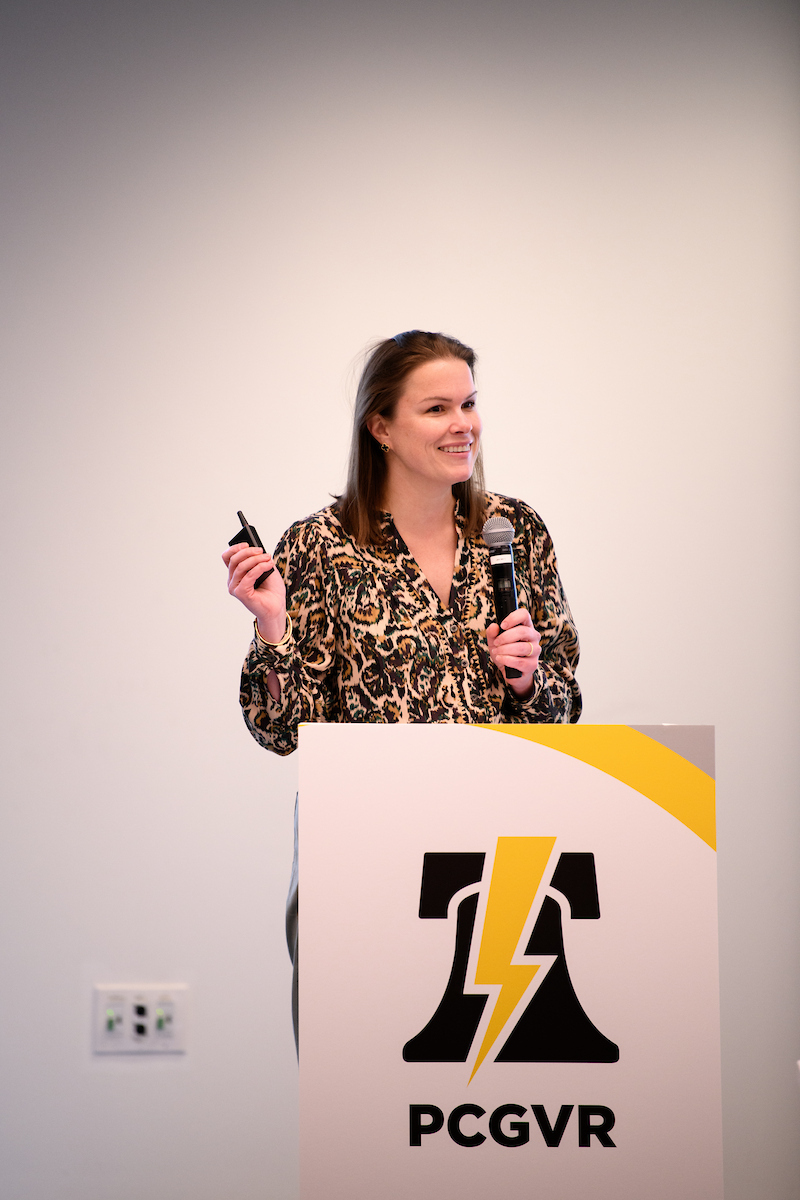
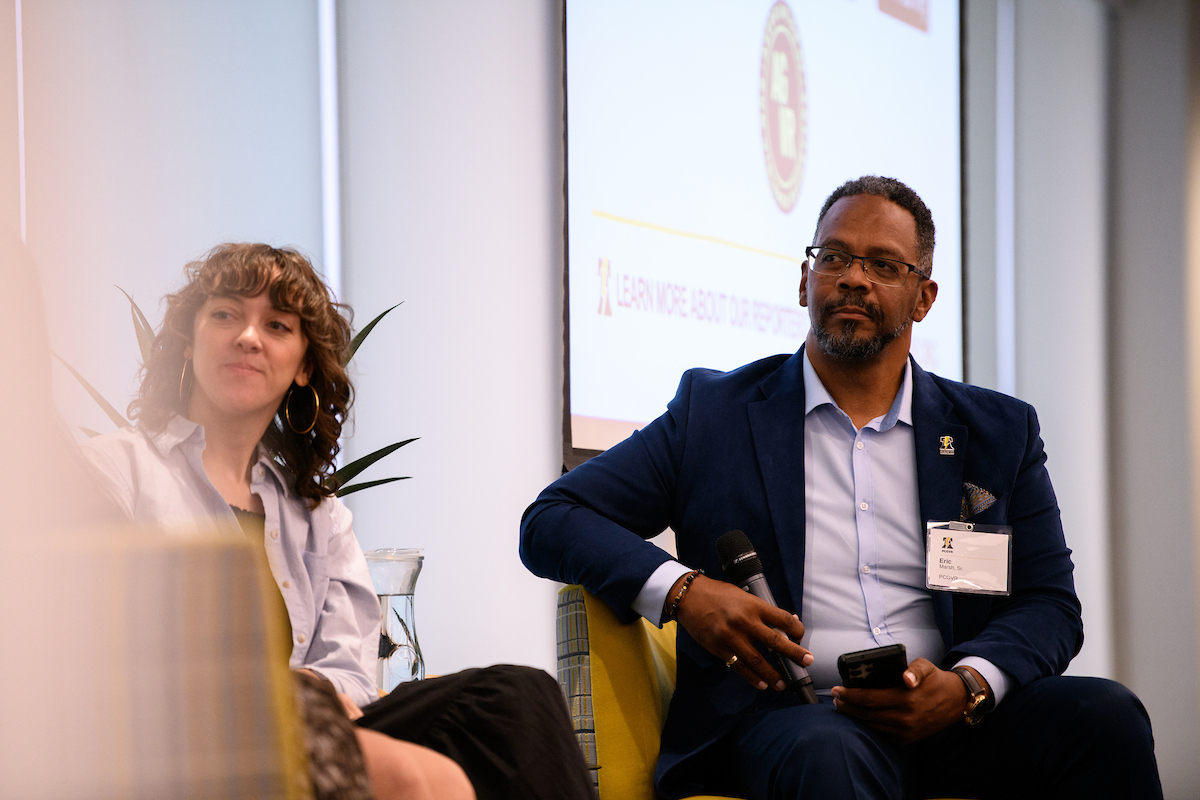
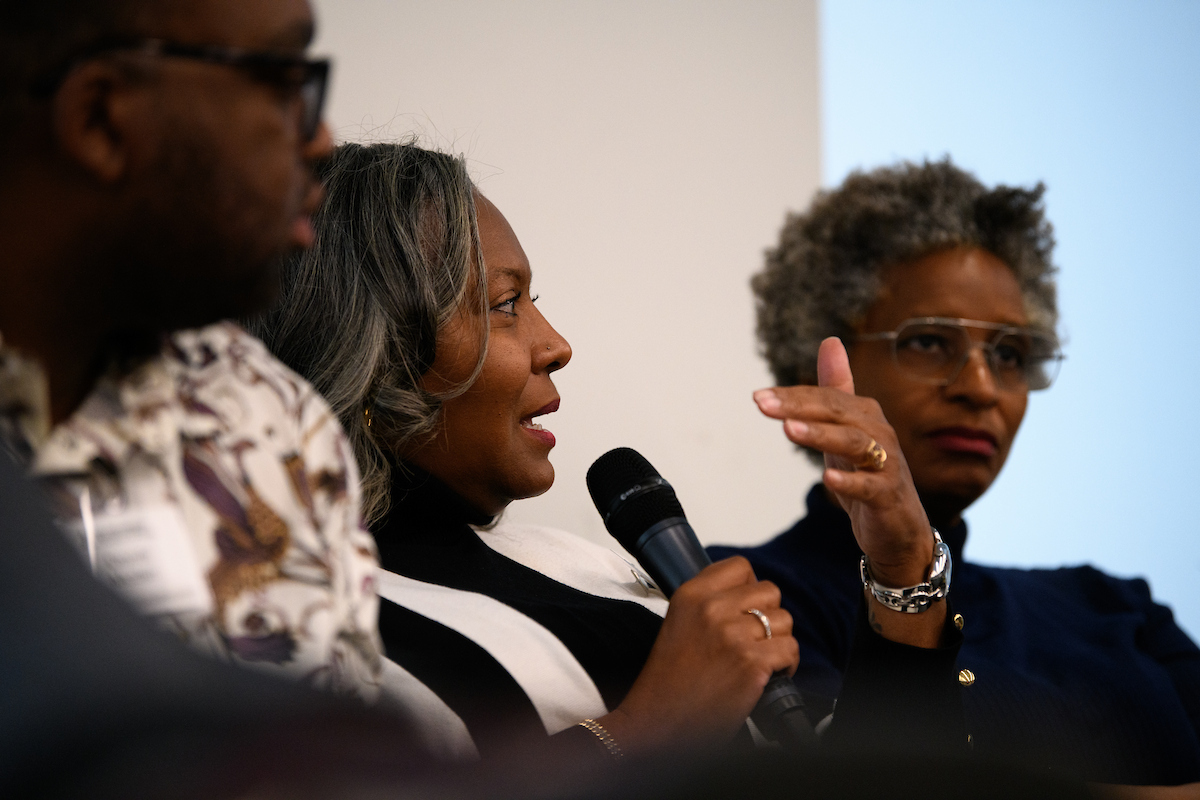
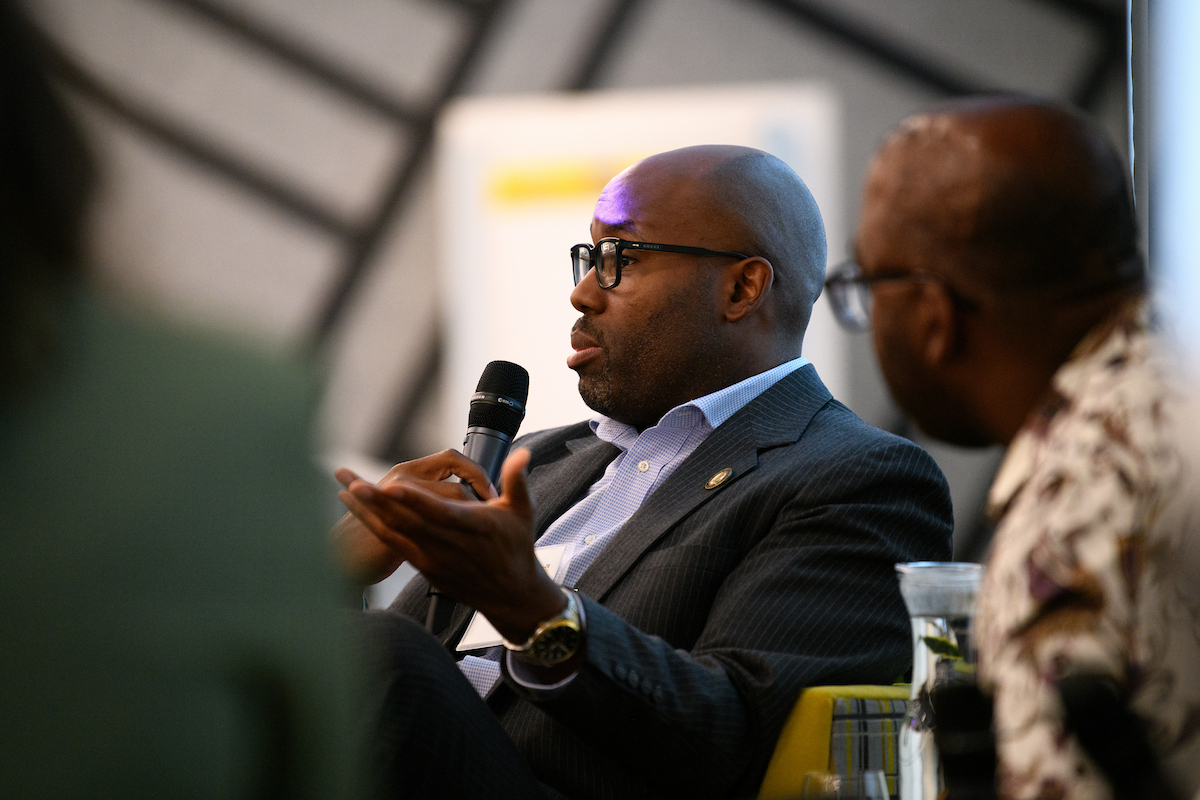
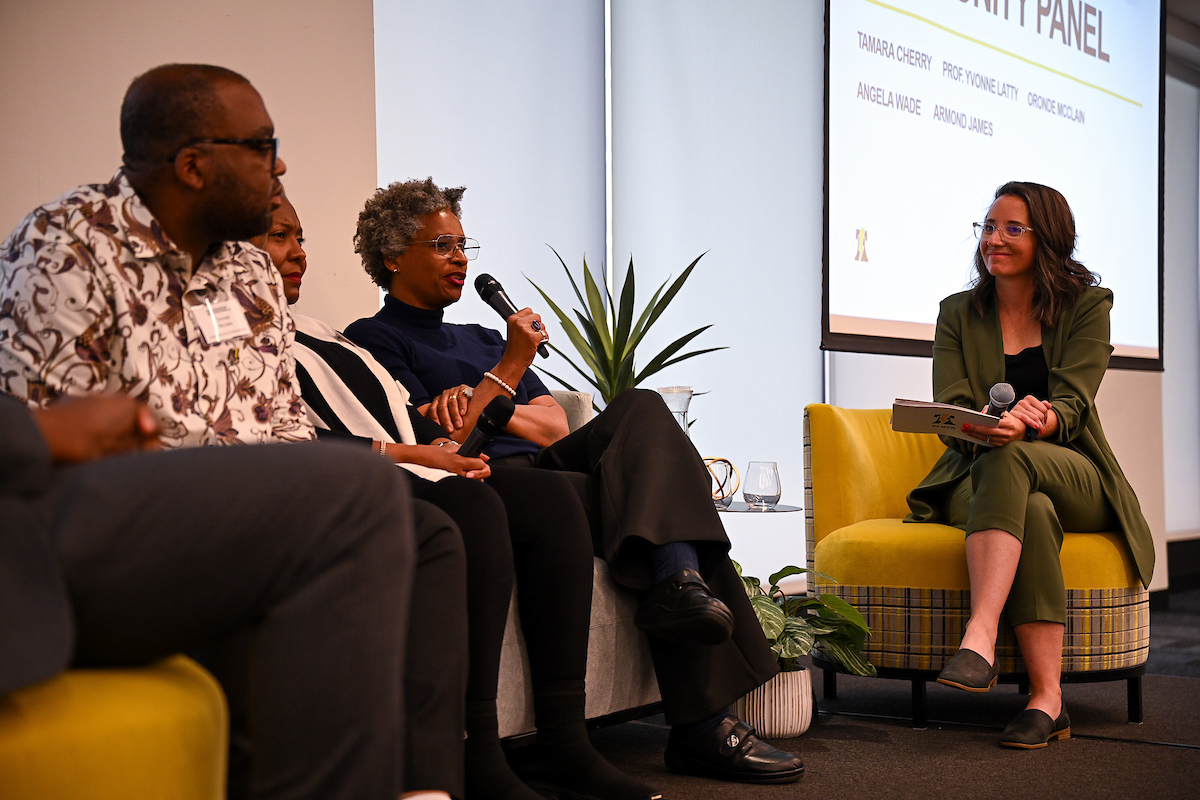
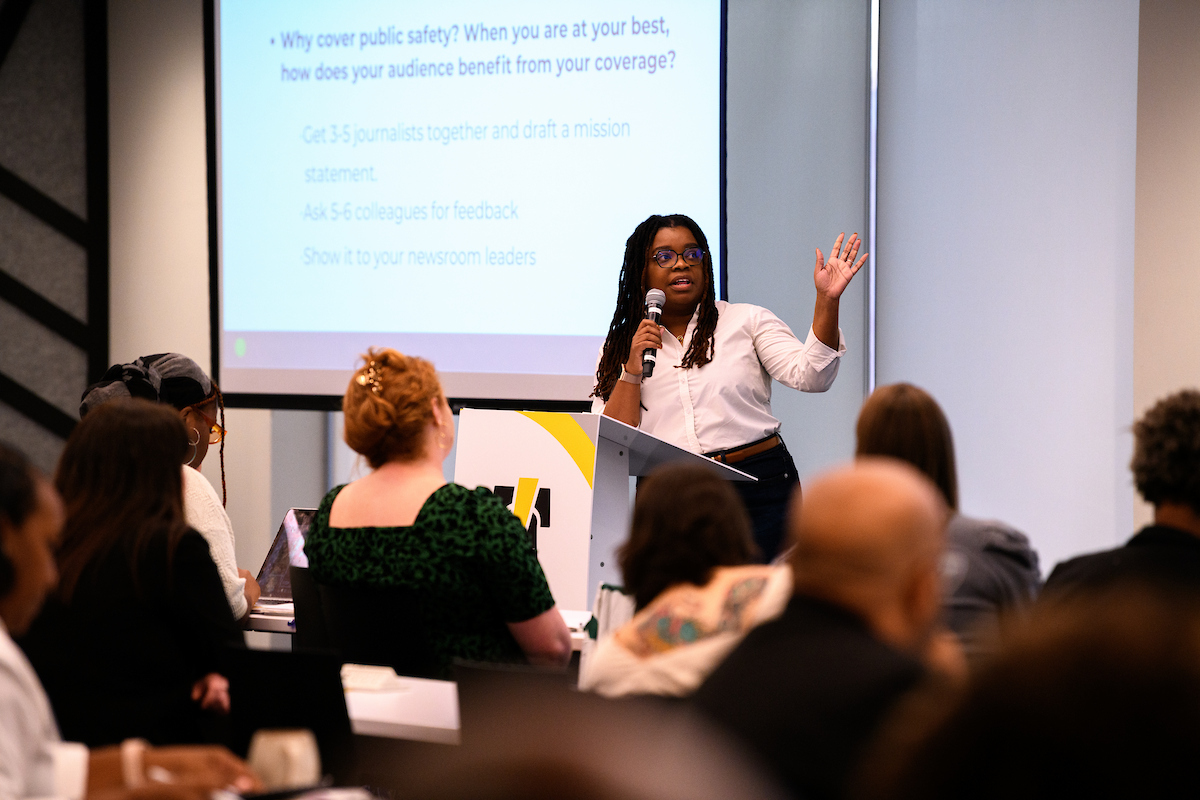
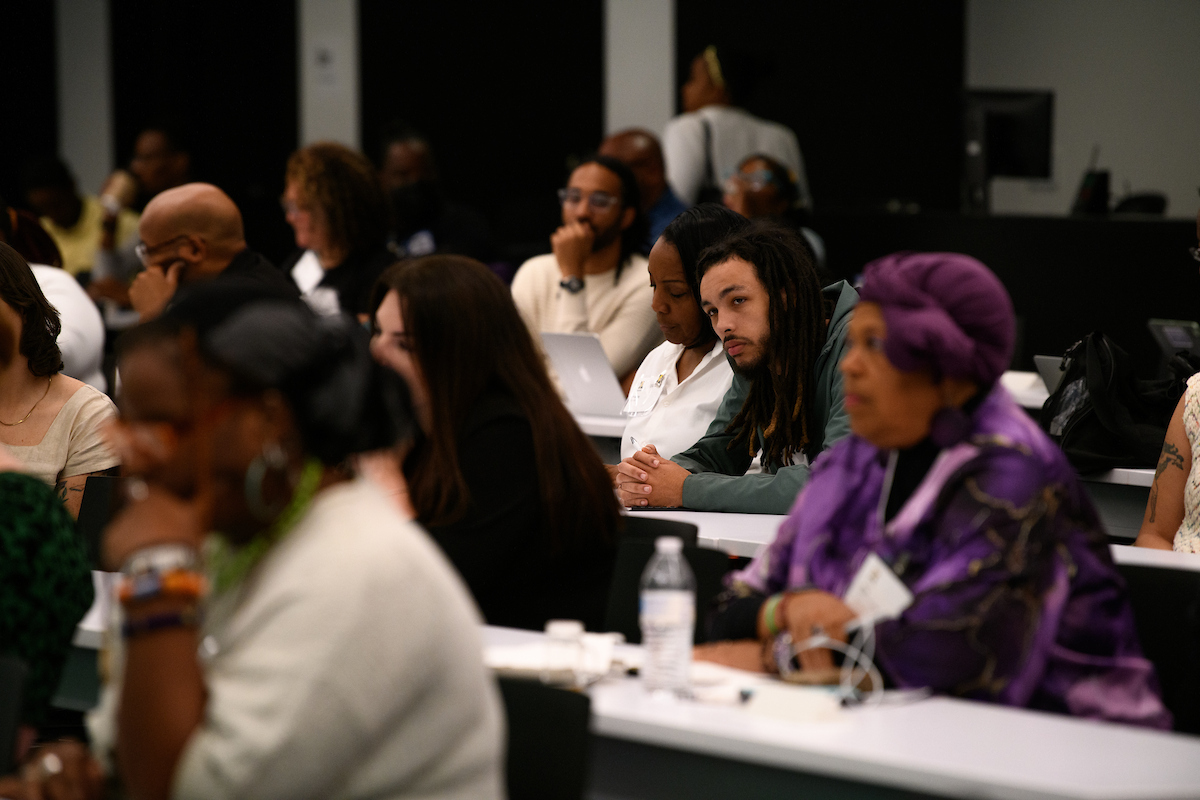
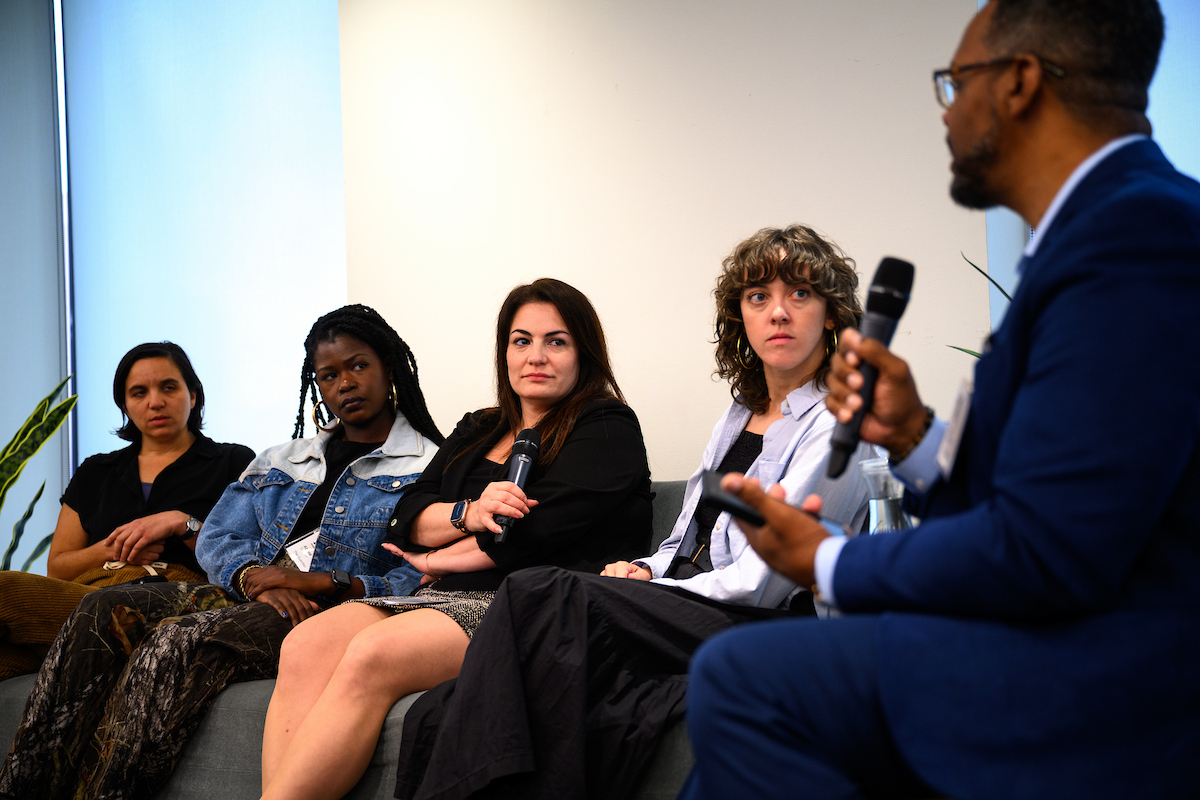
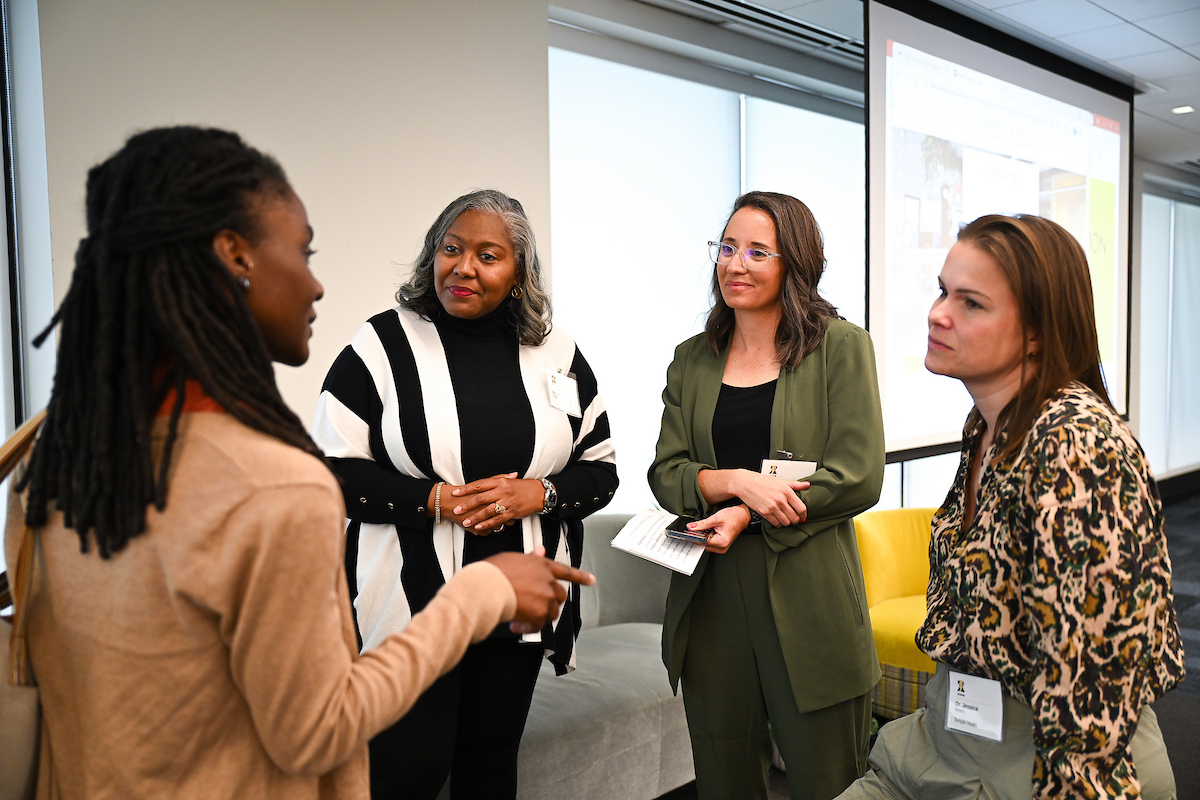
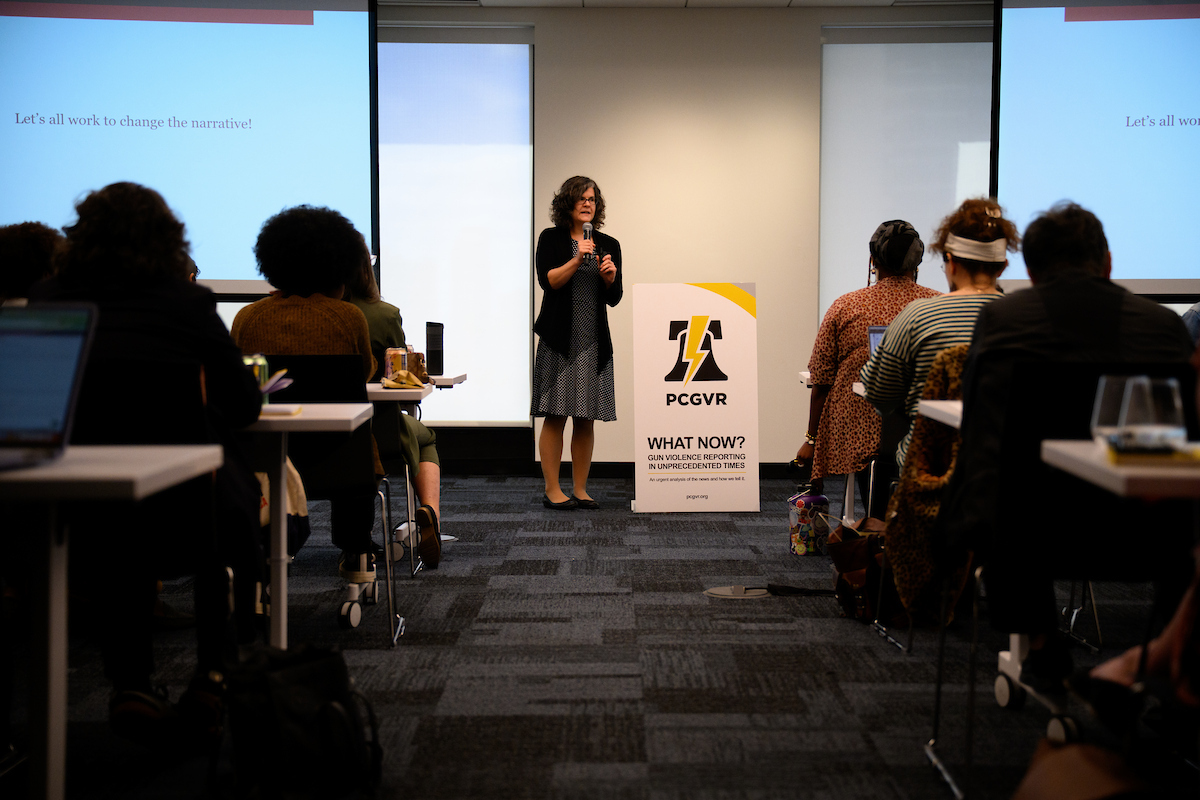
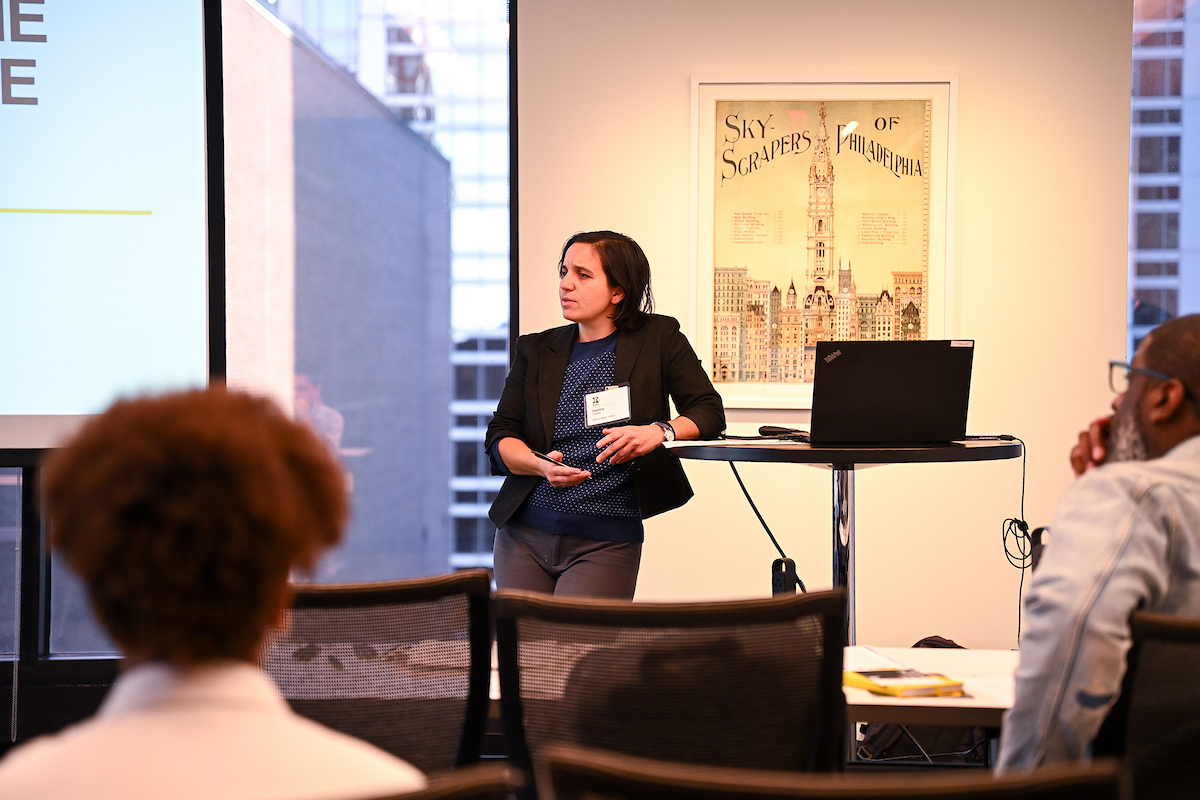
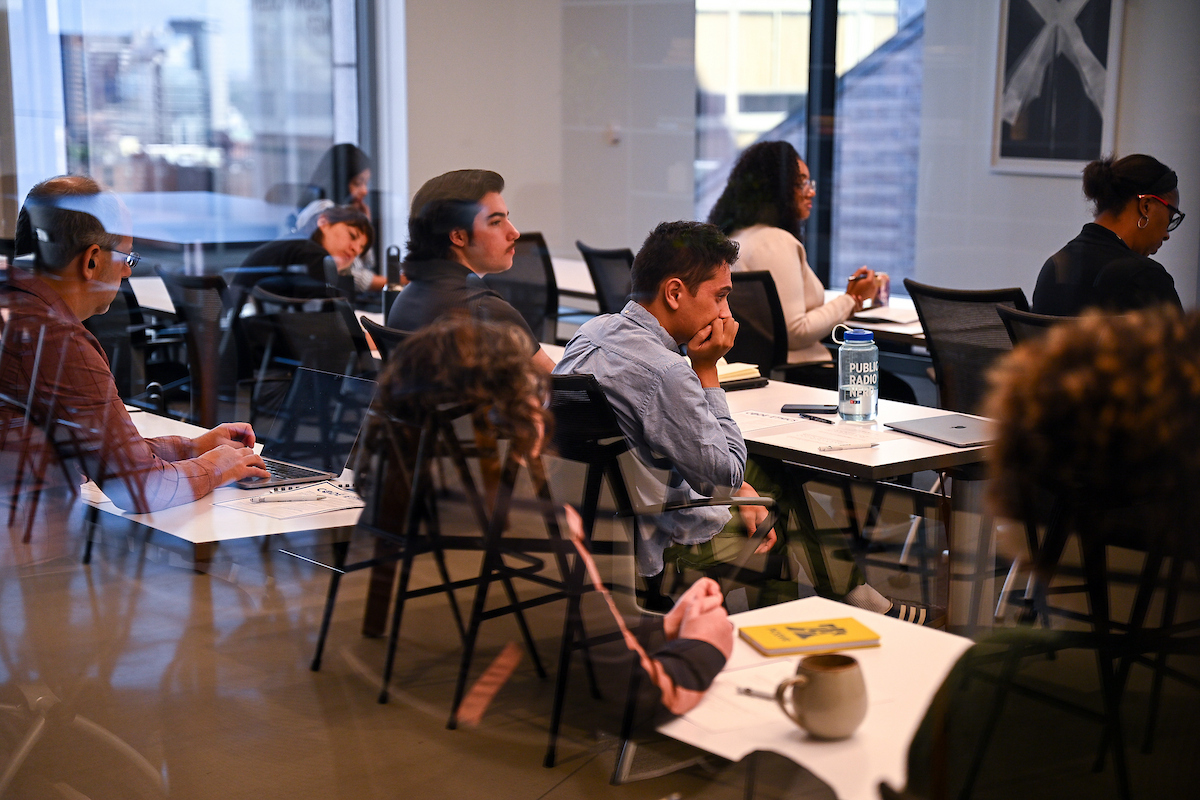
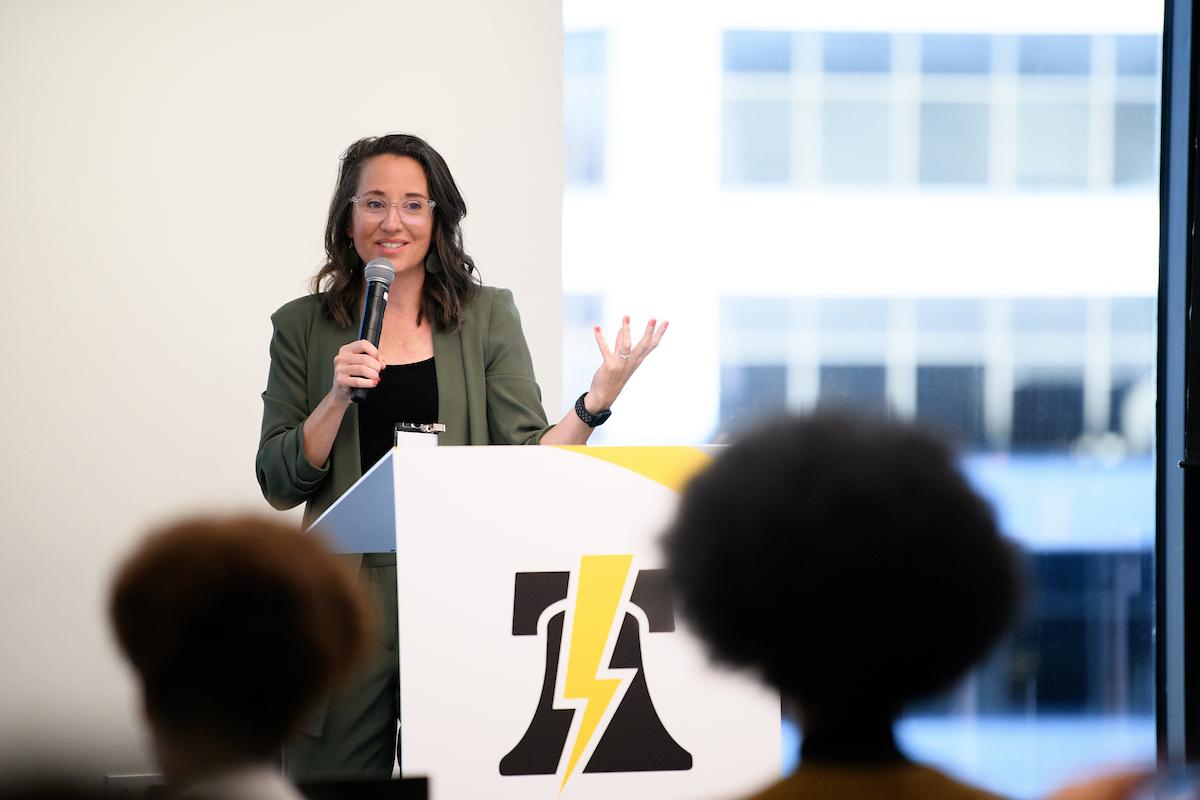
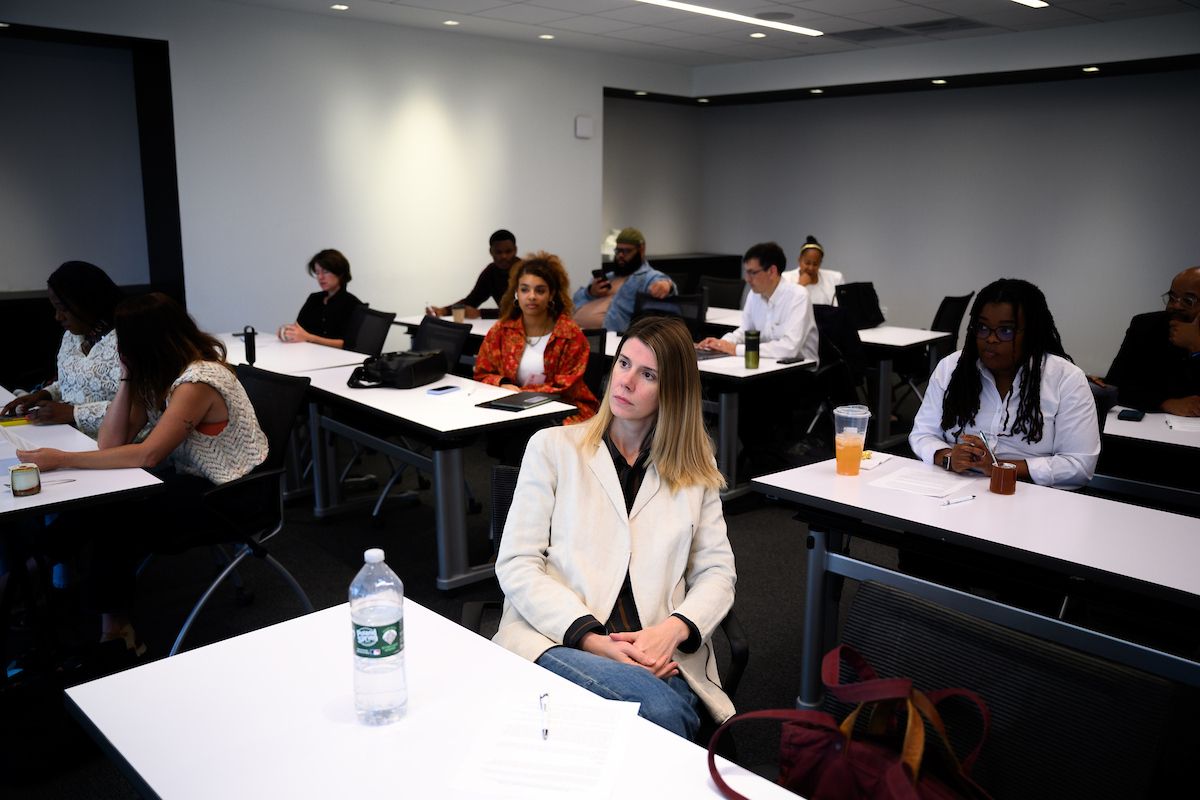
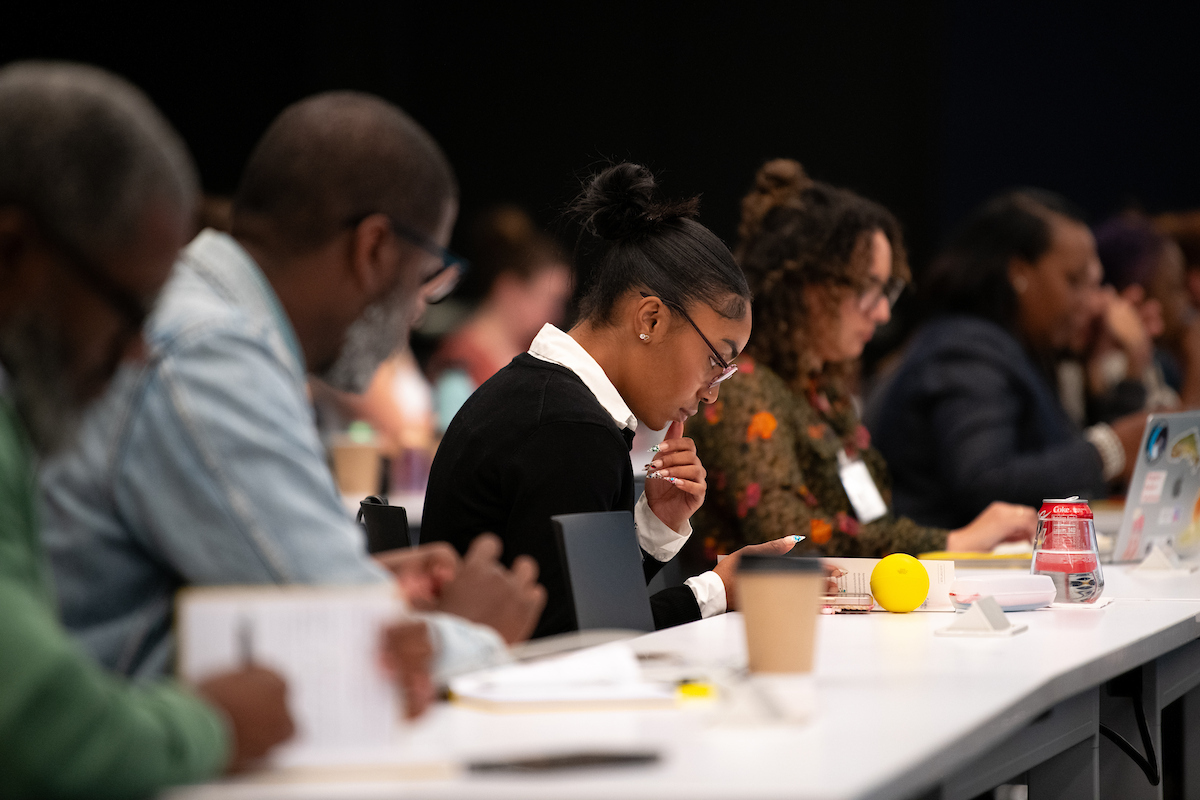
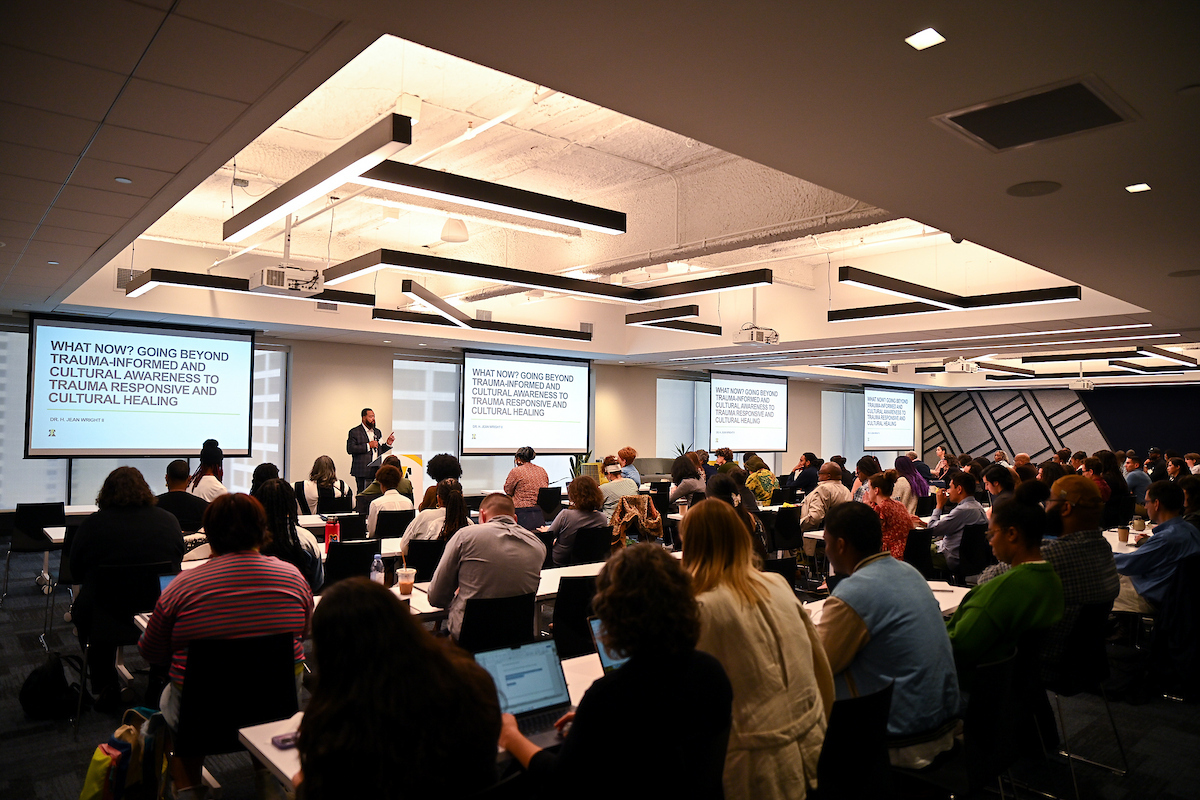
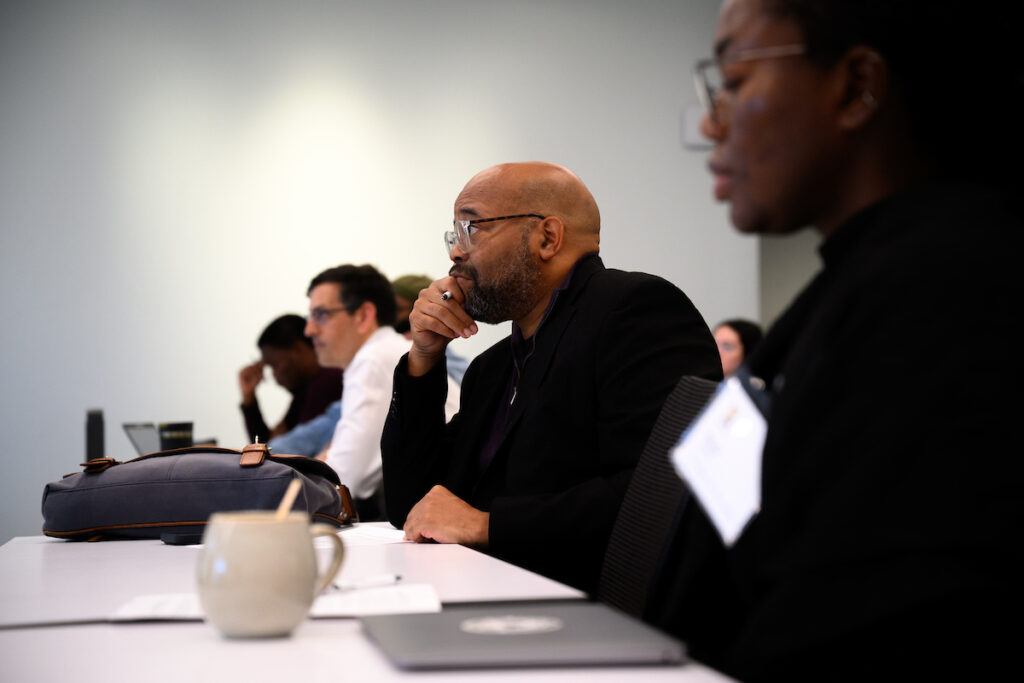
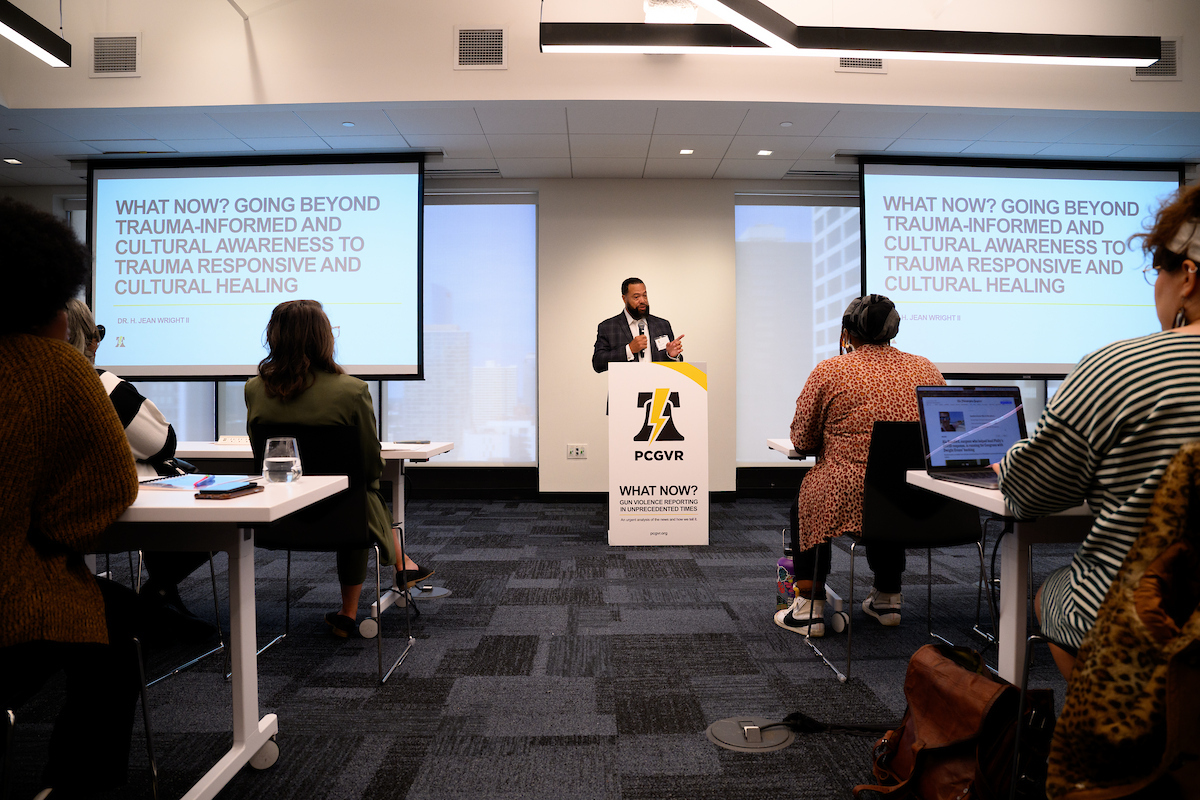
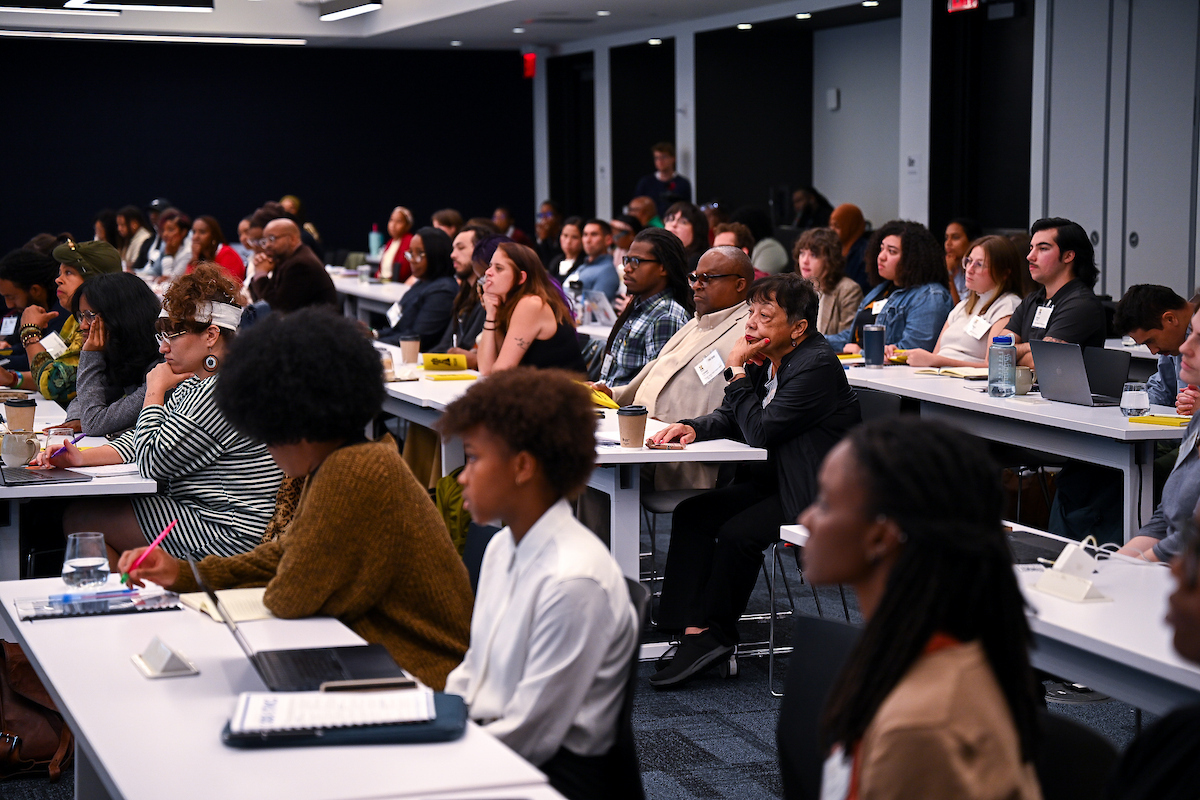
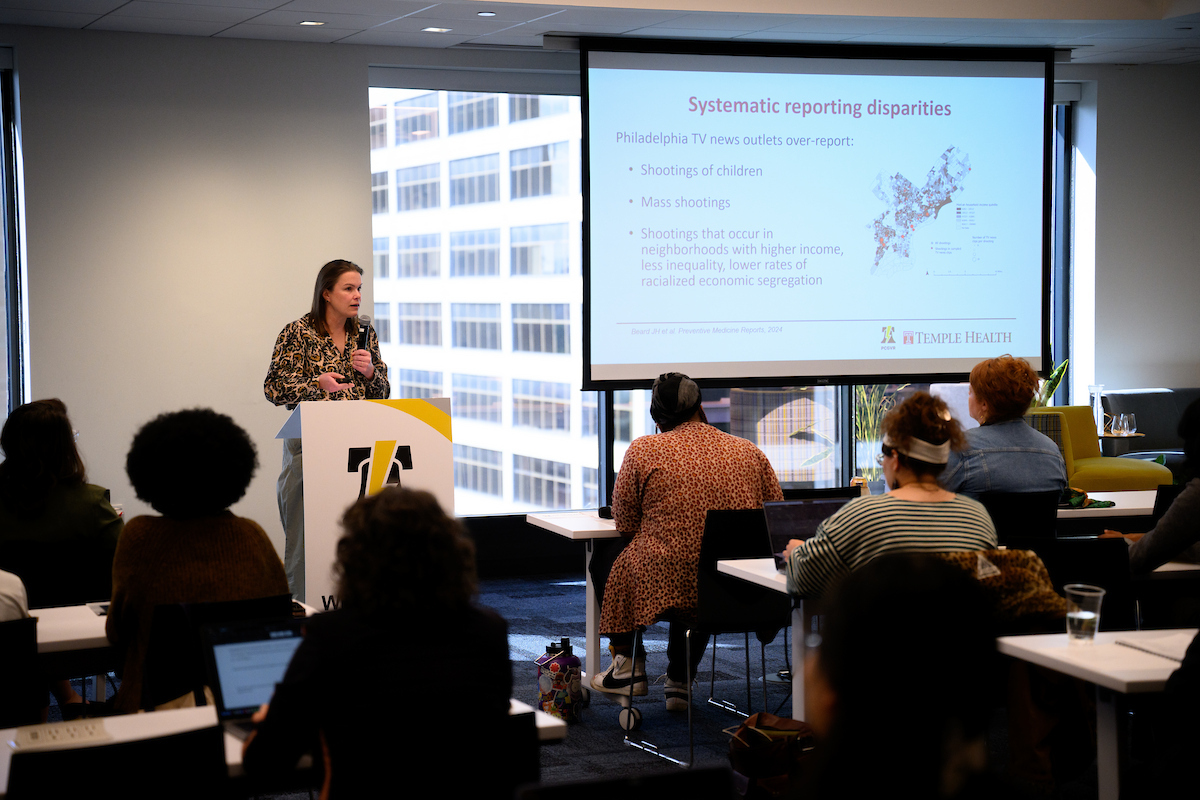
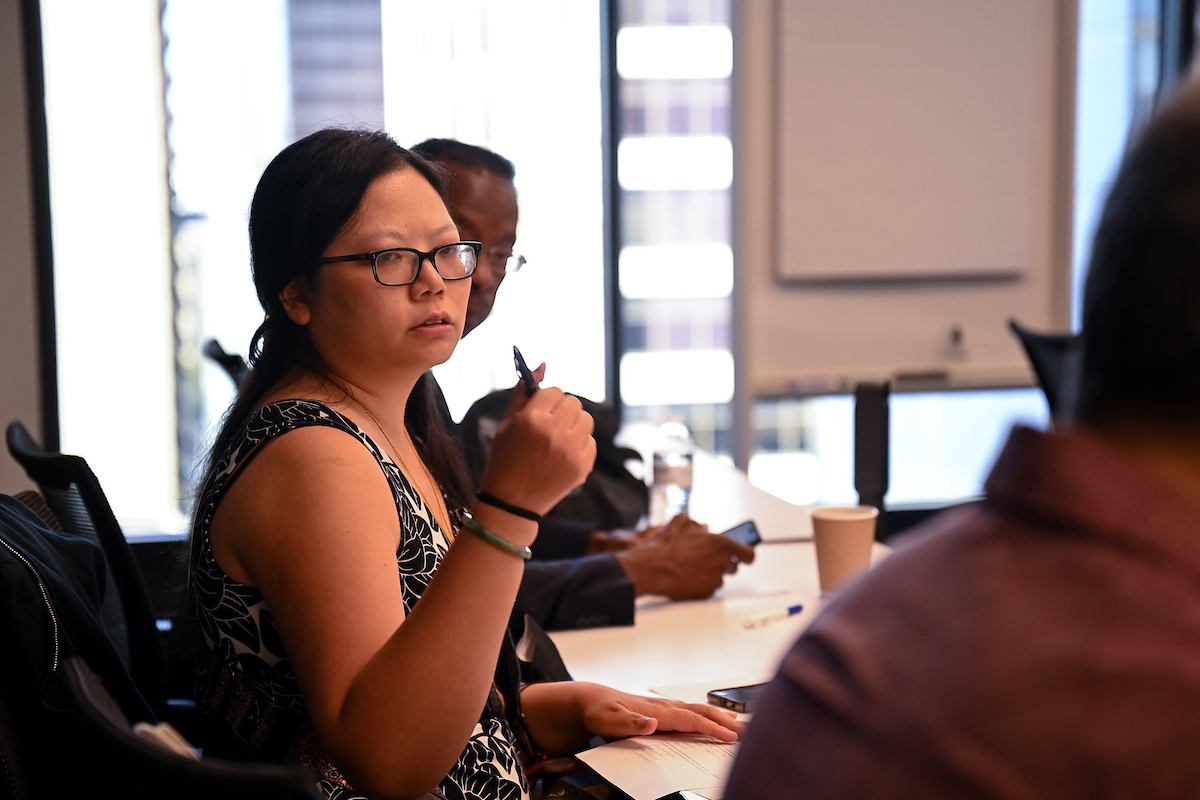
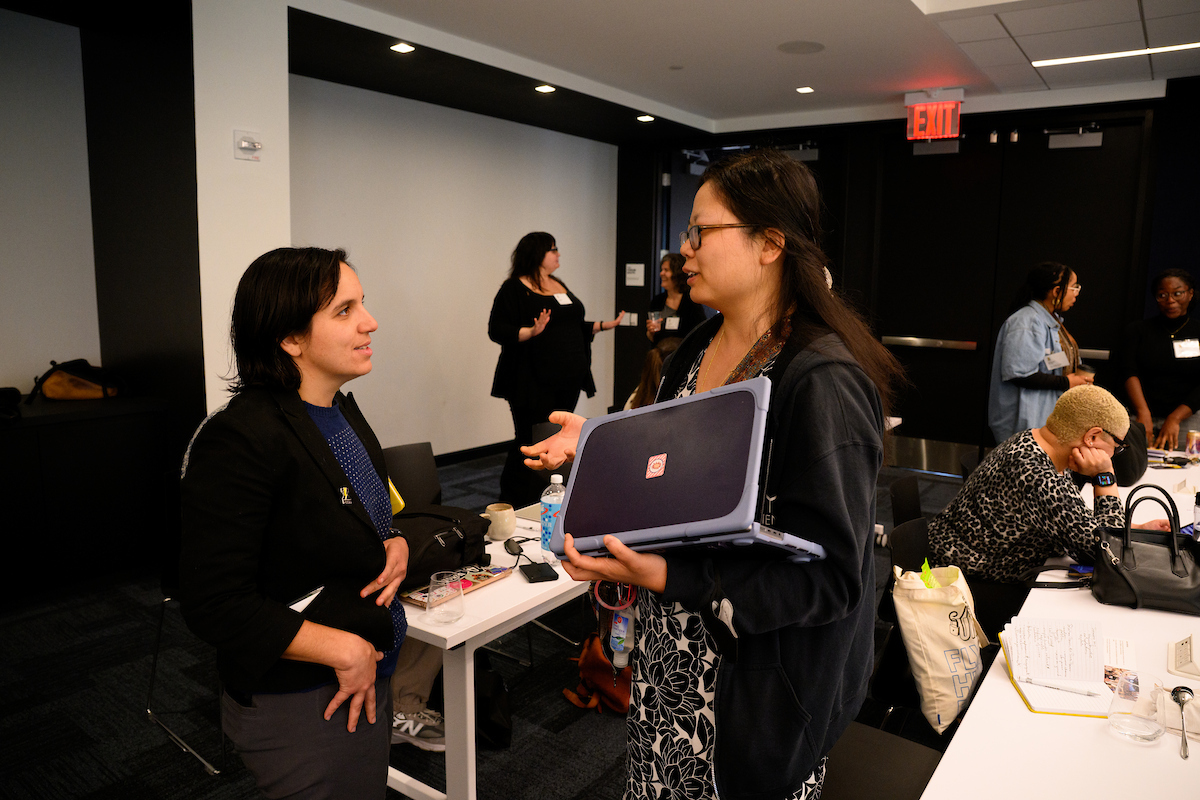
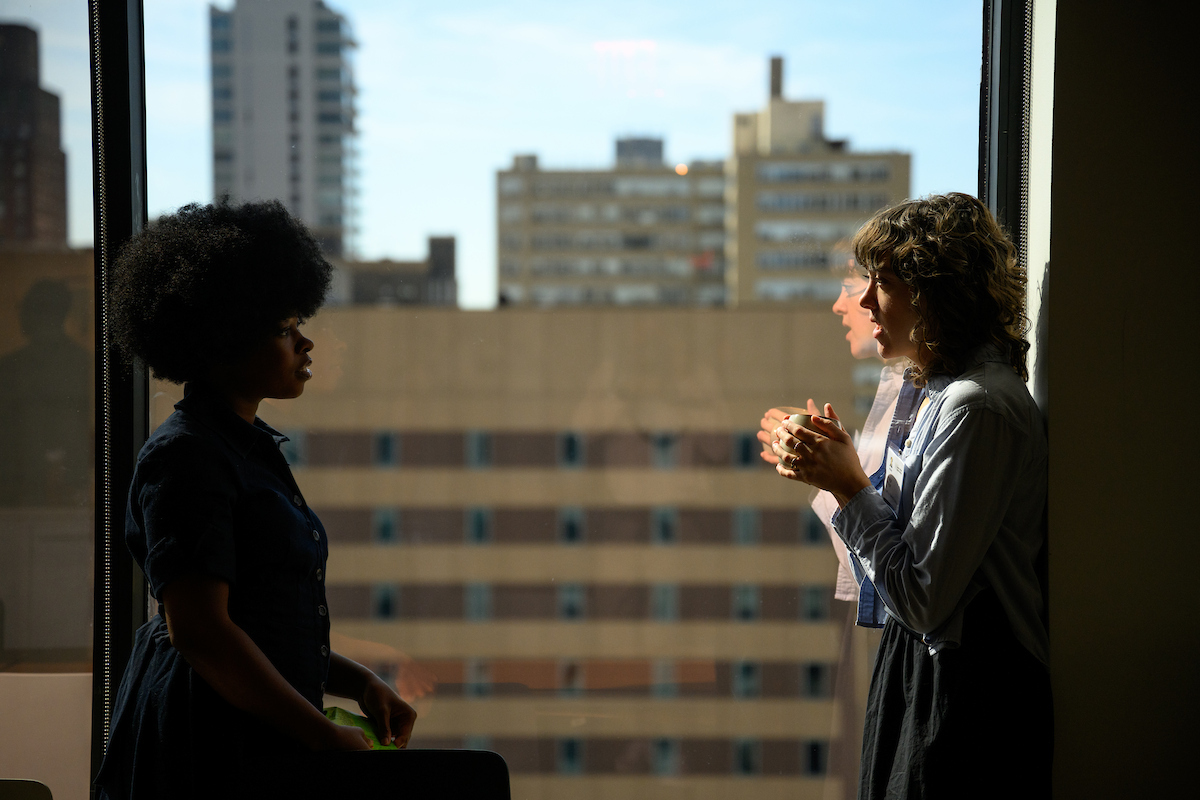
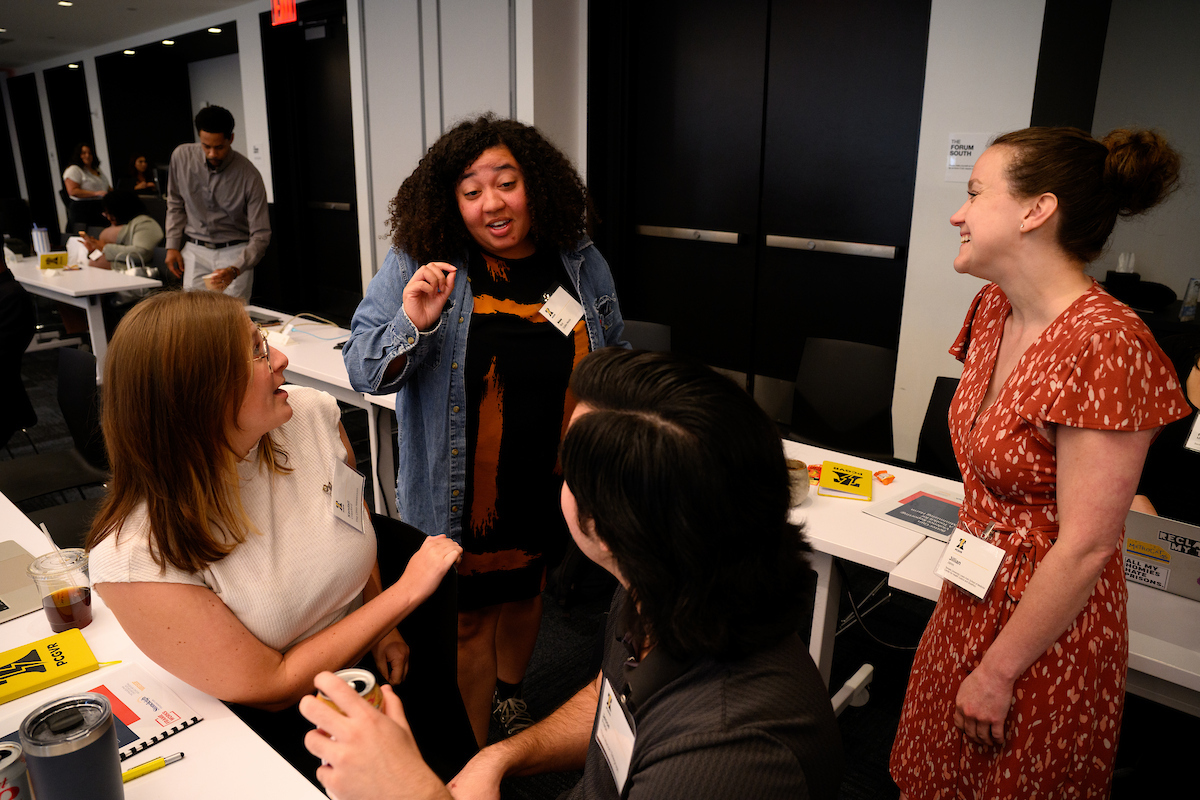
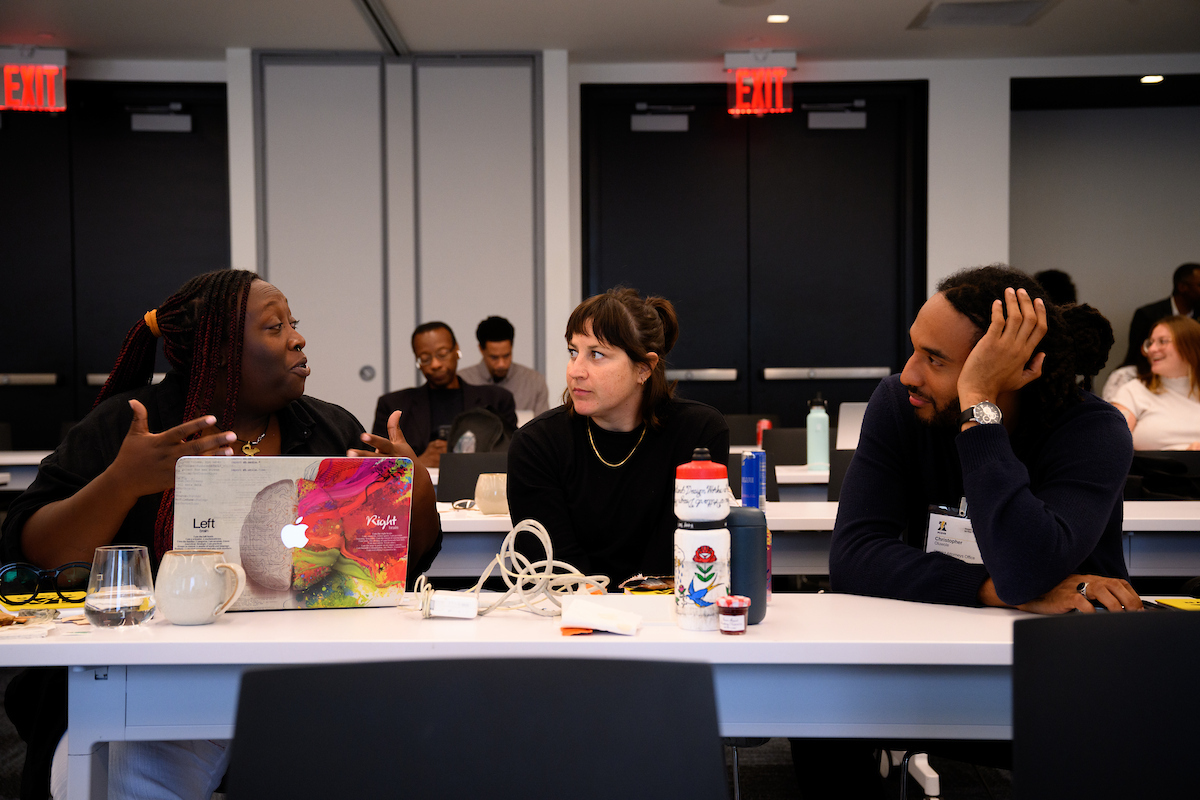
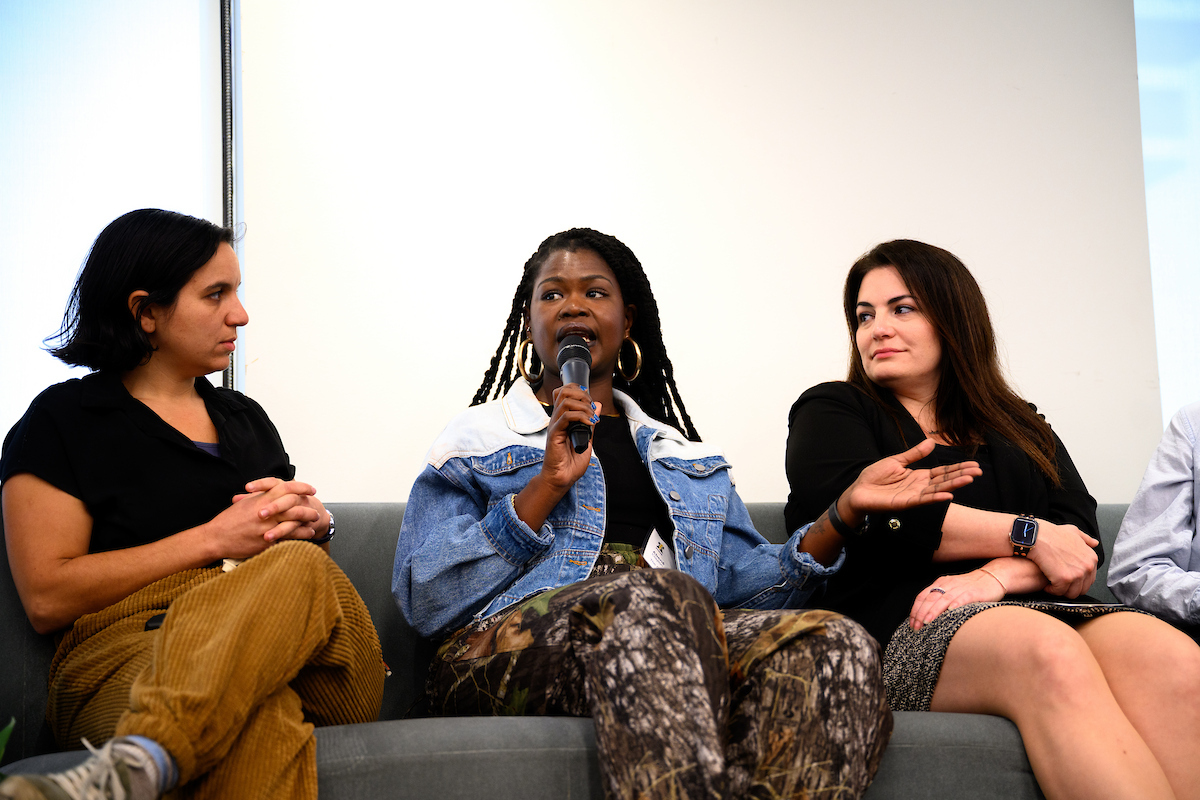
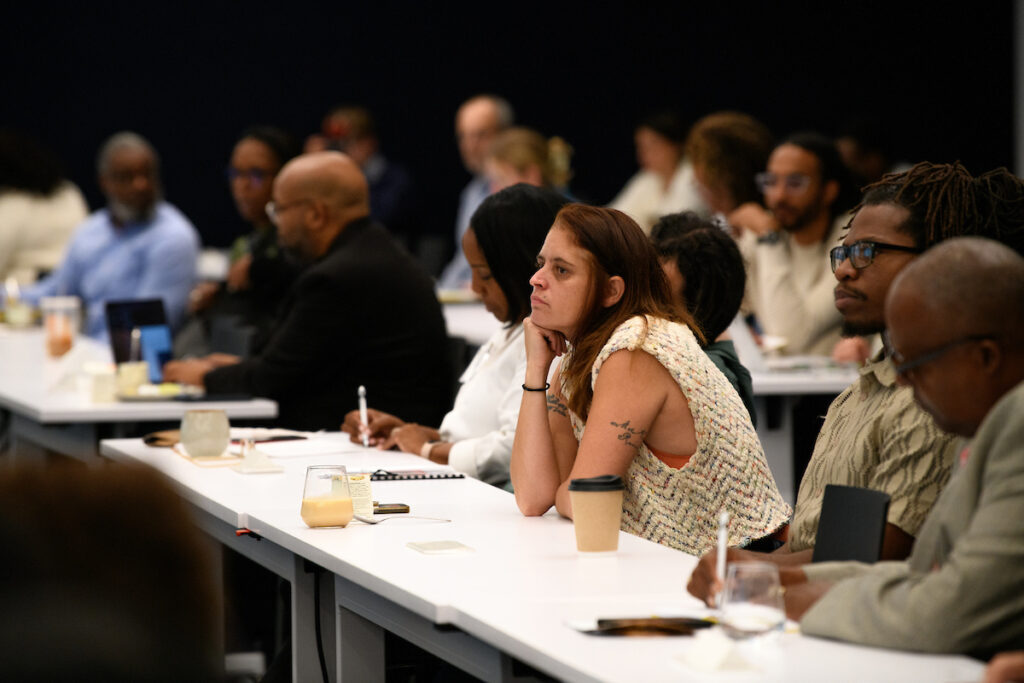
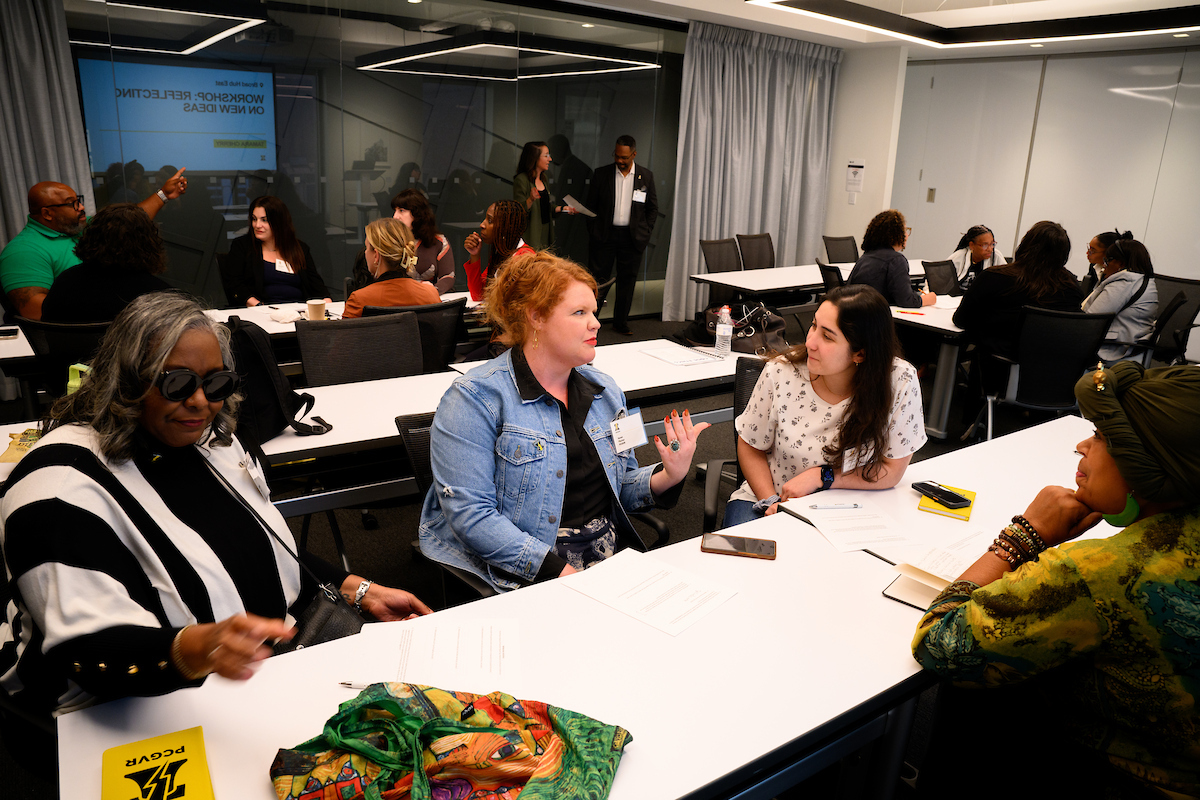
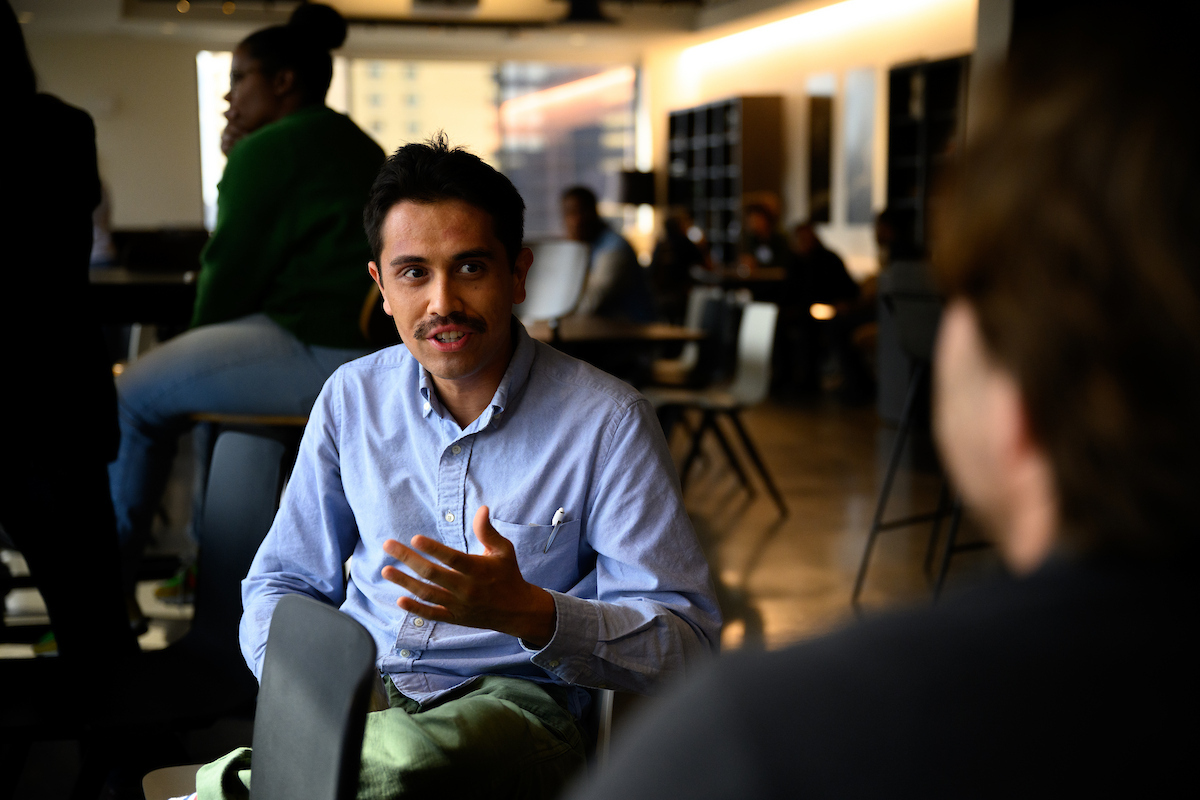
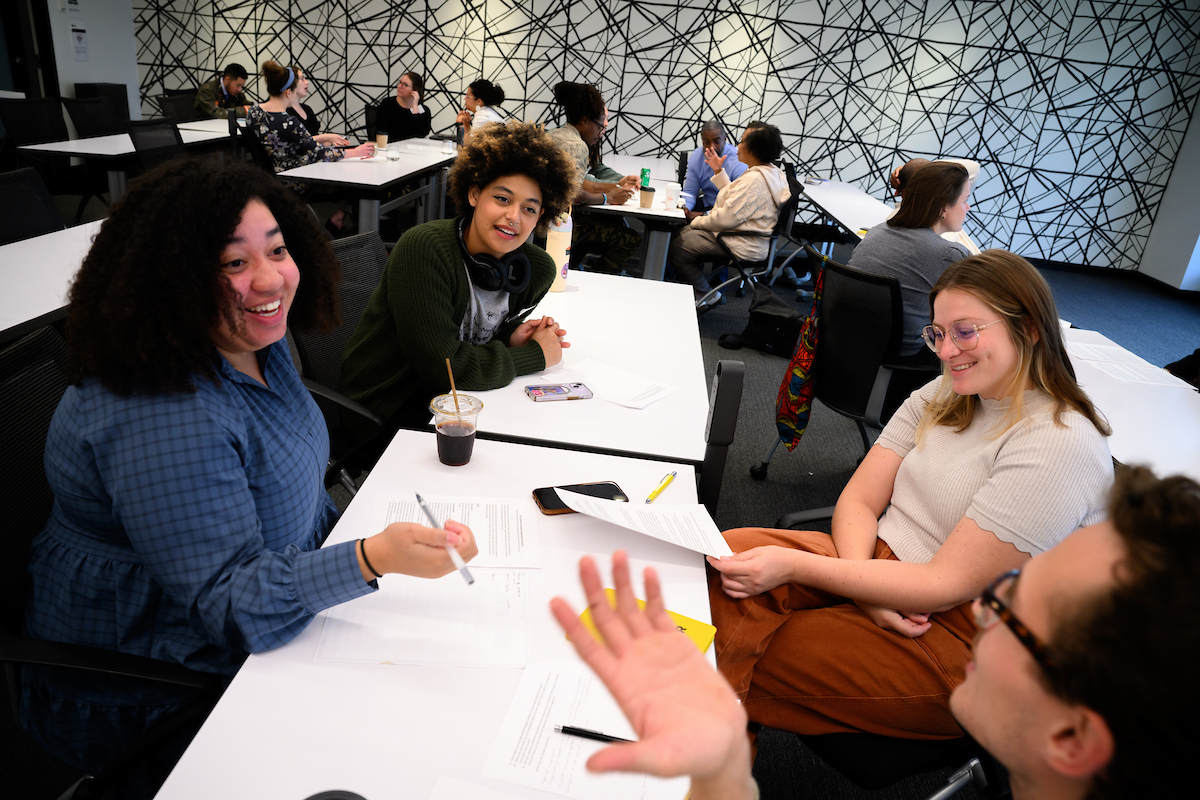
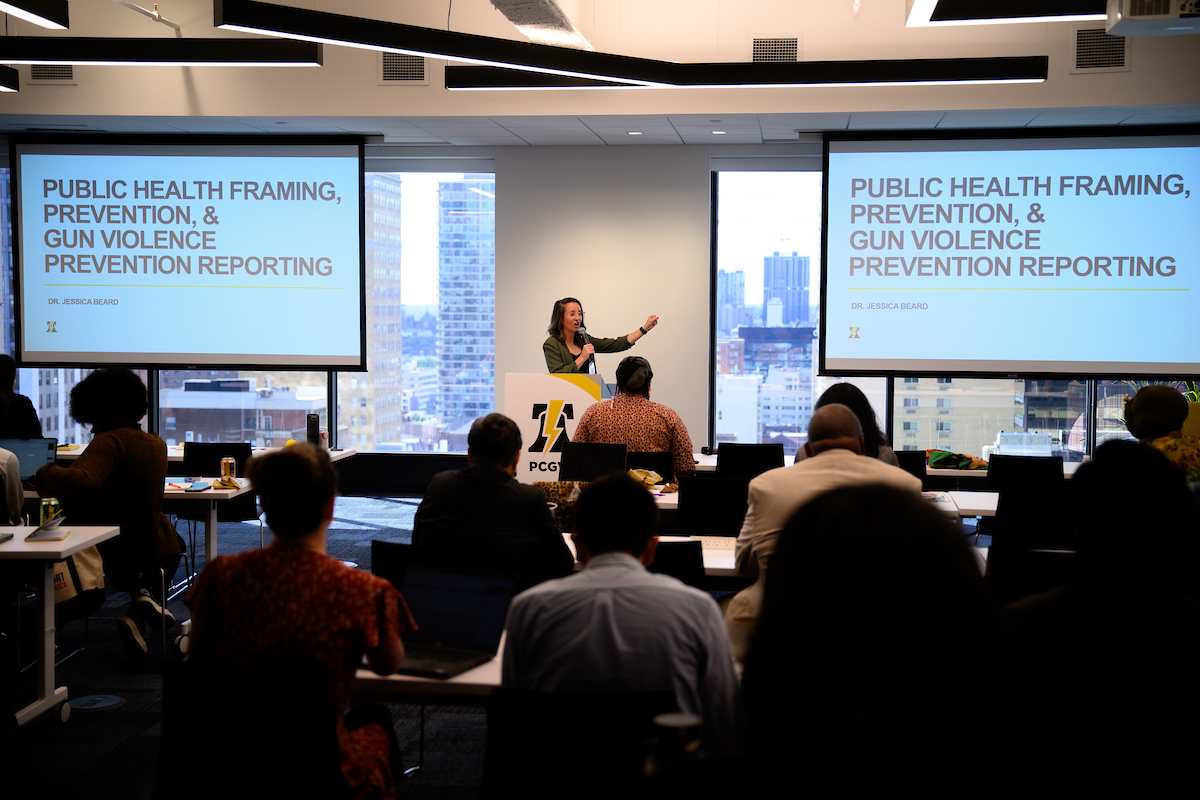
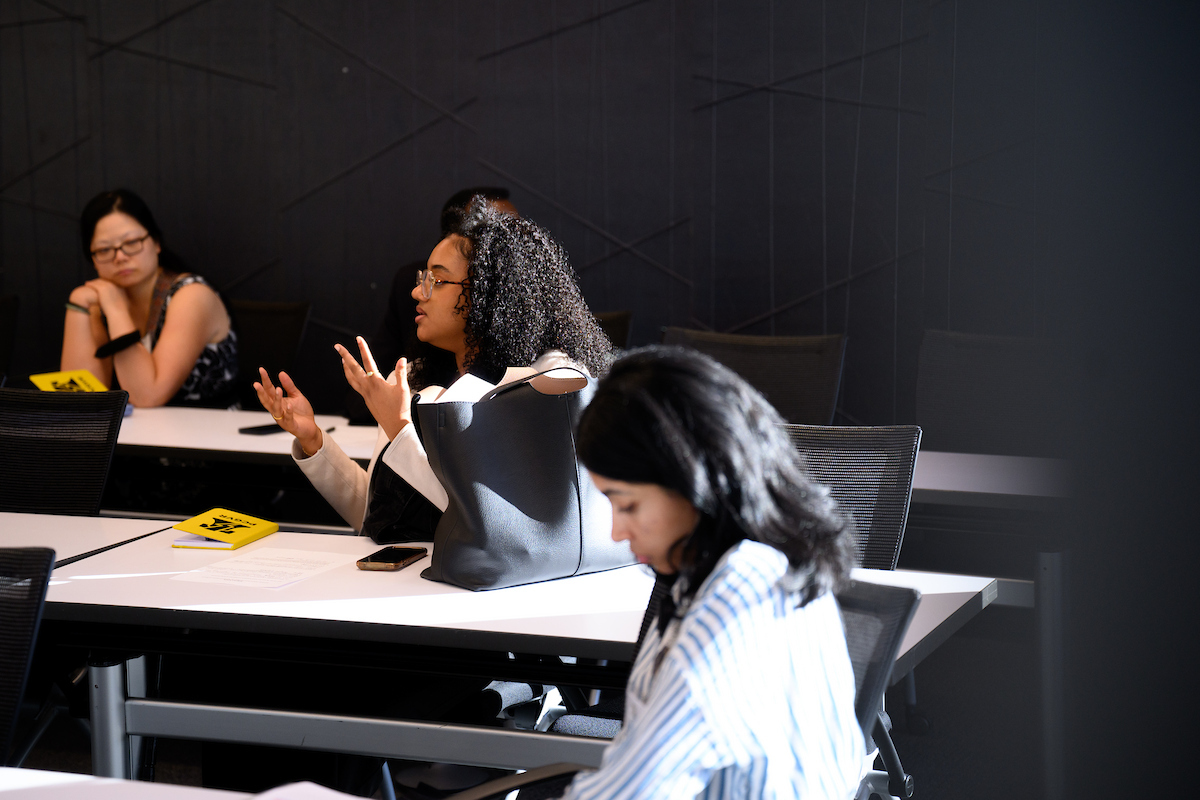
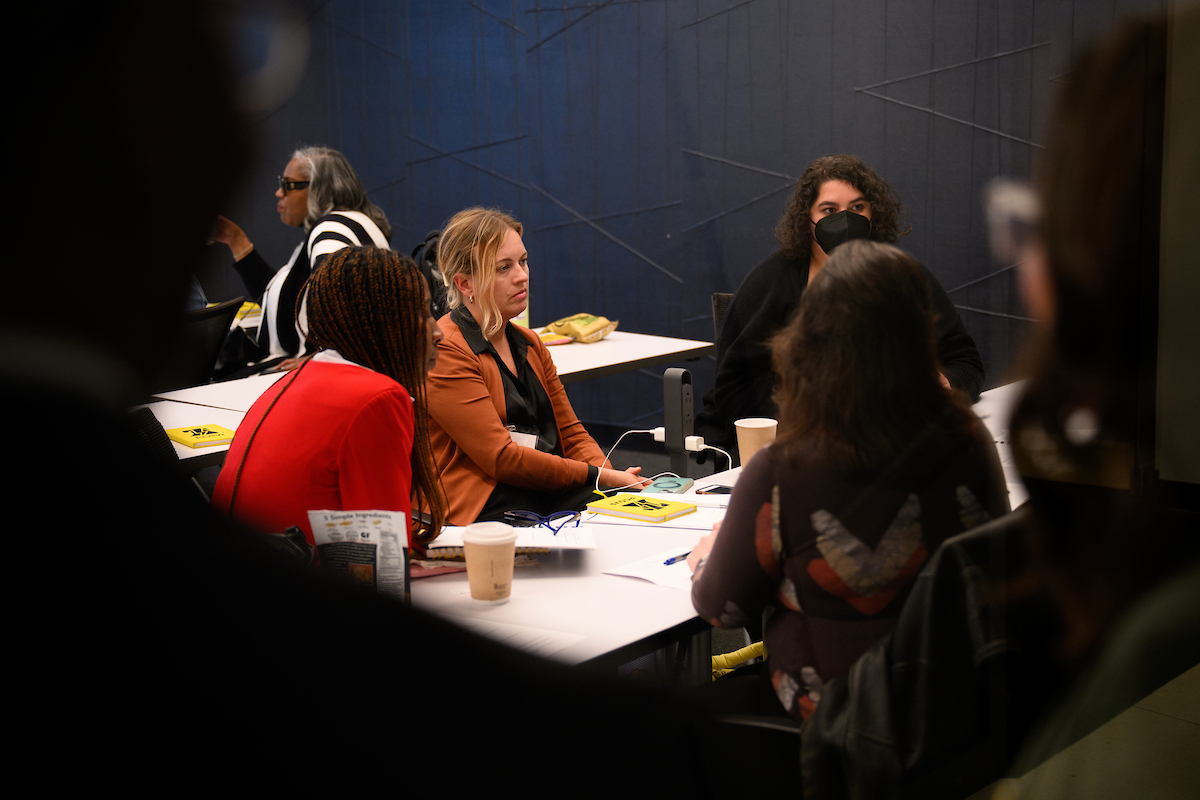
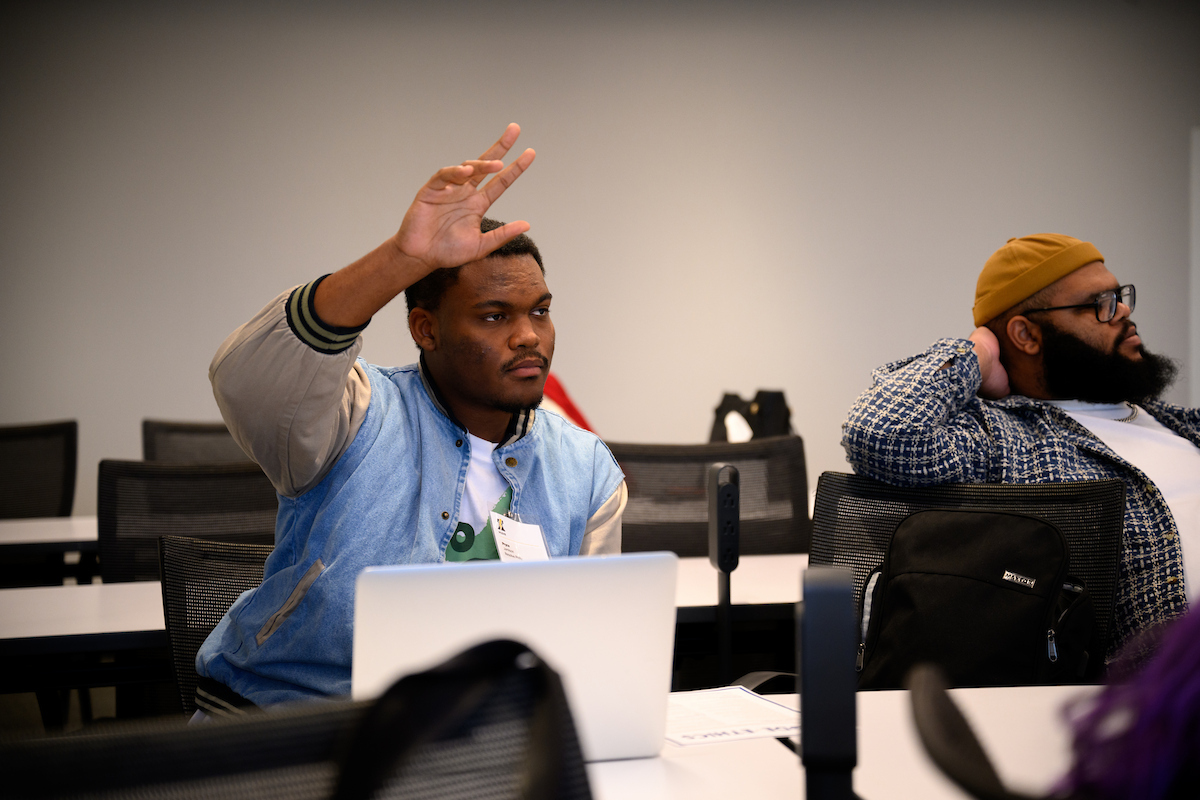
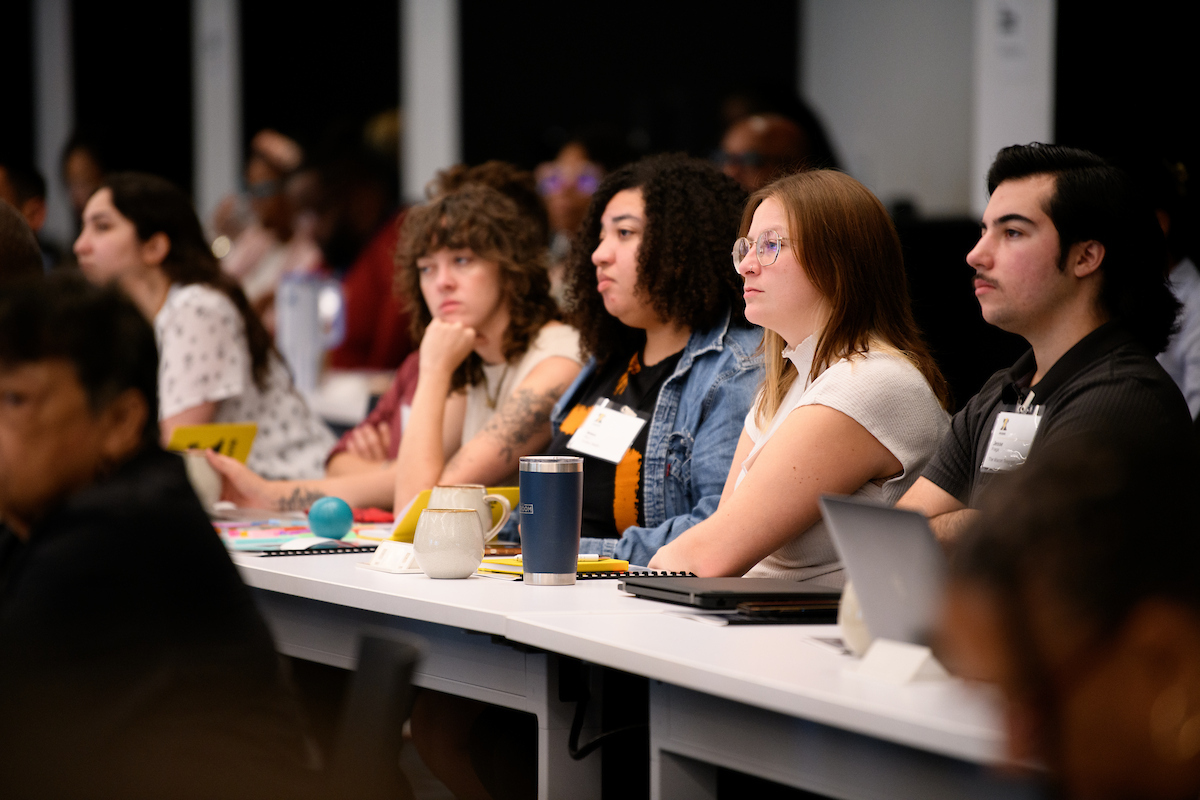
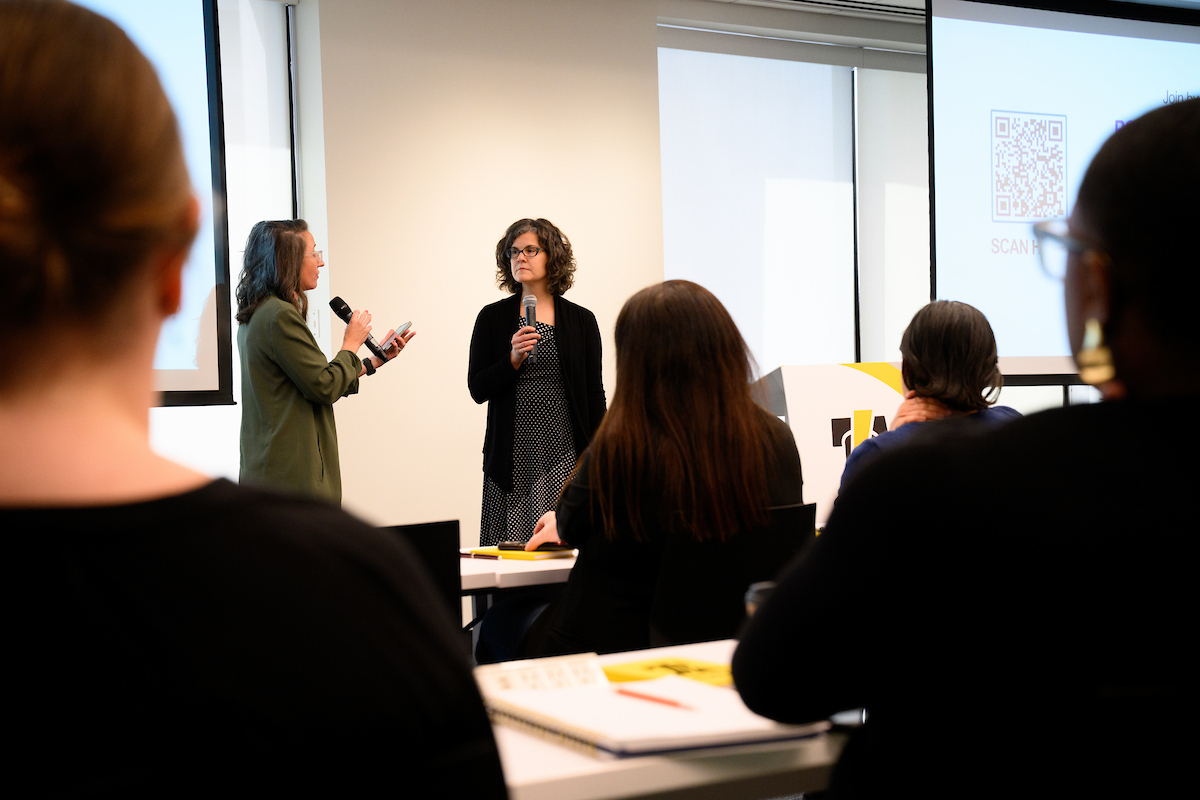
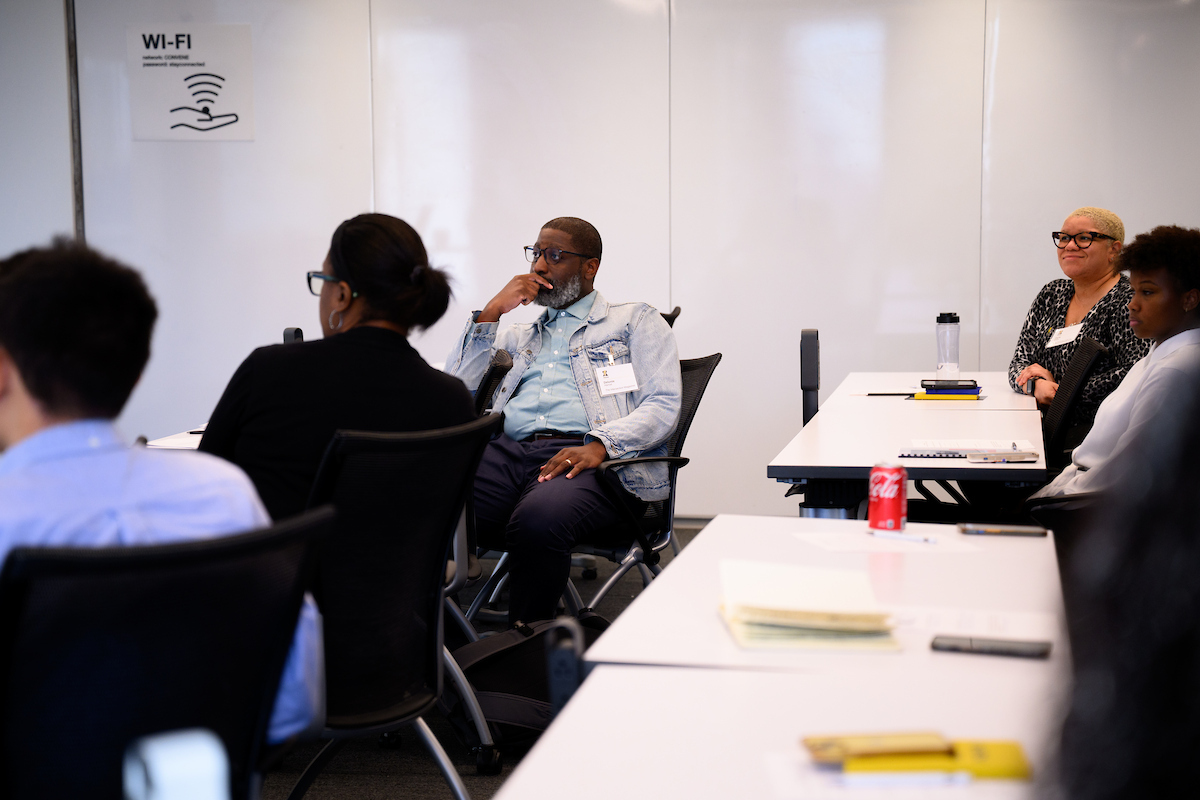
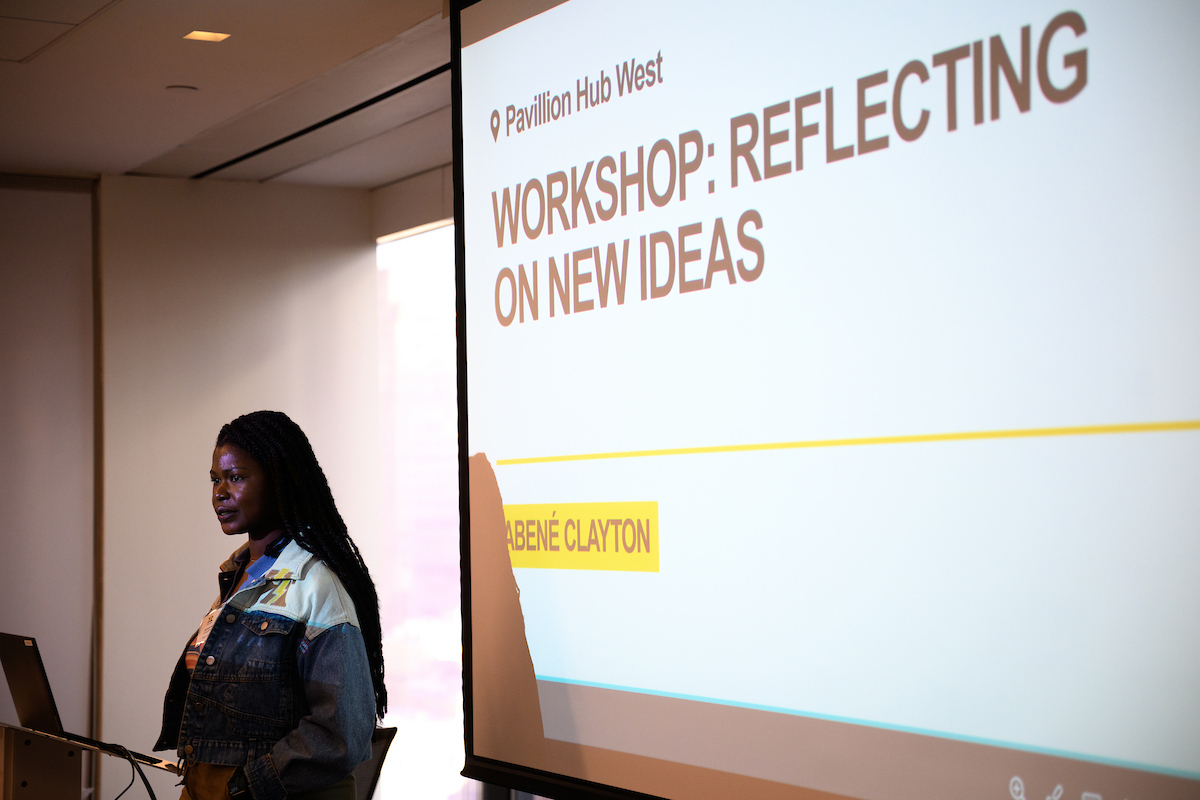
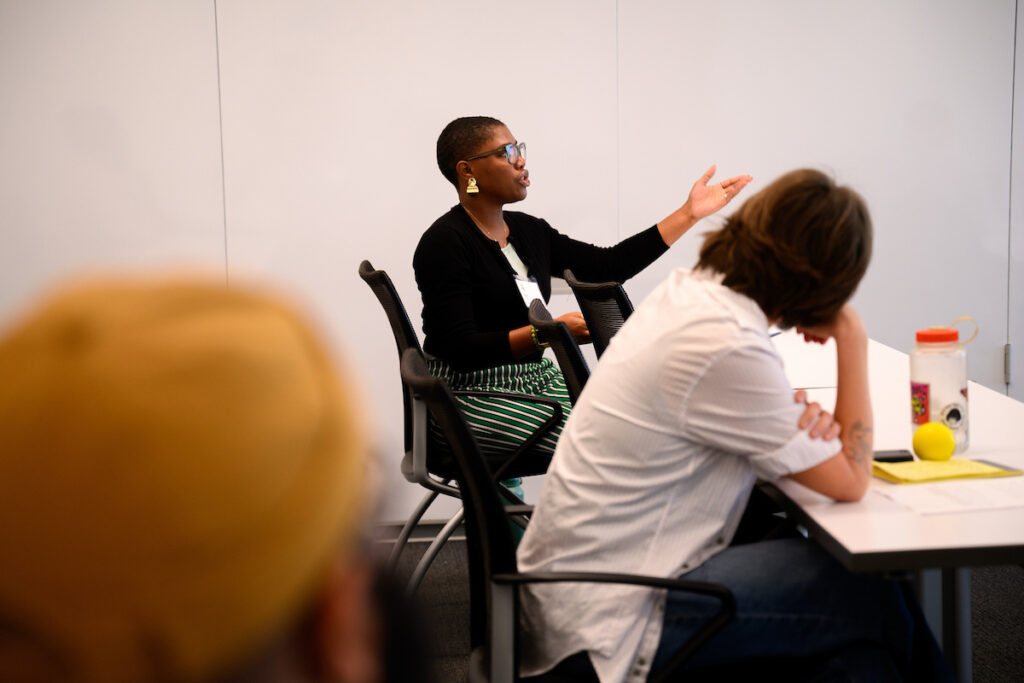
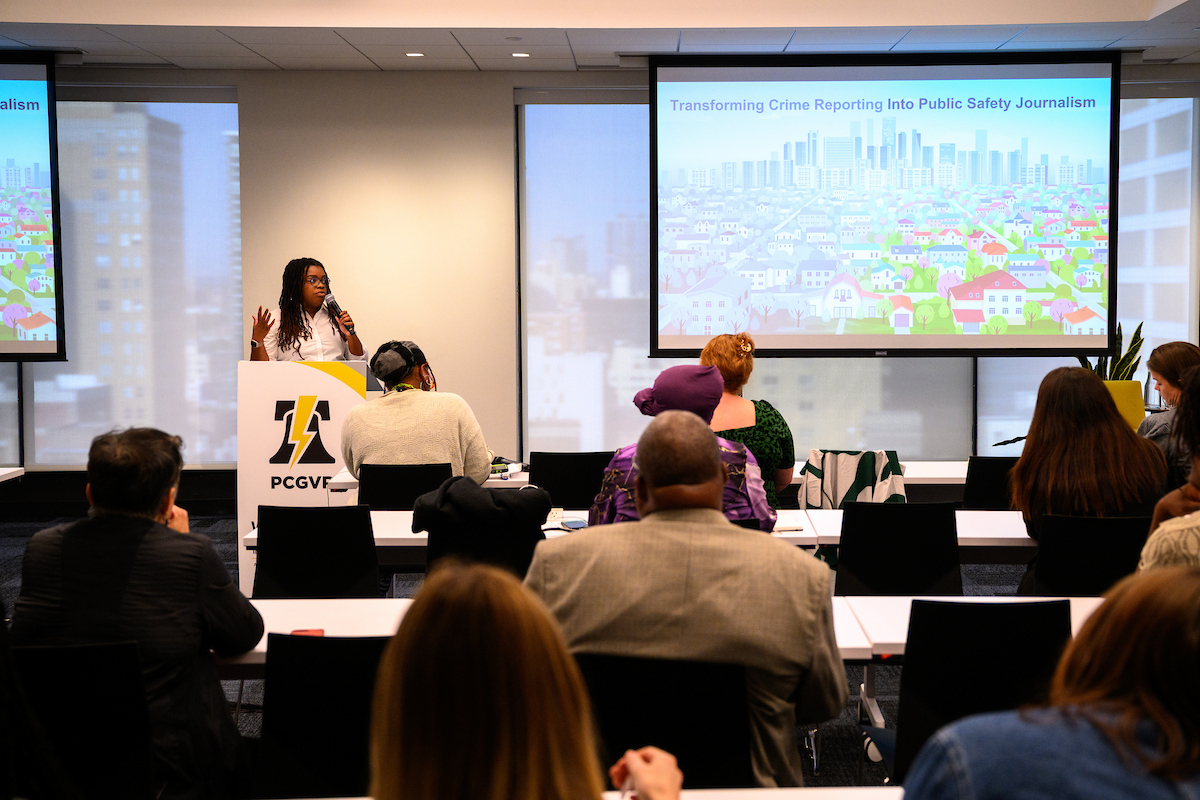
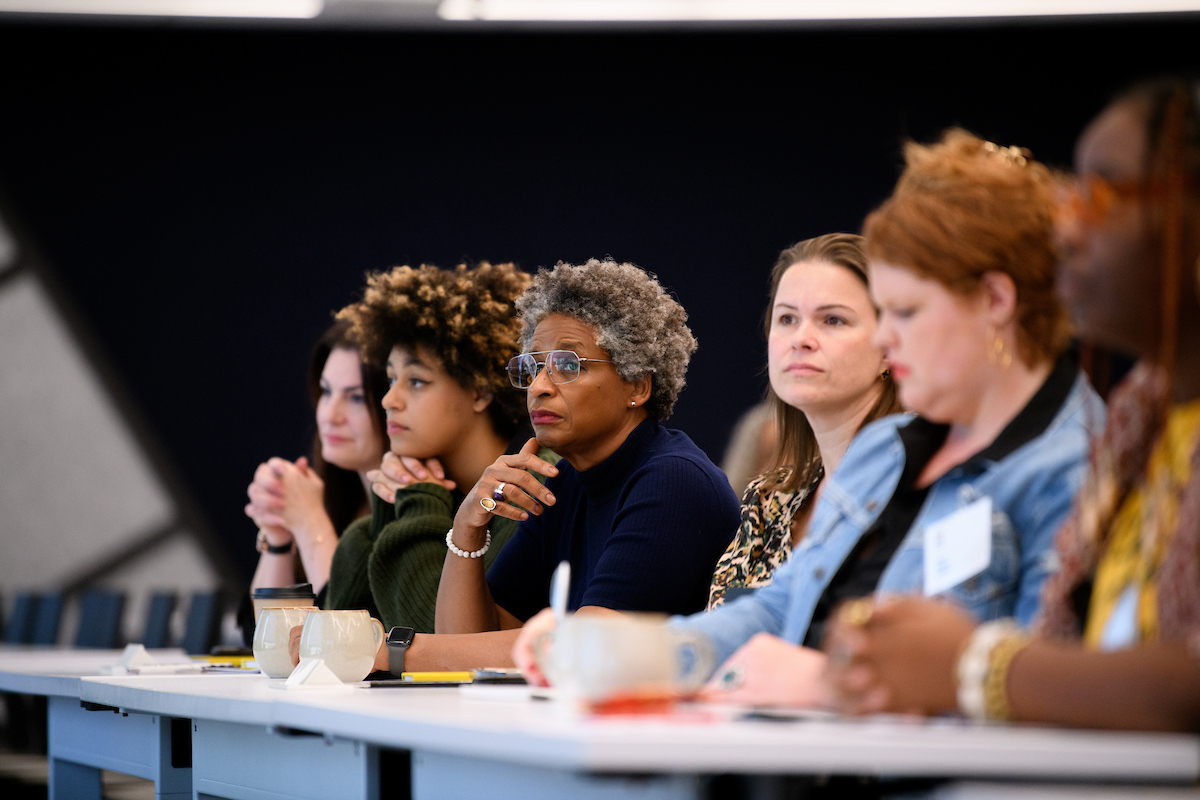
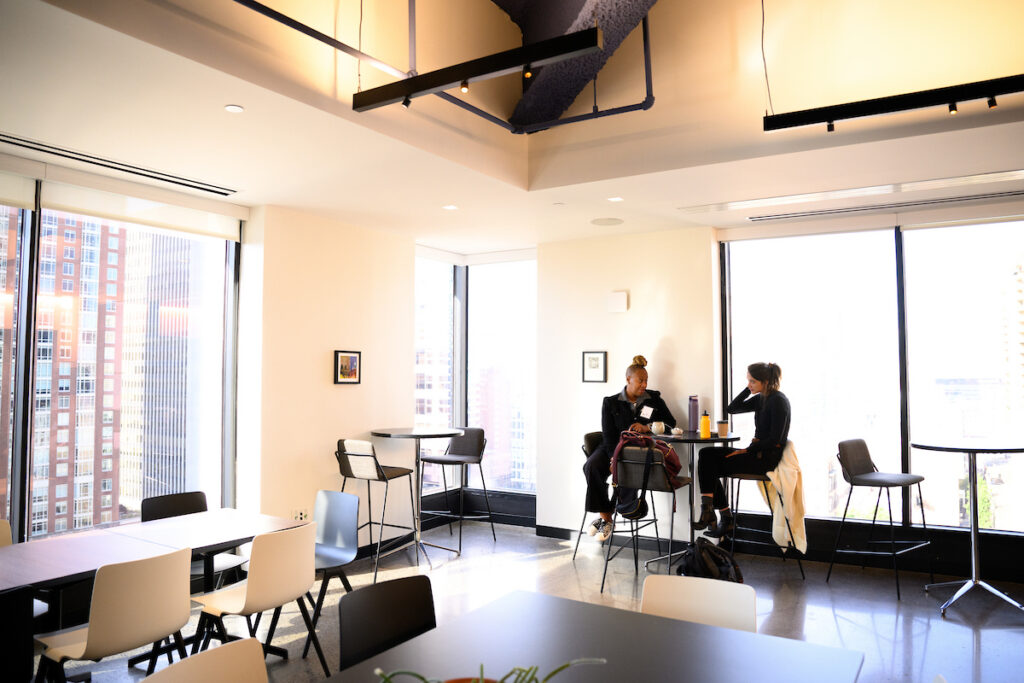
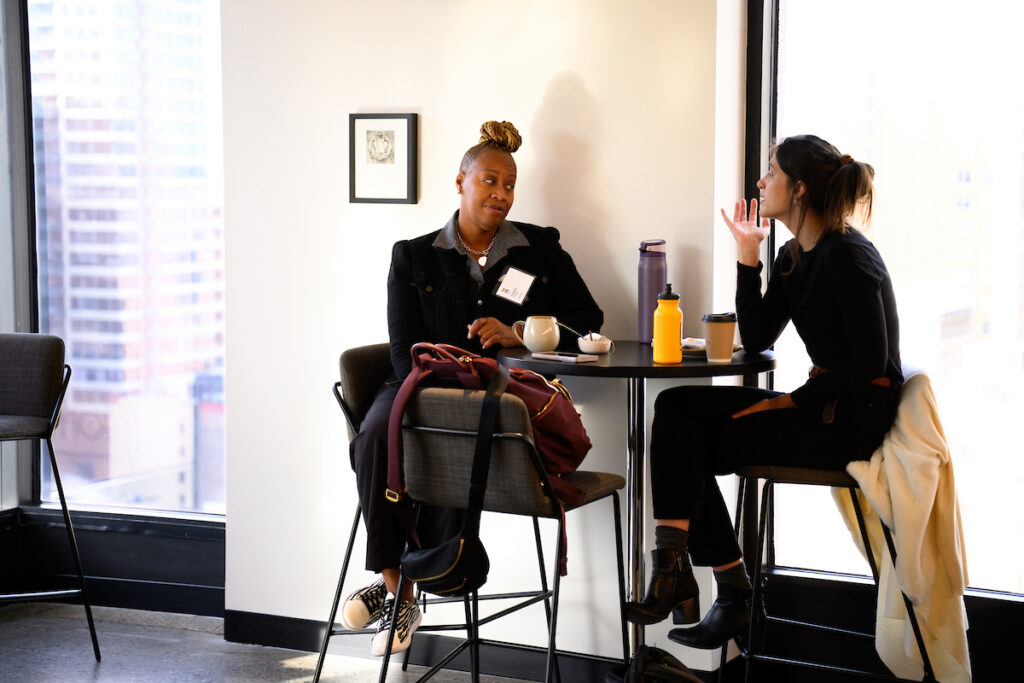
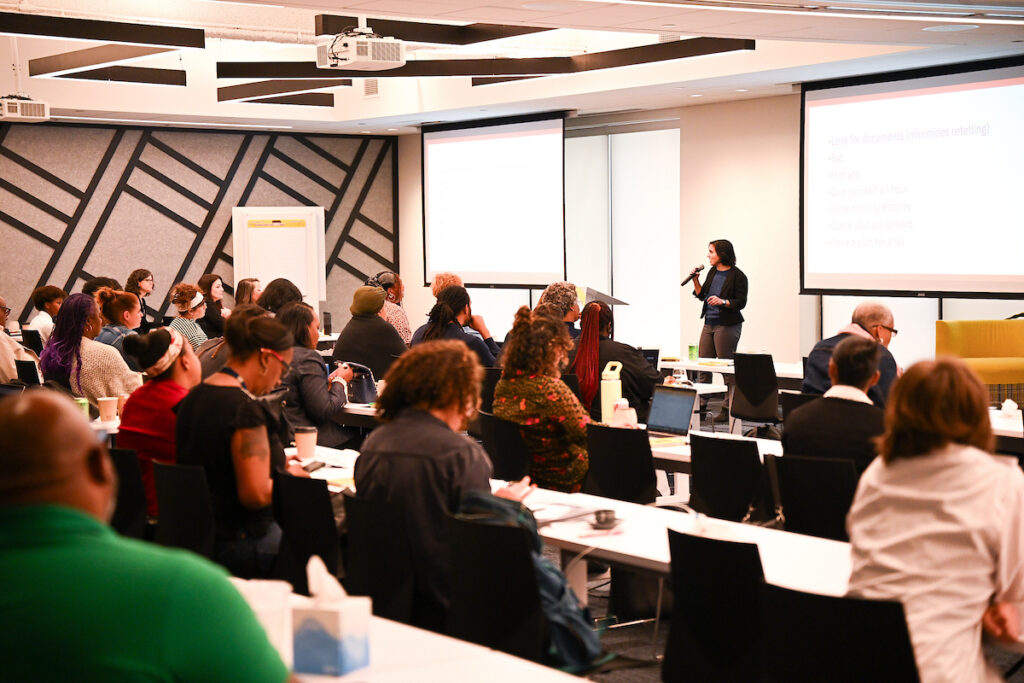
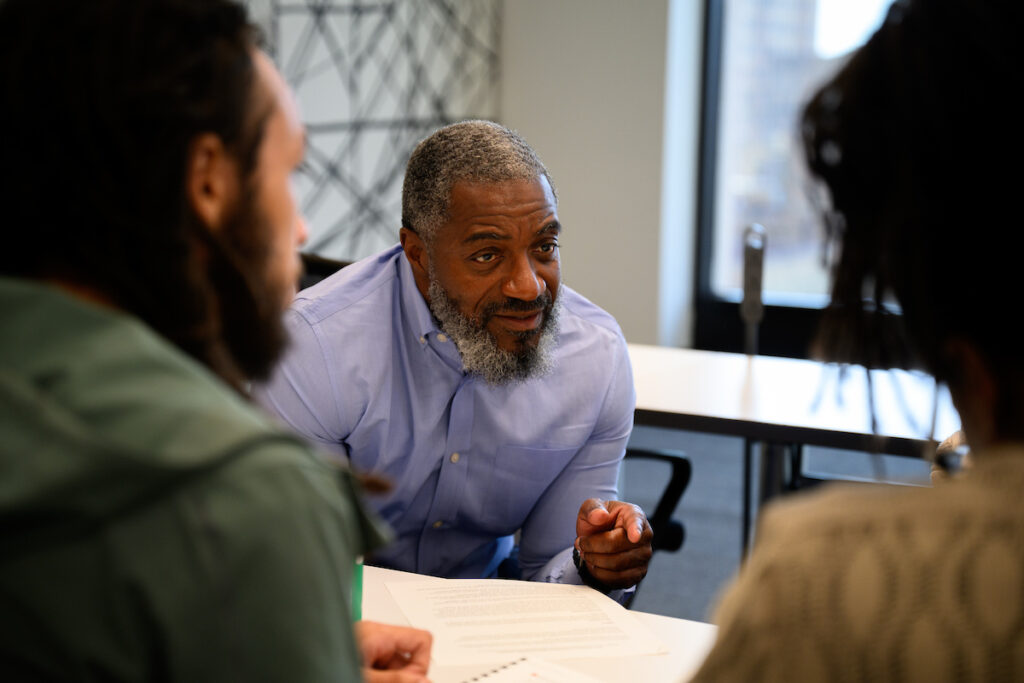
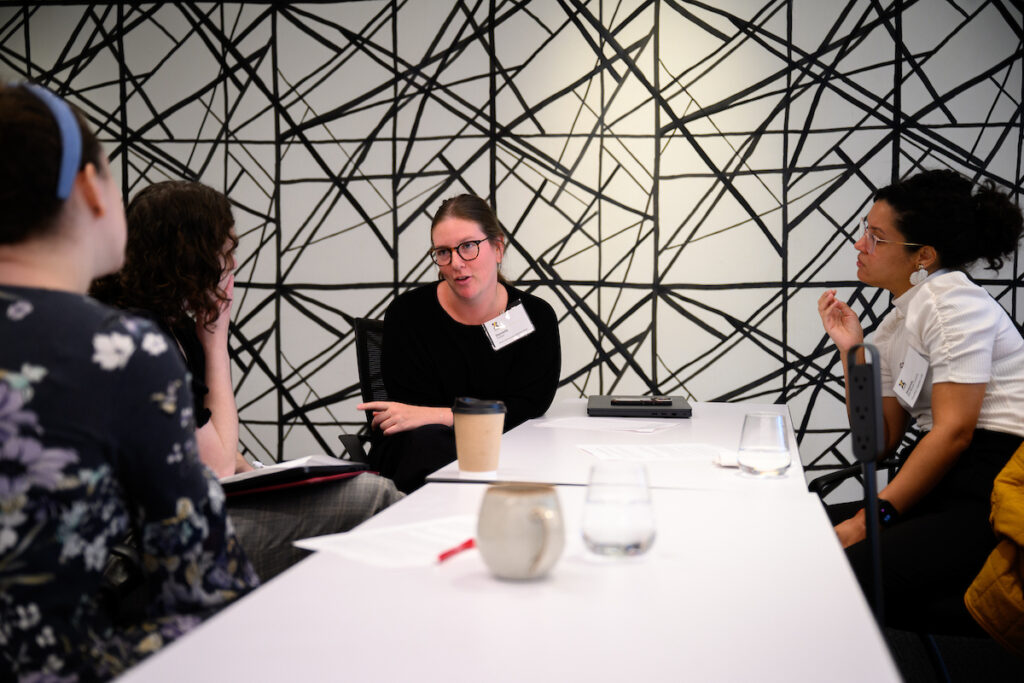
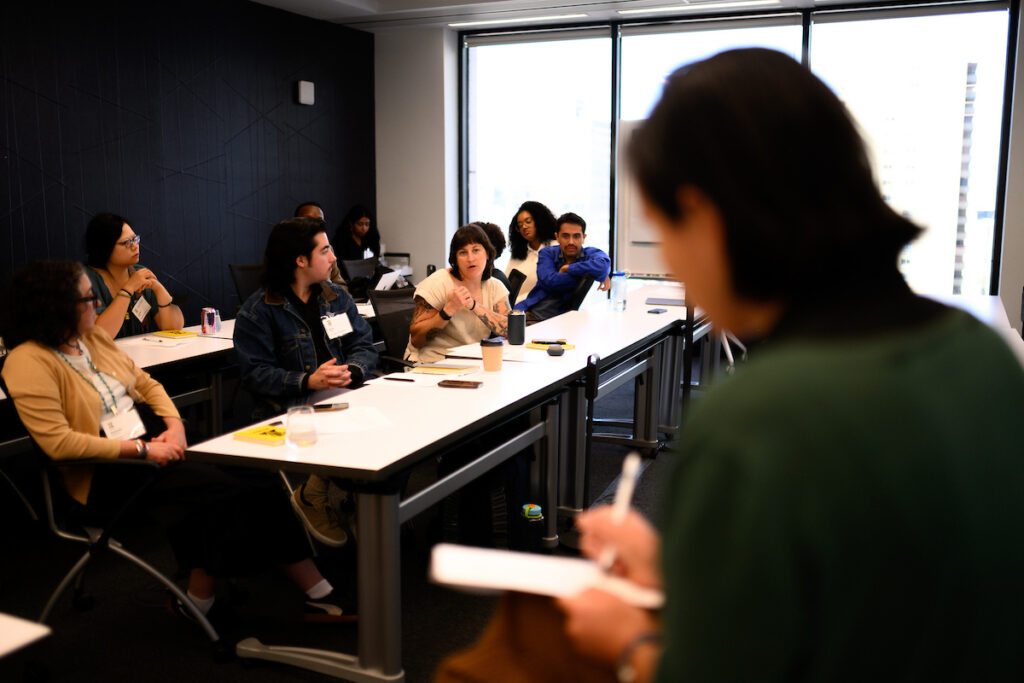
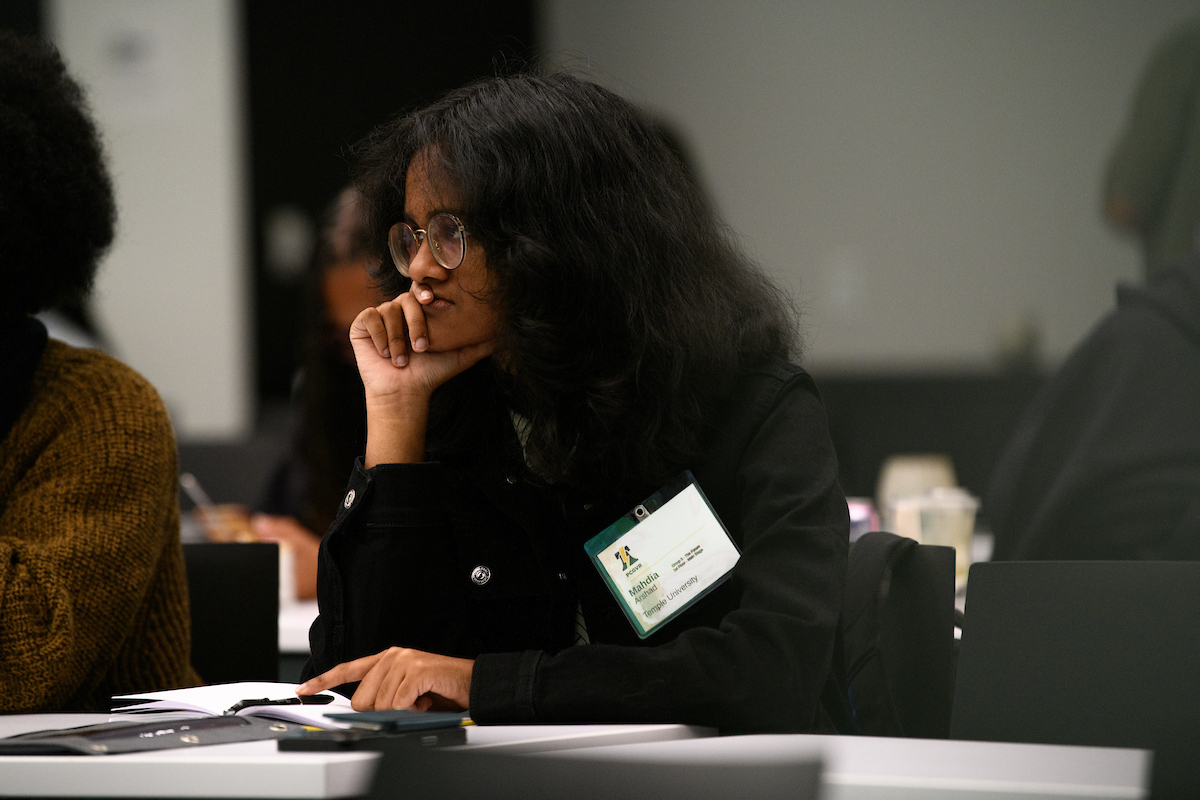
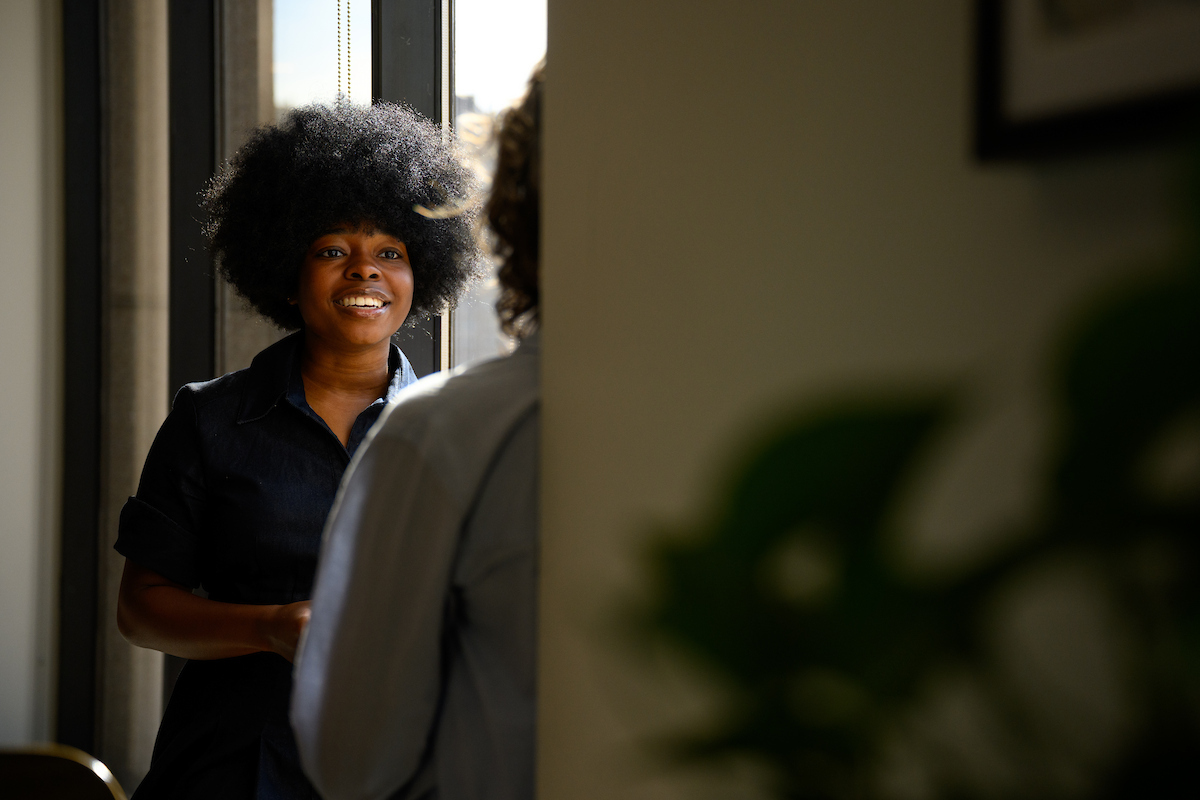
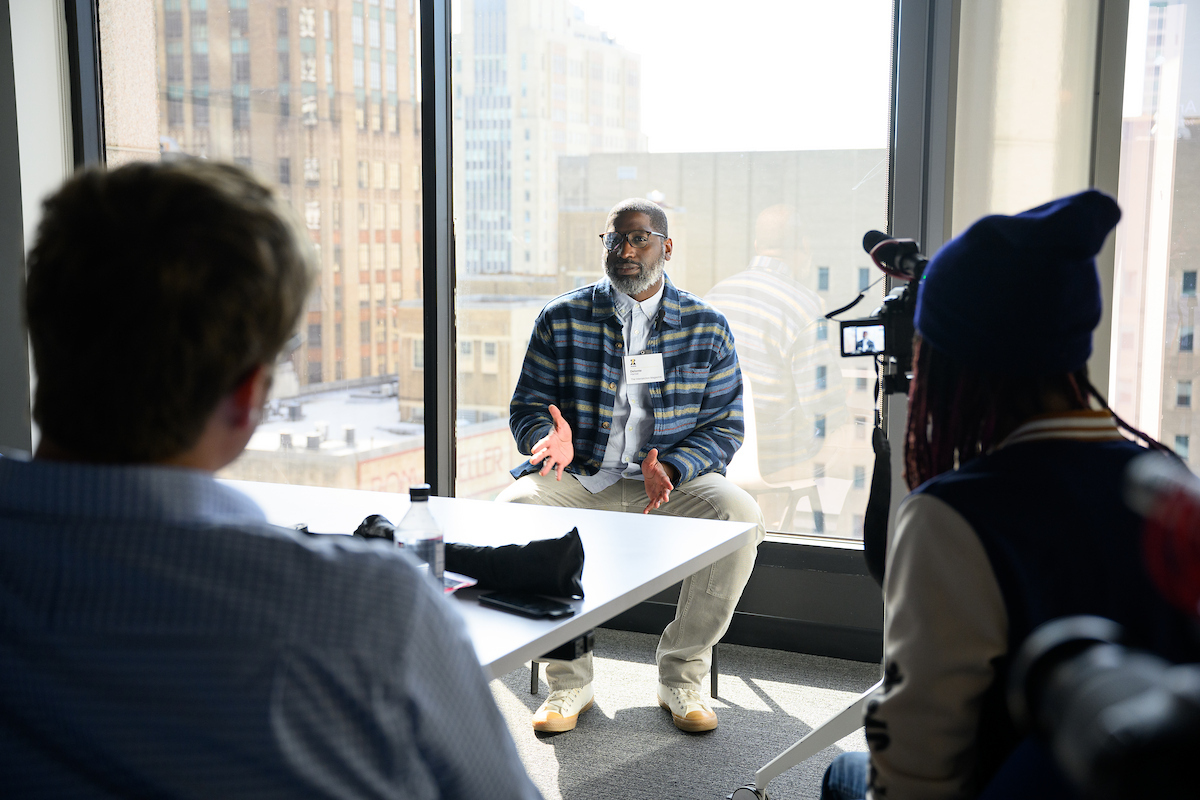
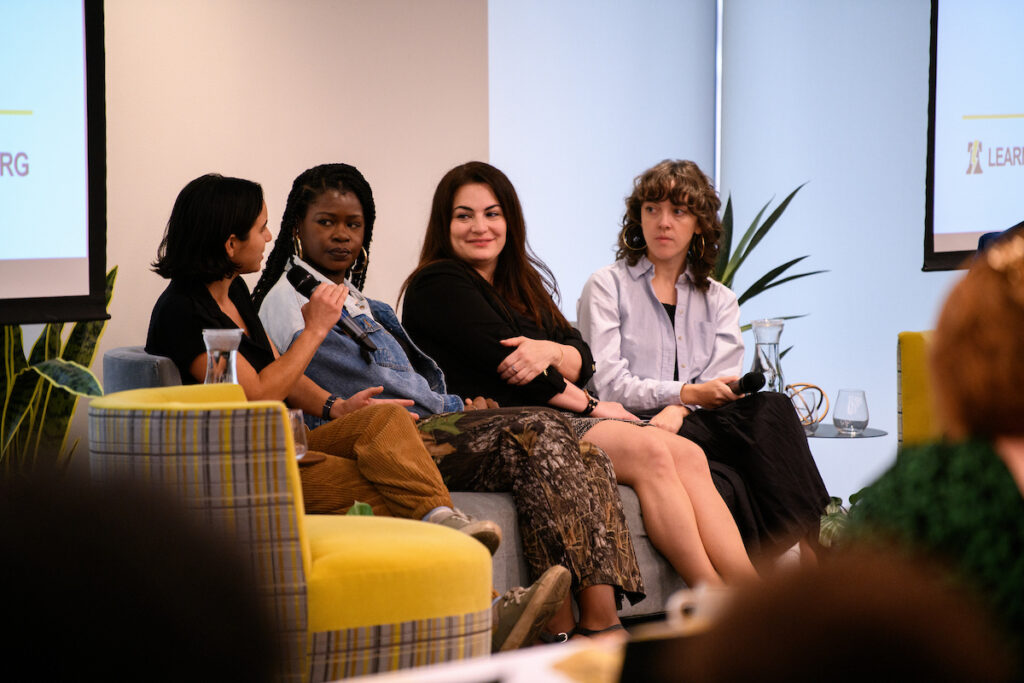
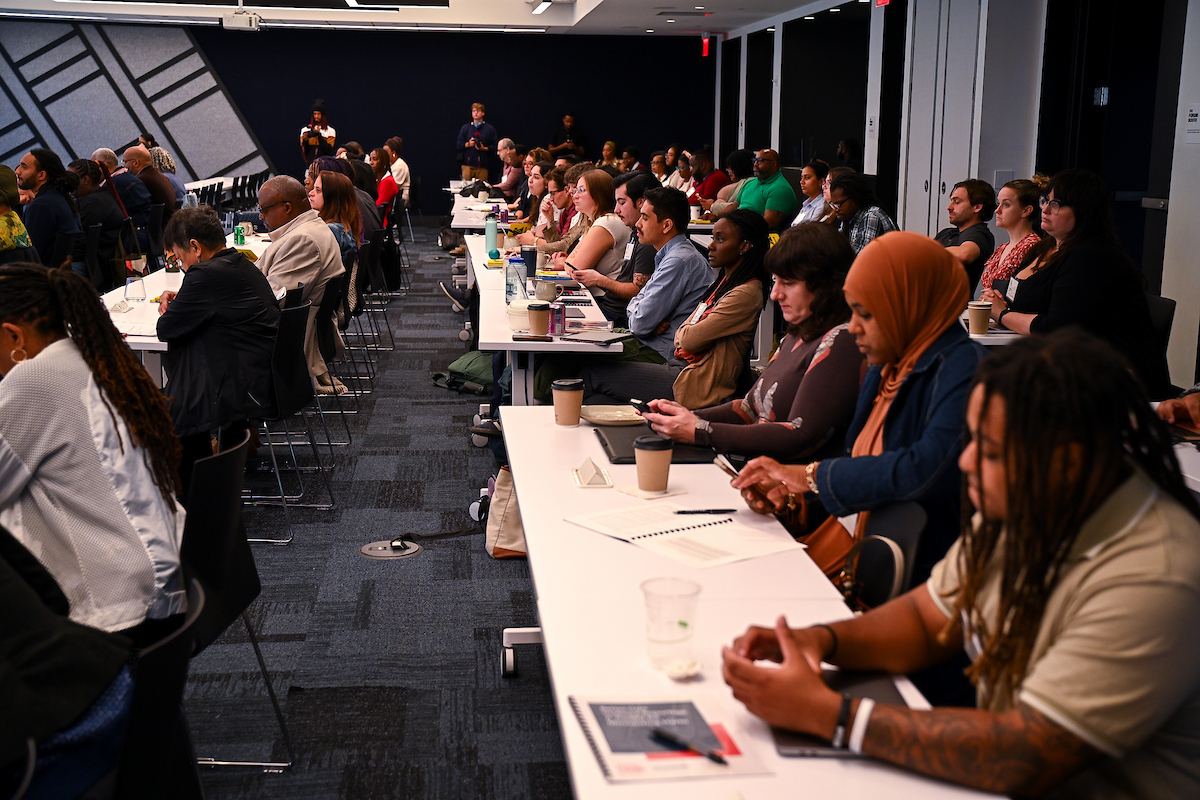
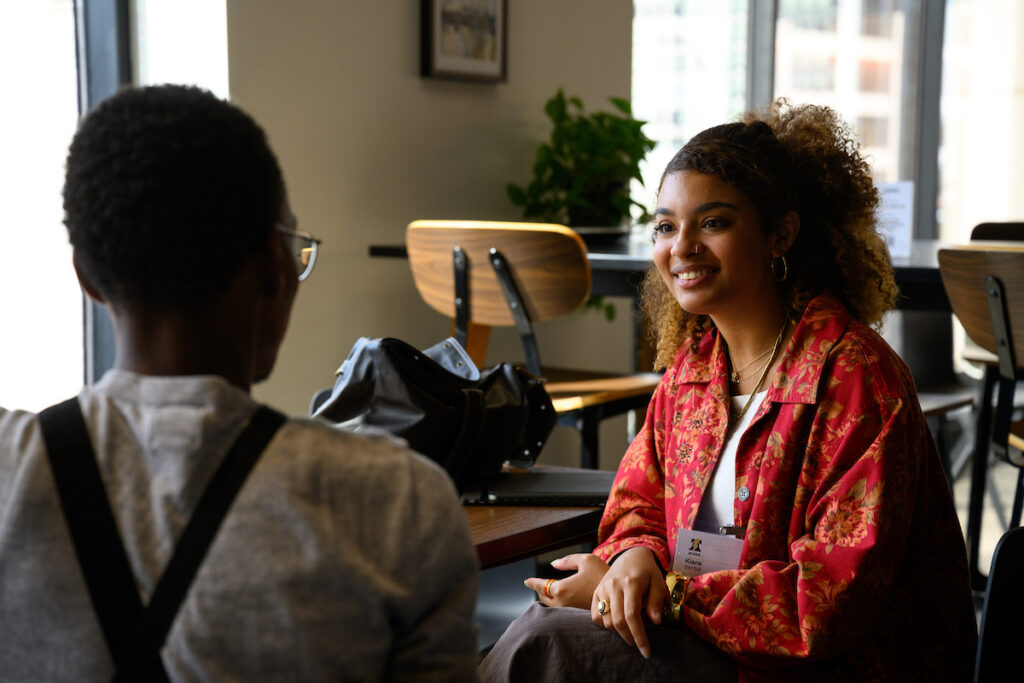
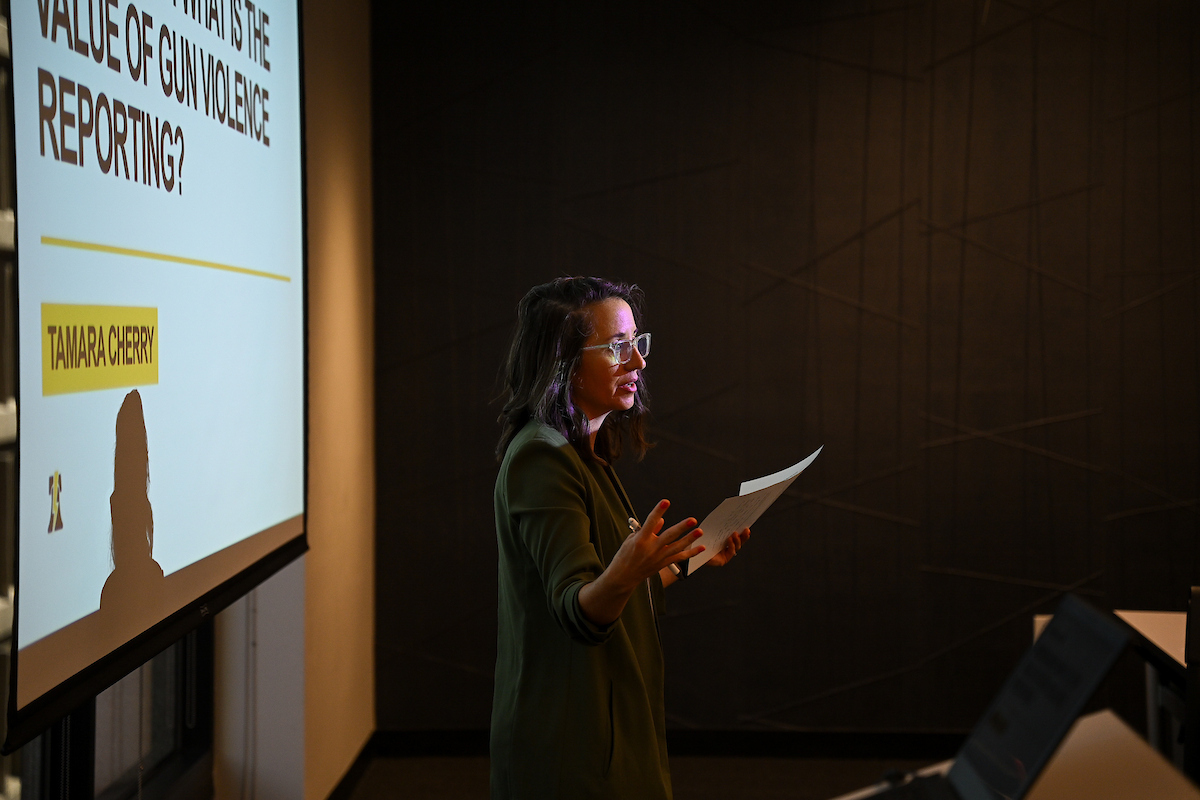
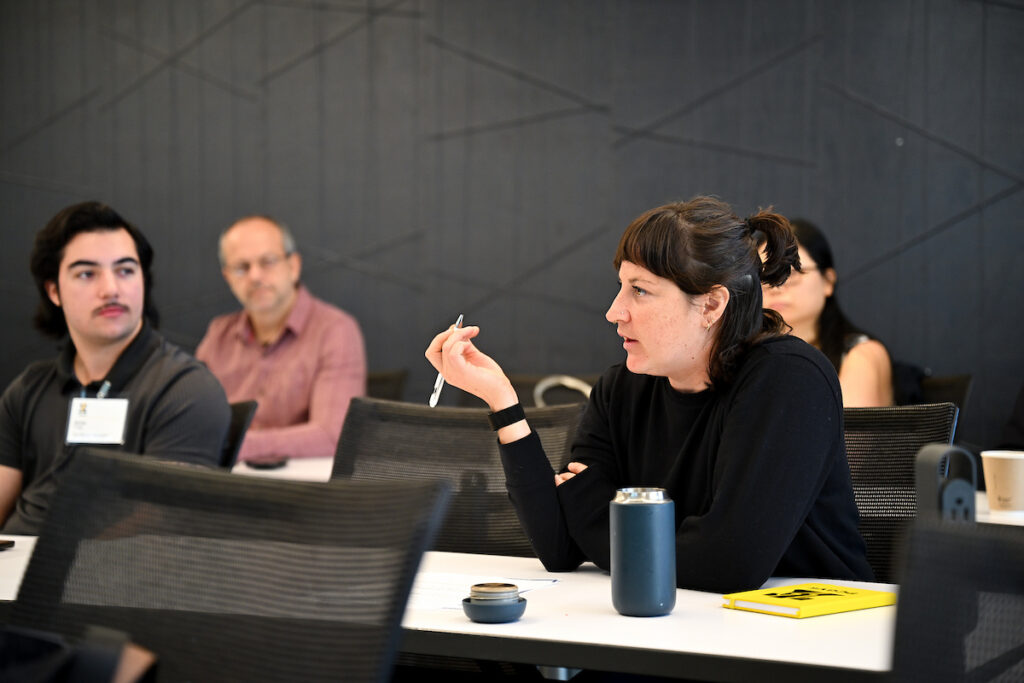
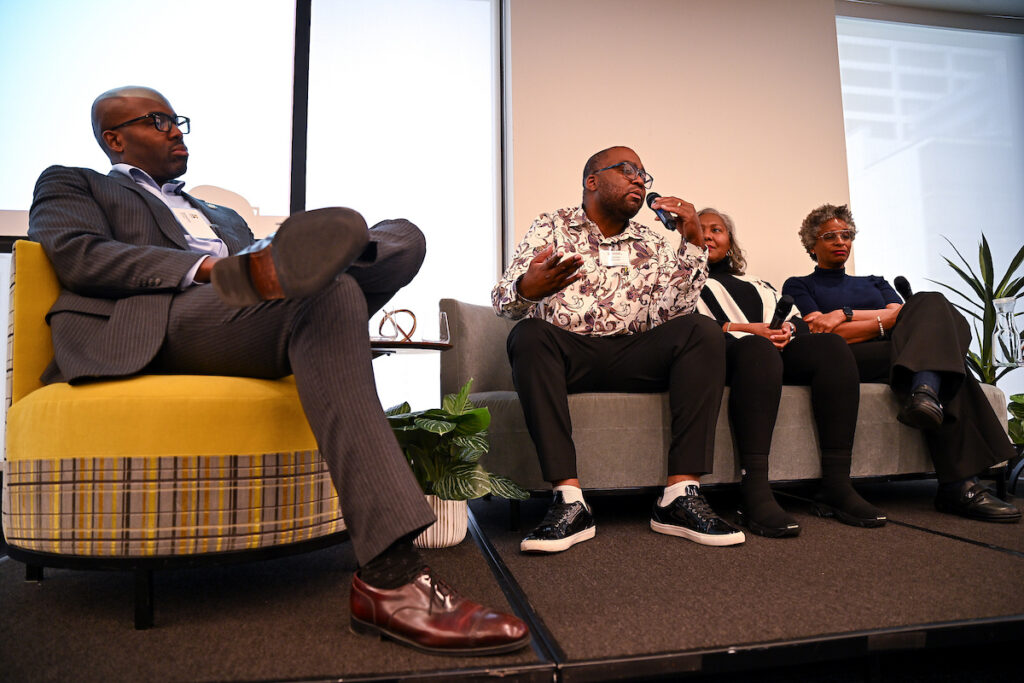
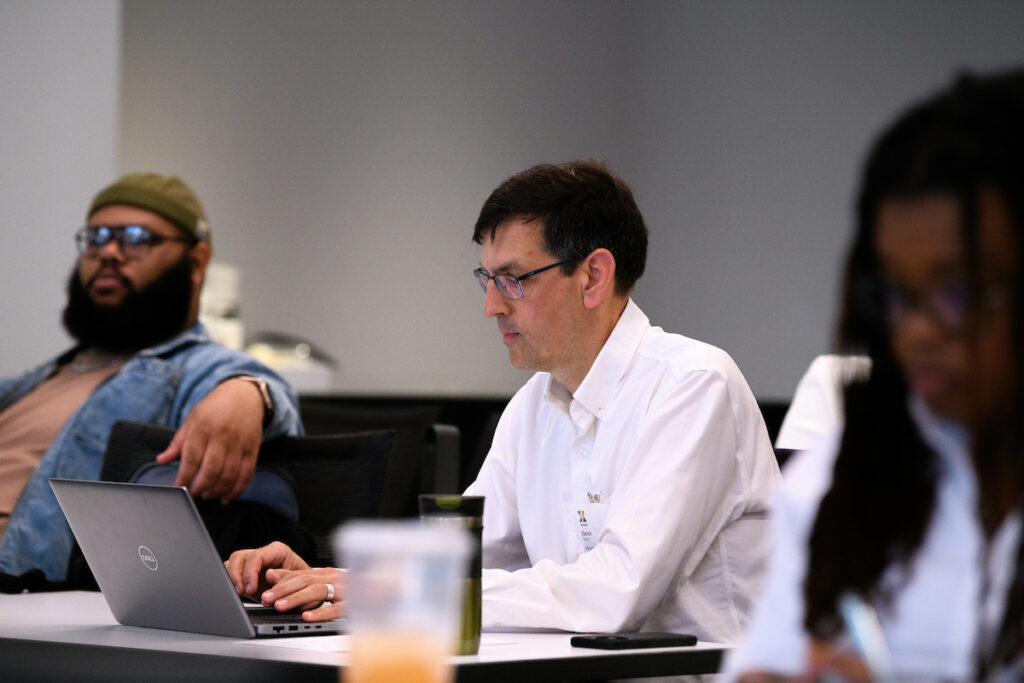
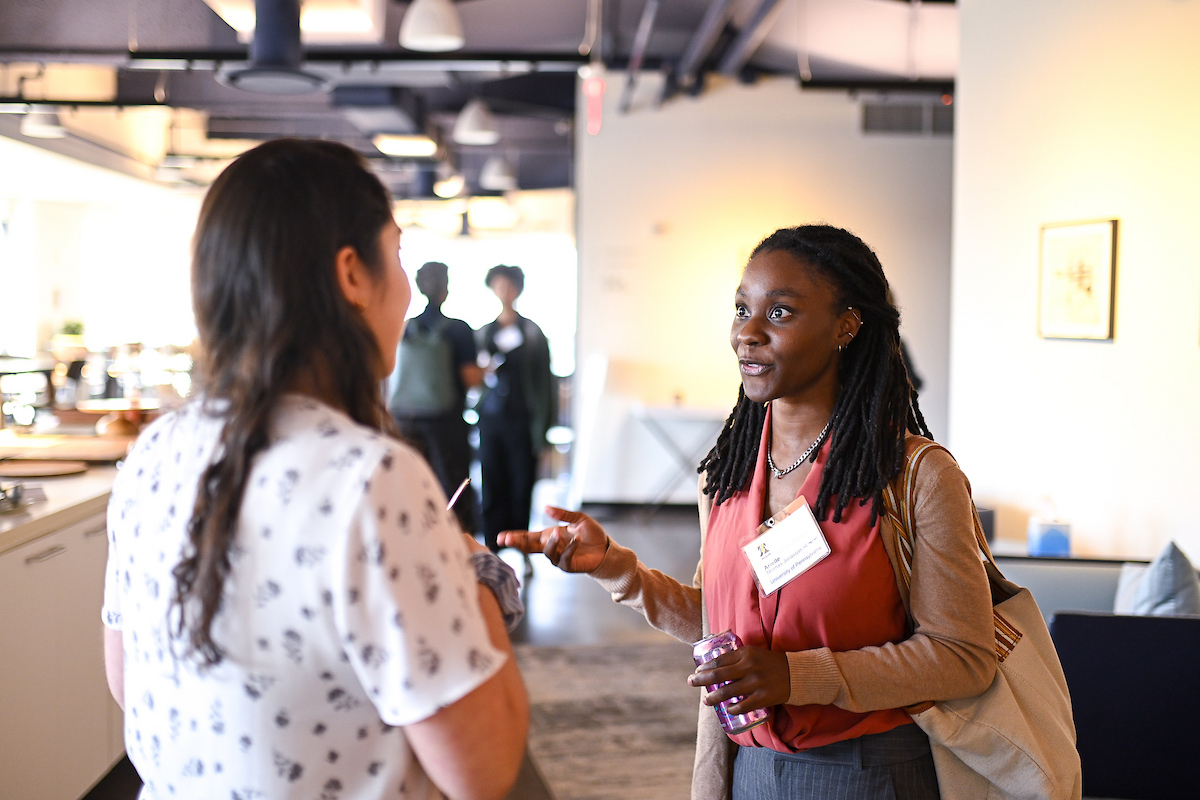
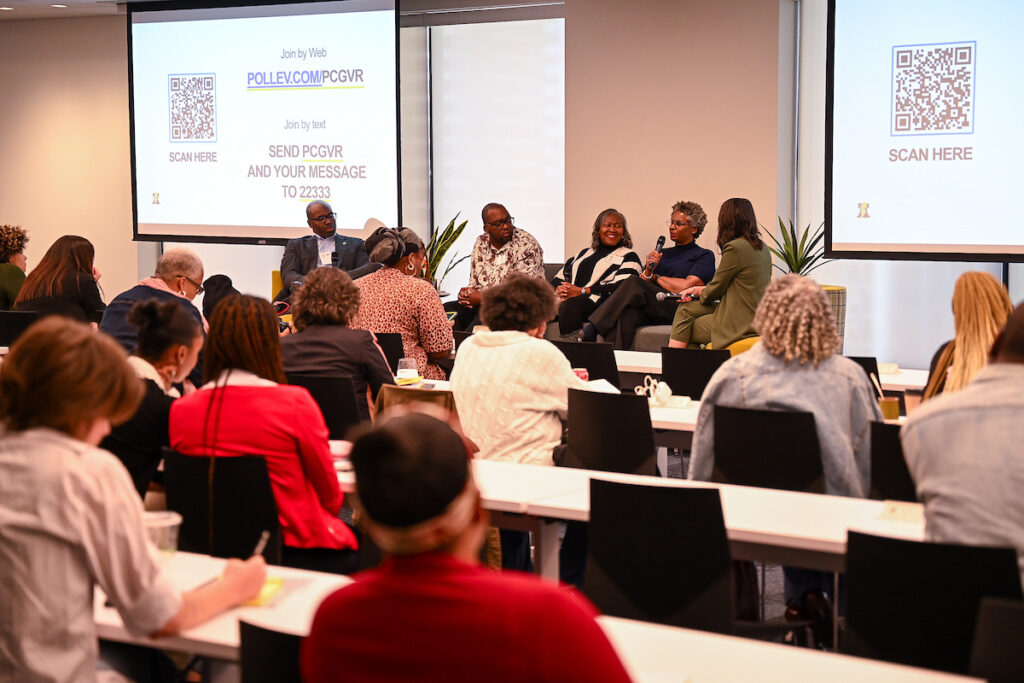
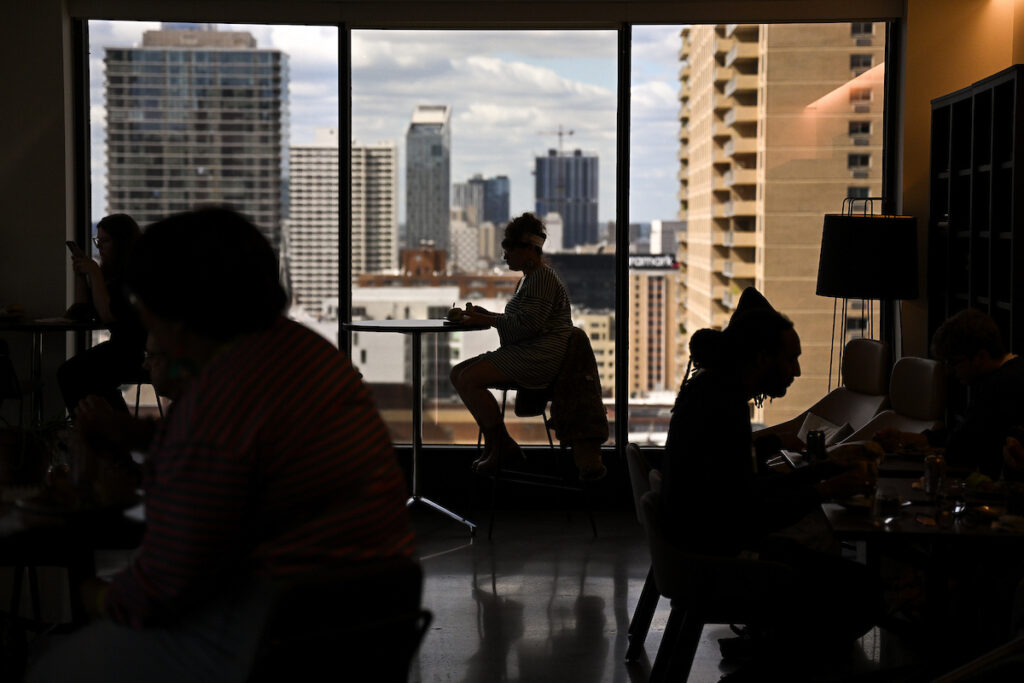
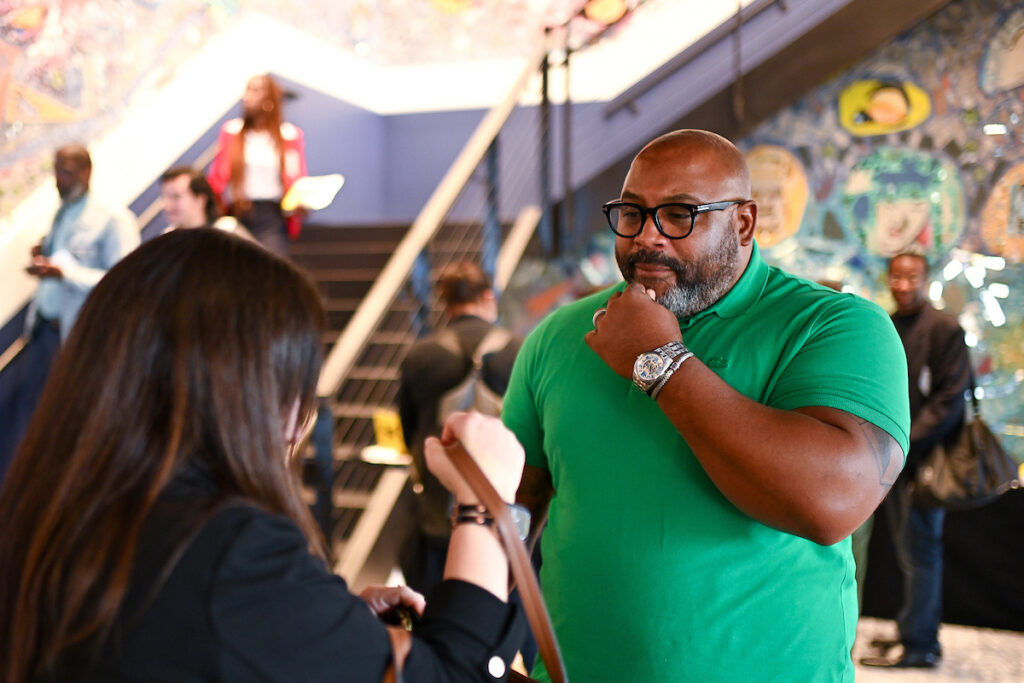
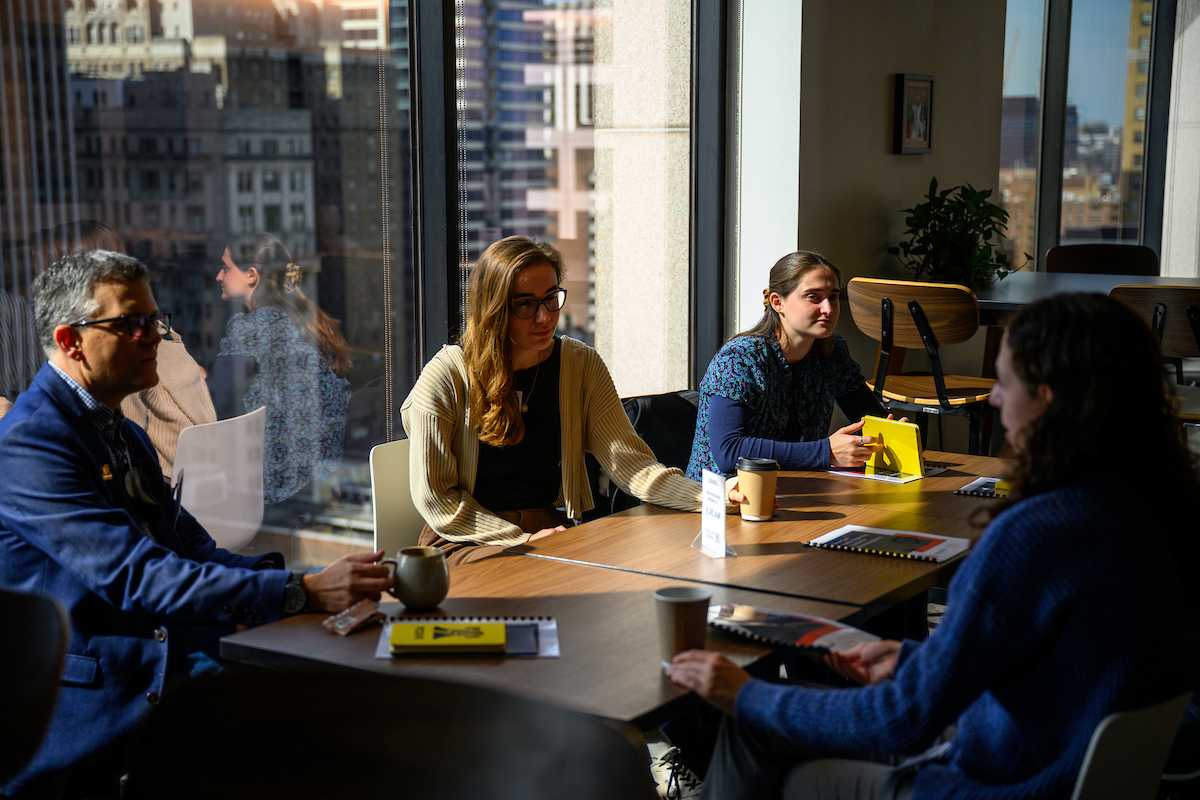
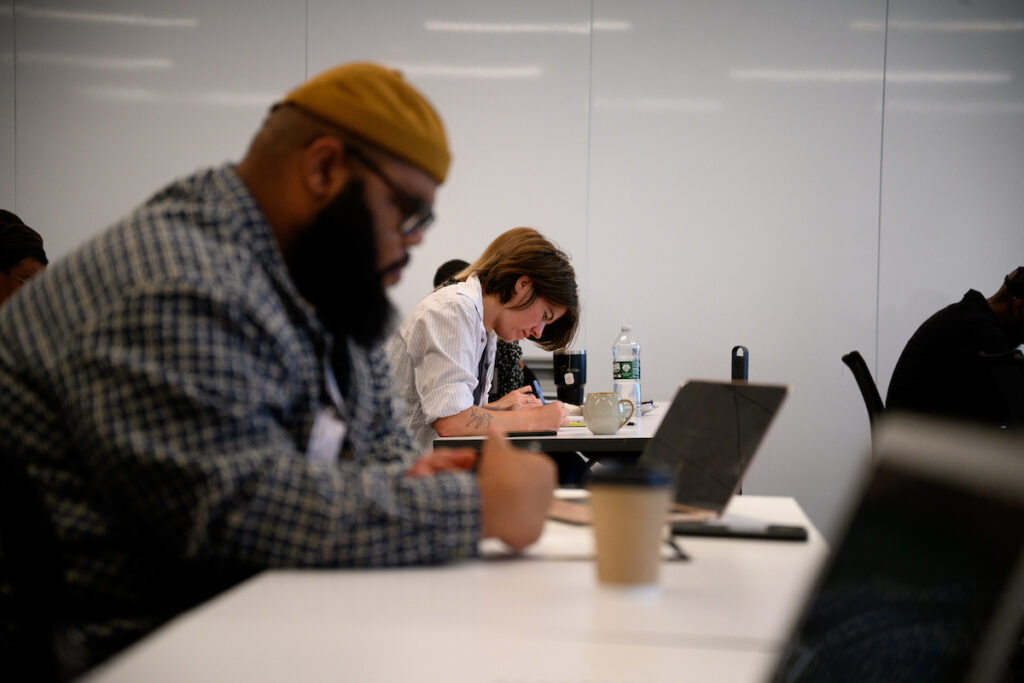
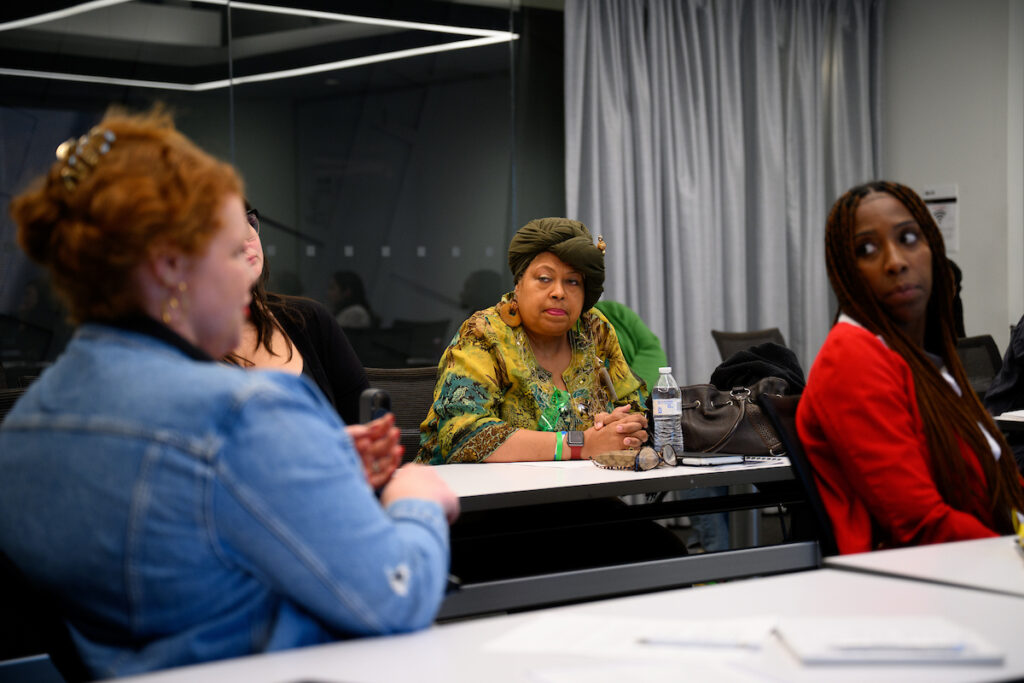
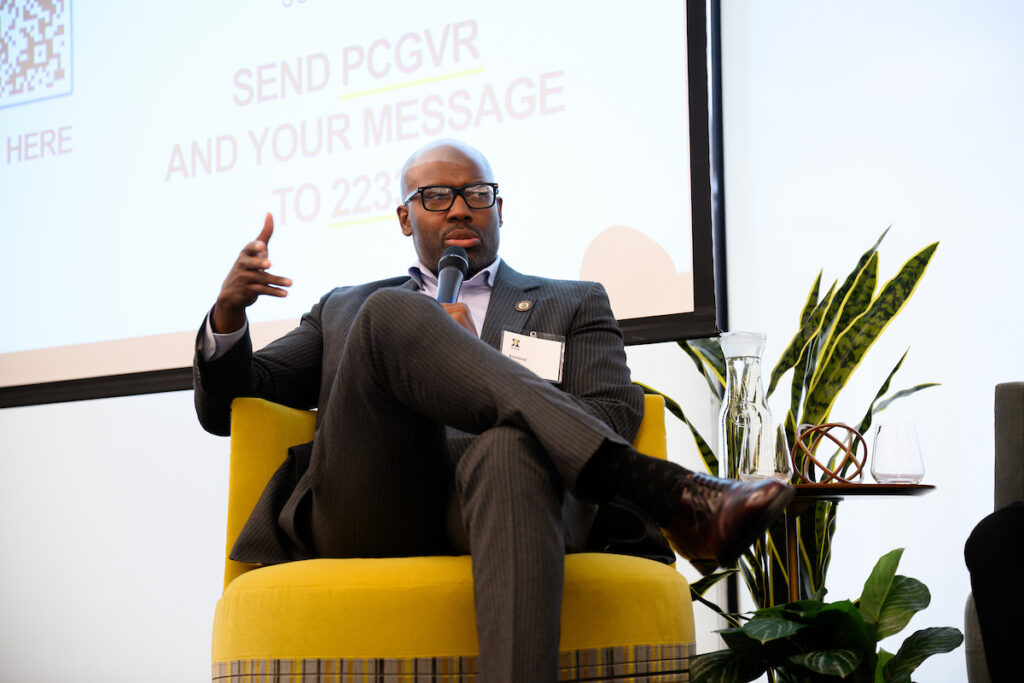
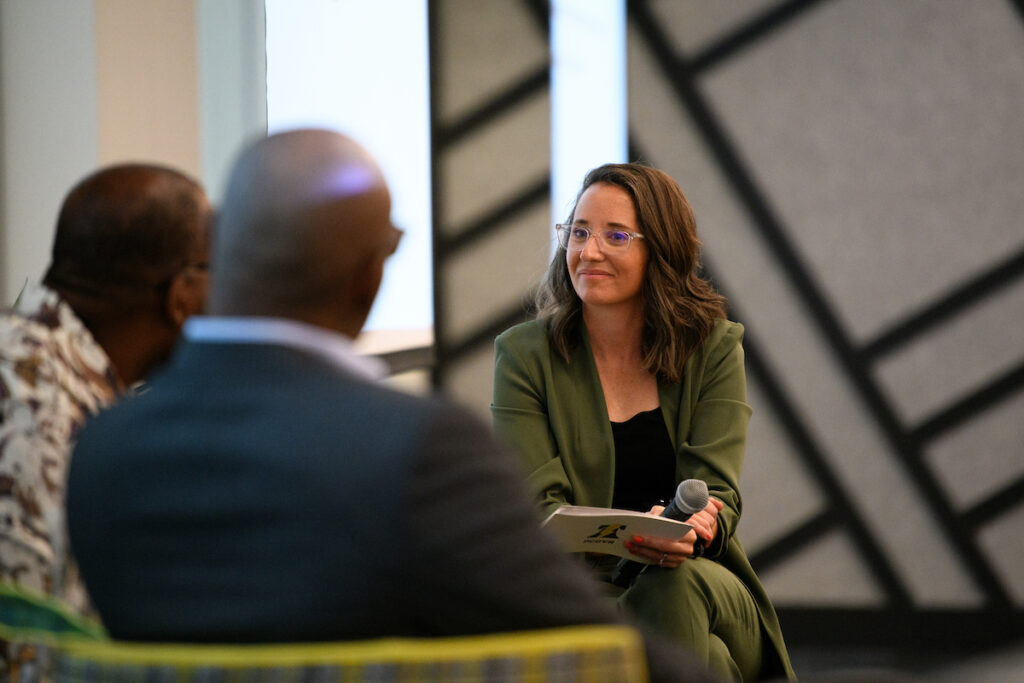
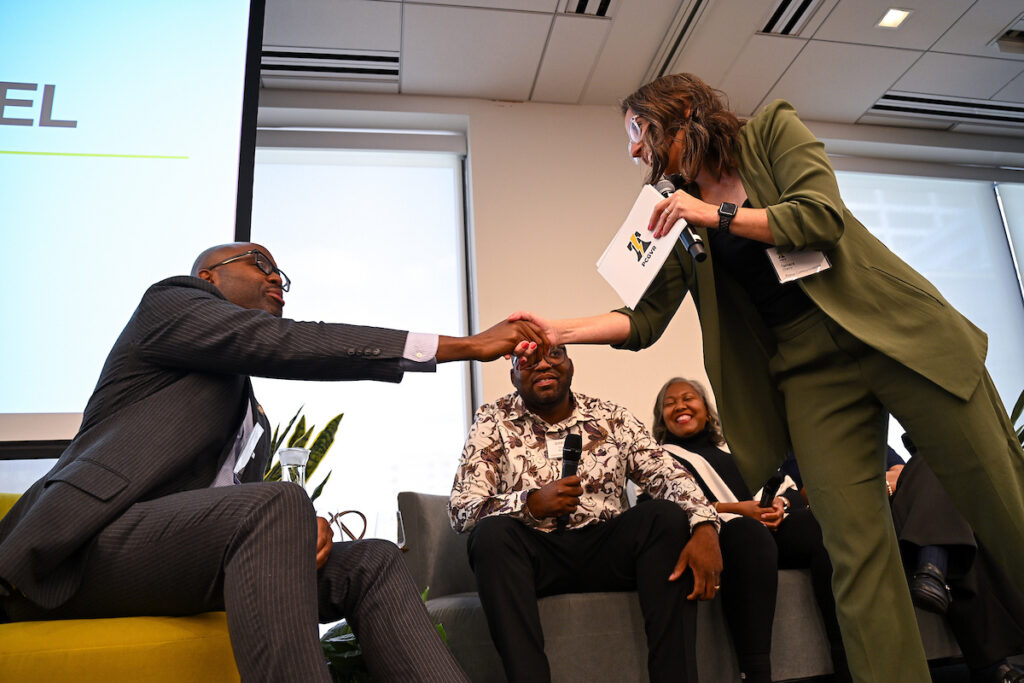
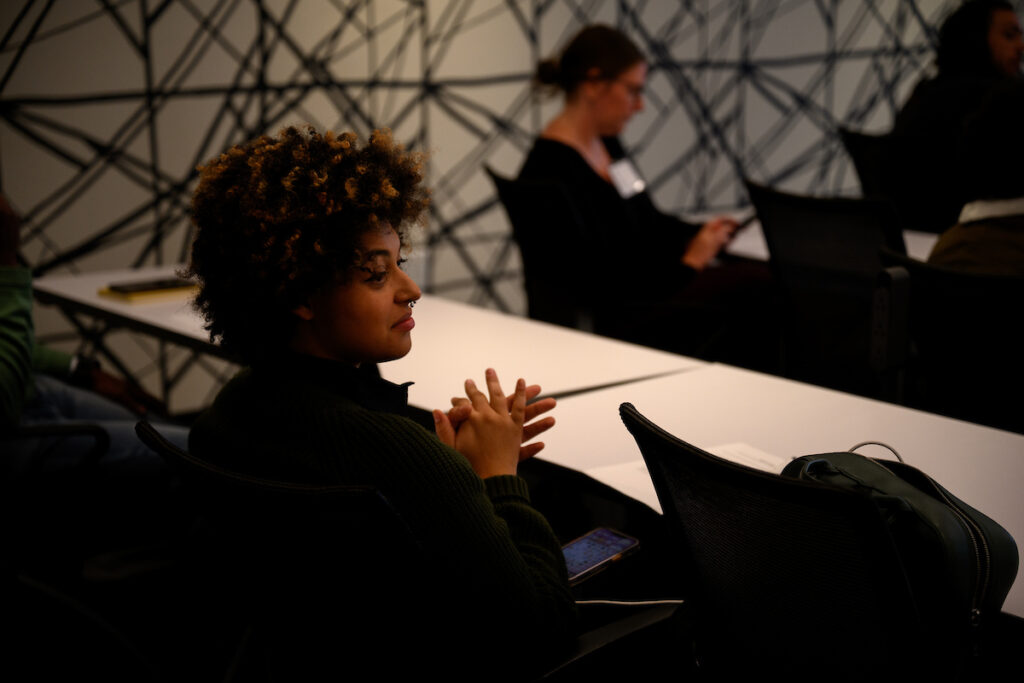
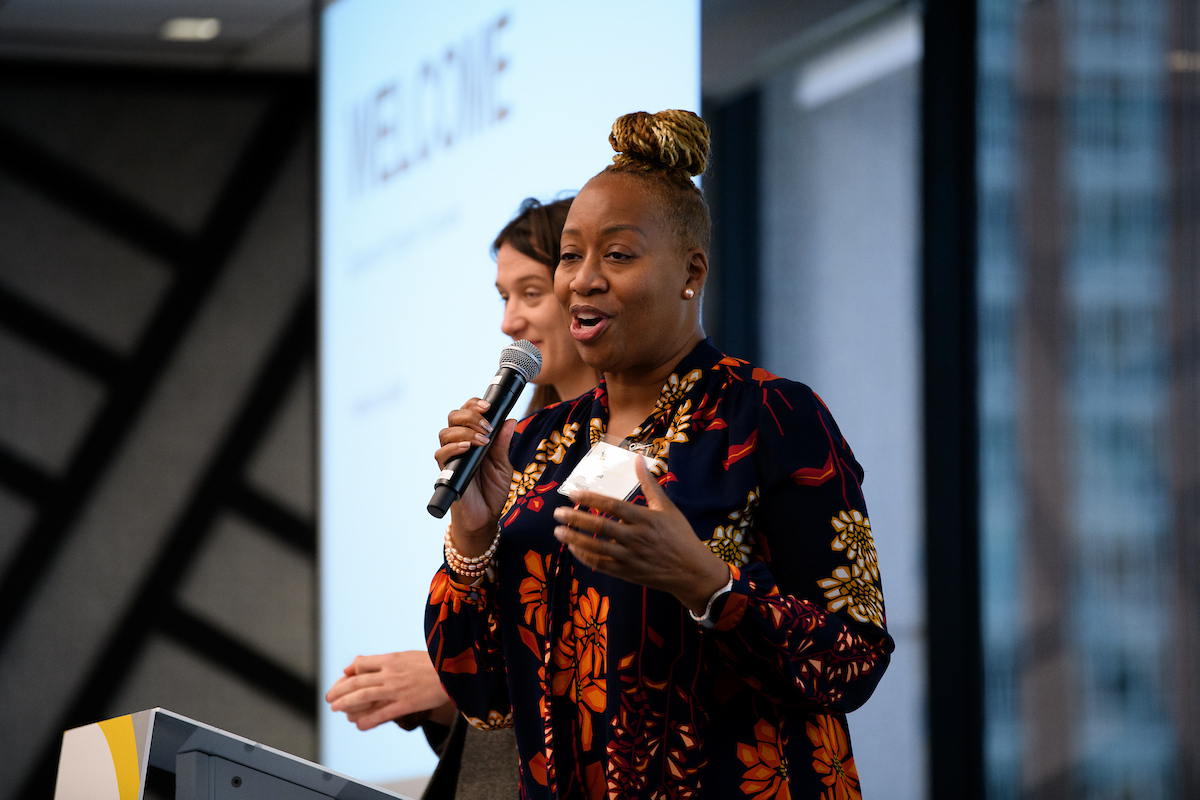
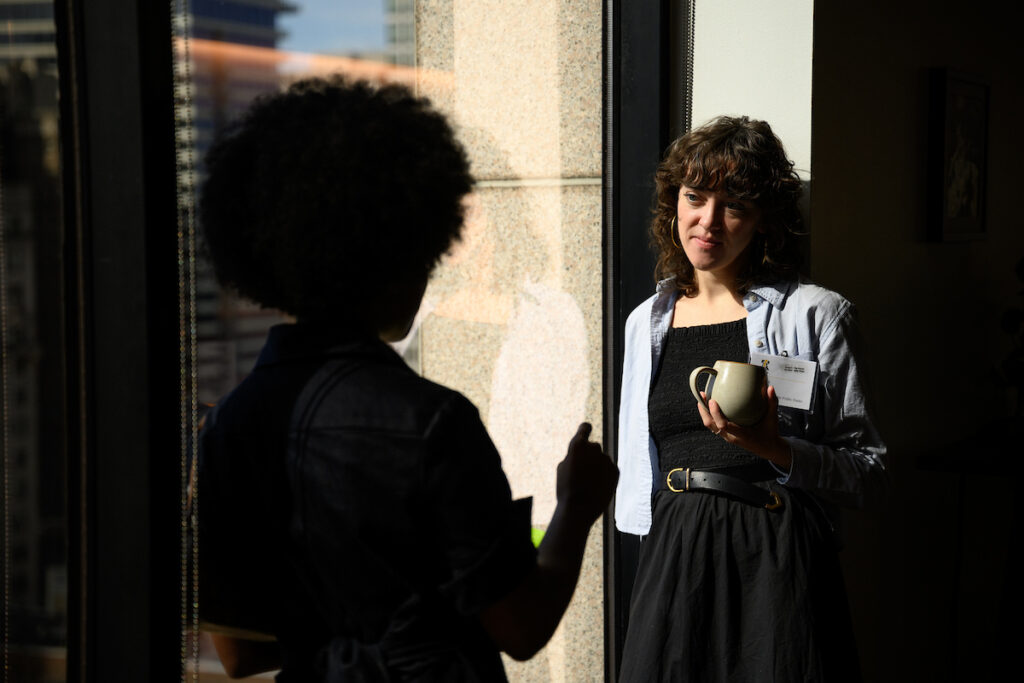
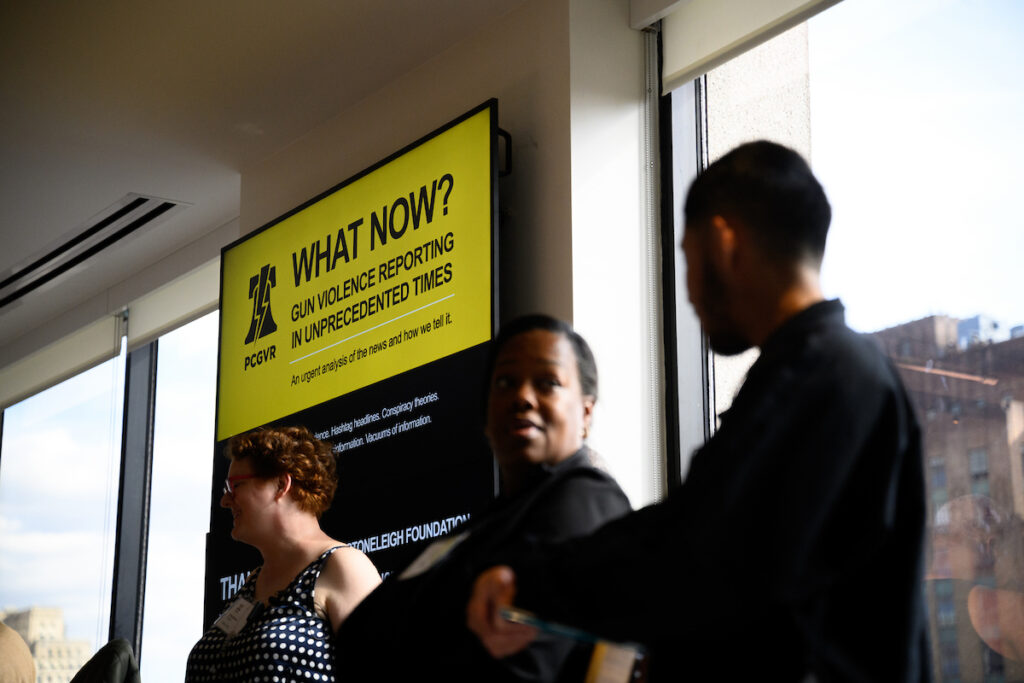
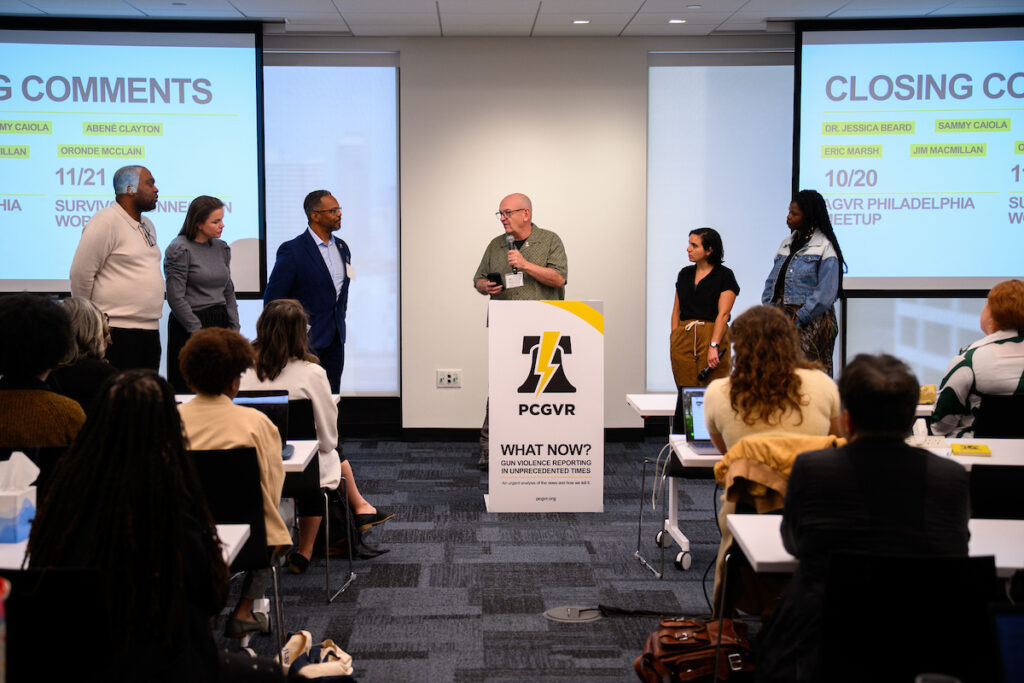
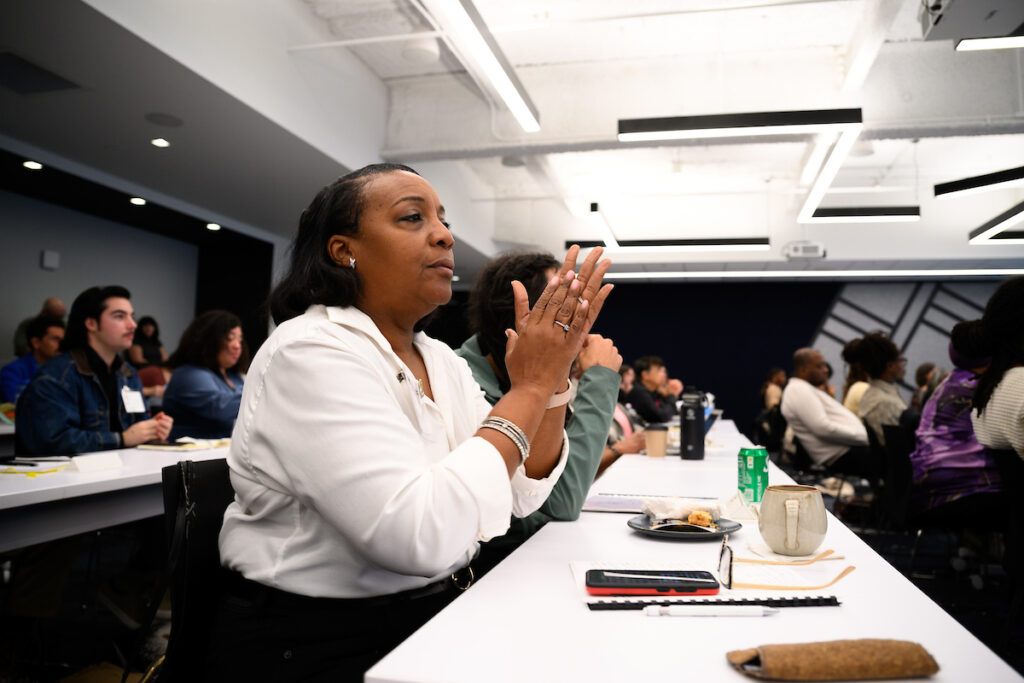
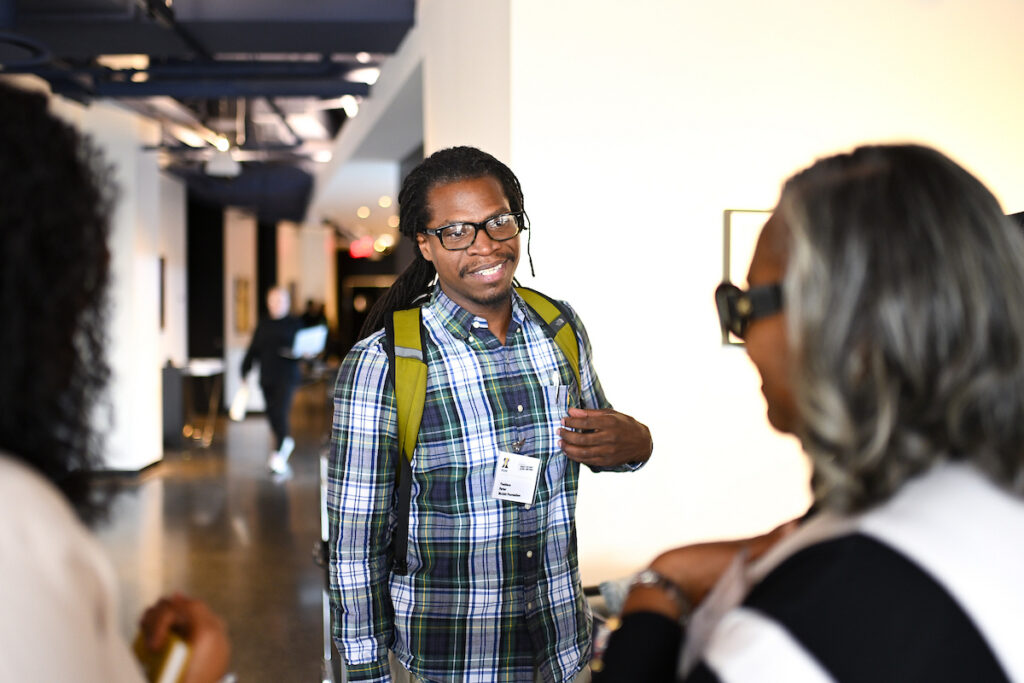
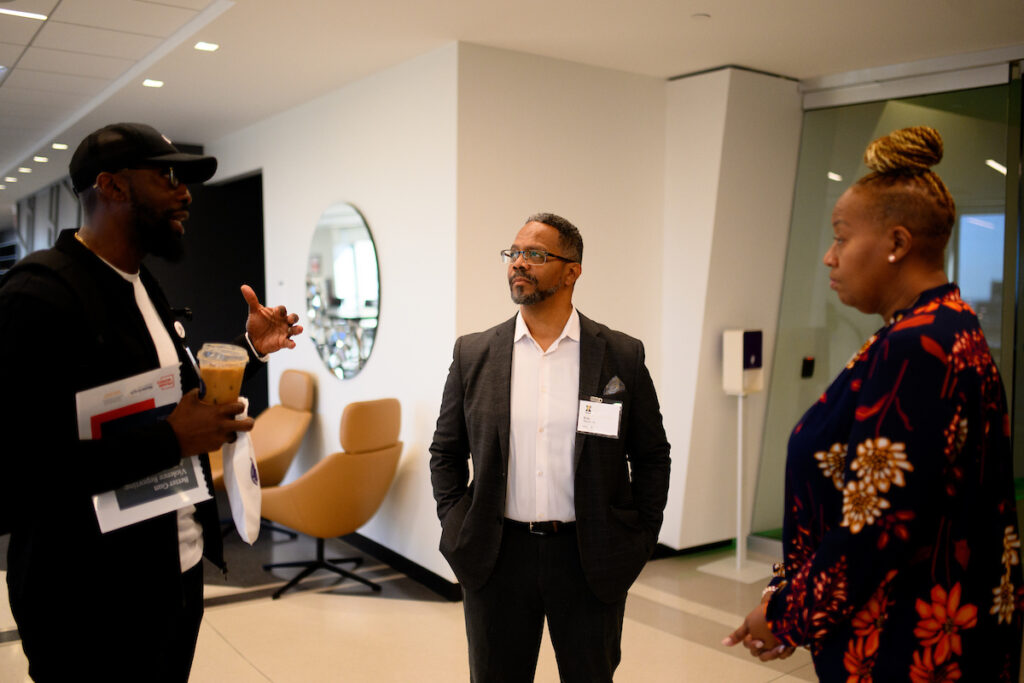
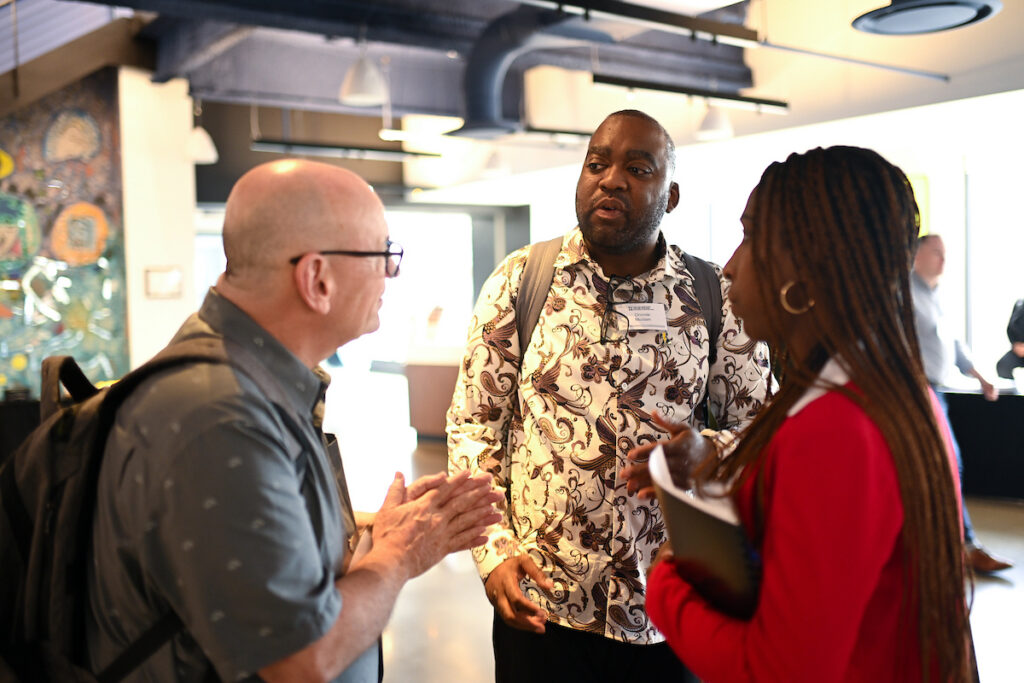
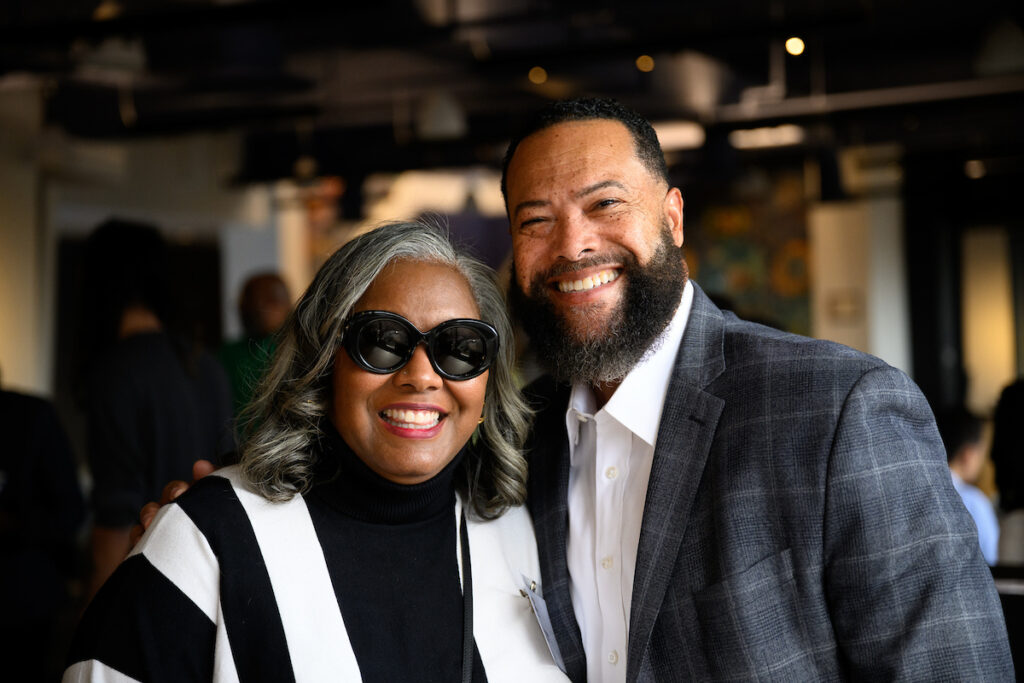
Nearly 120 journalists, researchers, prevention professionals and experts from the survivor community gathered October 2–3, 2025 in Philadelphia for our first national conference in six years: What Now? Gun Violence Reporting in Unprecedented Times. More than half earned PCGVR Certification in Gun Violence Prevention Reporting. Photographs by Kriston Jae Bethel for PCGVR
At The Philadelphia Center for Gun Violence Reporting, we are changing America’s gun violence narrative by working with journalists and public health experts, victims and survivors, and the many community and academic groups that are familiar with the root causes of gun violence and its research-backed solutions.
Every once in a while, we have the opportunity to work with all of these stakeholders at once, in the same space, with the same goal of preventing gun violence by changing the way the stories of gun violence are told. And it is, in a word, magical.
Such was the case at our recent national conference, What Now? Gun Violence Reporting in Unprecedented Times, produced in partnership with our recently formed Association of Gun Violence Reporters (AGVR).
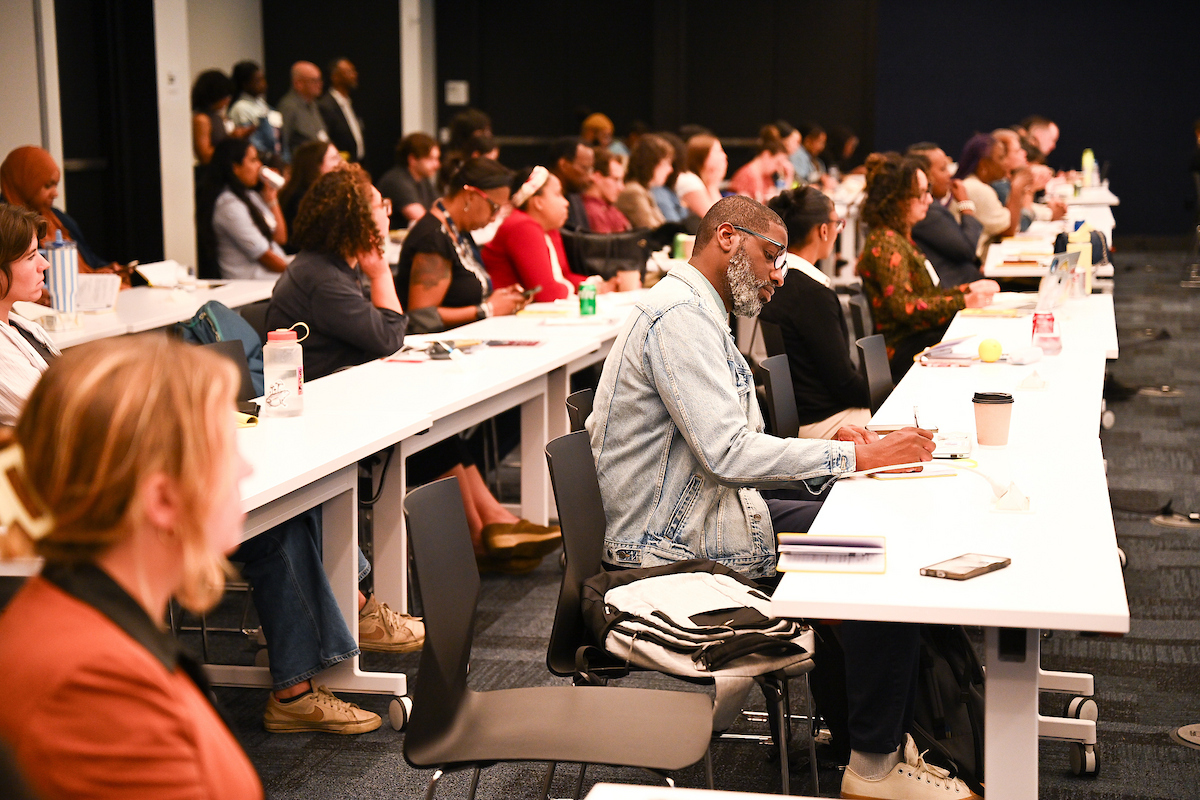
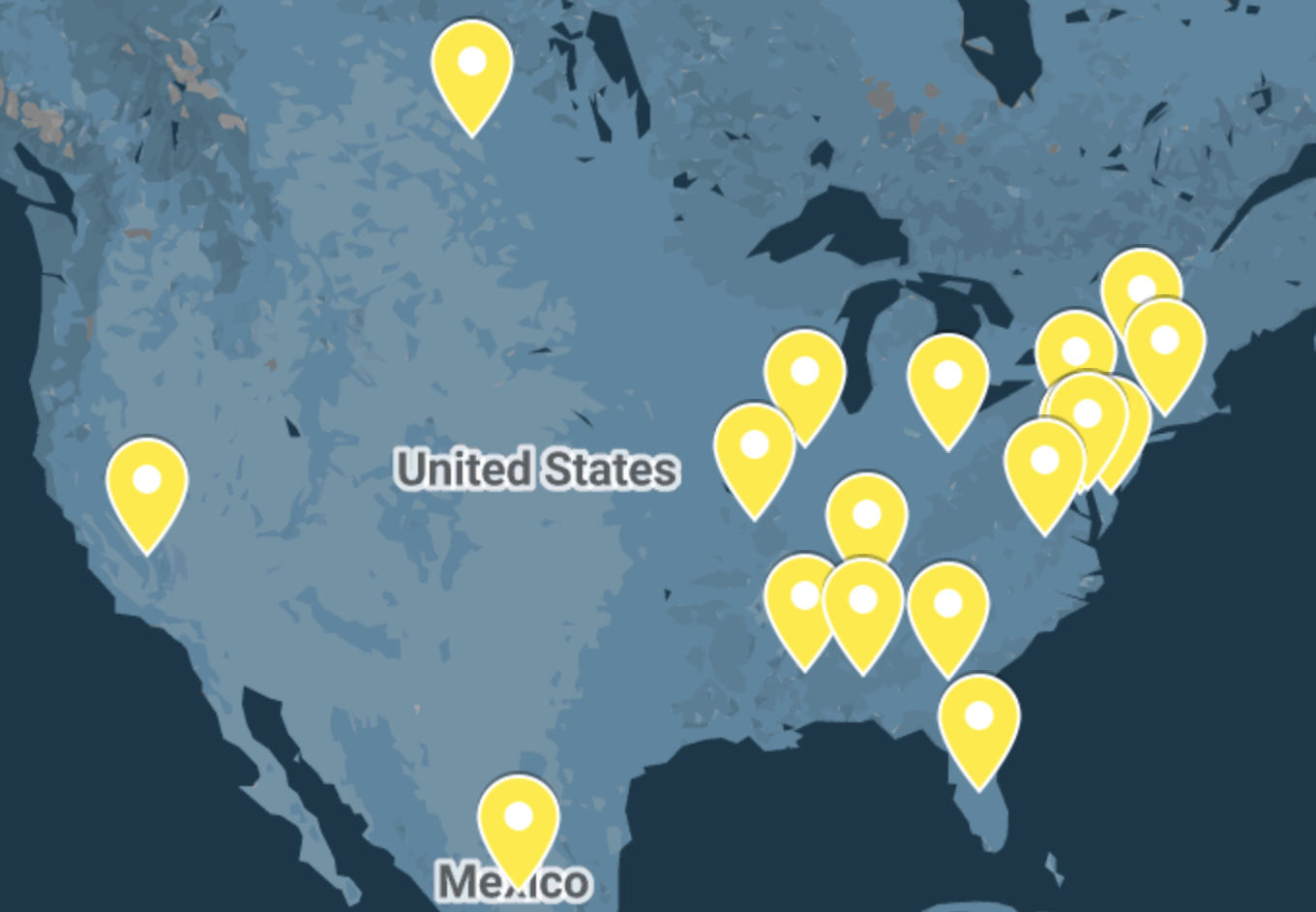
Nearly 120 people from 18 U.S. states, plus the District of Columbia and Canada and Mexico, gathered in downtown Philadelphia to listen and learn from not only our distinguished speakers, but each other.
Over two days, this engaged group heard from 18 presenters in a rich spread of presentations and workshops. Some attendees came to listen, learn, and connect. More than half of them completed our Gun Violence Prevention Reporting Certification Workshop.
The multidisciplinary, intersectional work of PCGVR was on powerful display.
SHARING THEIR EXPERIENCES
Participants discuss “What Now? Gun Violence Reporting in Unprecedented Times,” our 2025 national conference and gun violence prevention reporting certification workshop. Video by the The 5 Shorts Project.
PLENARY SESSIONS PLANT VALUABLE SEEDS
• Dr. H. Jean Wright’s keynote address showed us the importance of moving beyond trauma-informed to trauma-responsive.
• Journalist and AGVR co-director Sammy Caiola outlined practical ways for journalists to support victims and survivors through trauma-informed reporting, and offered important tips for self-care.
• Professor Jennifer Midberry shared how the framing of stories can shape societal attitudes about gun violence, introducing our audience to the powerful concepts of solutions and peace journalism.
• Our Director of Research, trauma surgeon Dr. Jessica Beard, showed how traditional gun violence reporting can negatively impact individuals, communities and society, and what a public health framing of gun violence reporting might look like.
• And Cheryl Thompson-Morton from The Lenfest Institute for Journalism and Poynter Institute offered actionable steps for newsrooms to transform long-held and often harmful gun violence reporting practices.
Each plenary spurred a flurry of questions and observations that popped up in hallway conversations and networking opportunities between sessions.
BREAKOUTS CREATE SPACE FOR COMMUNITY
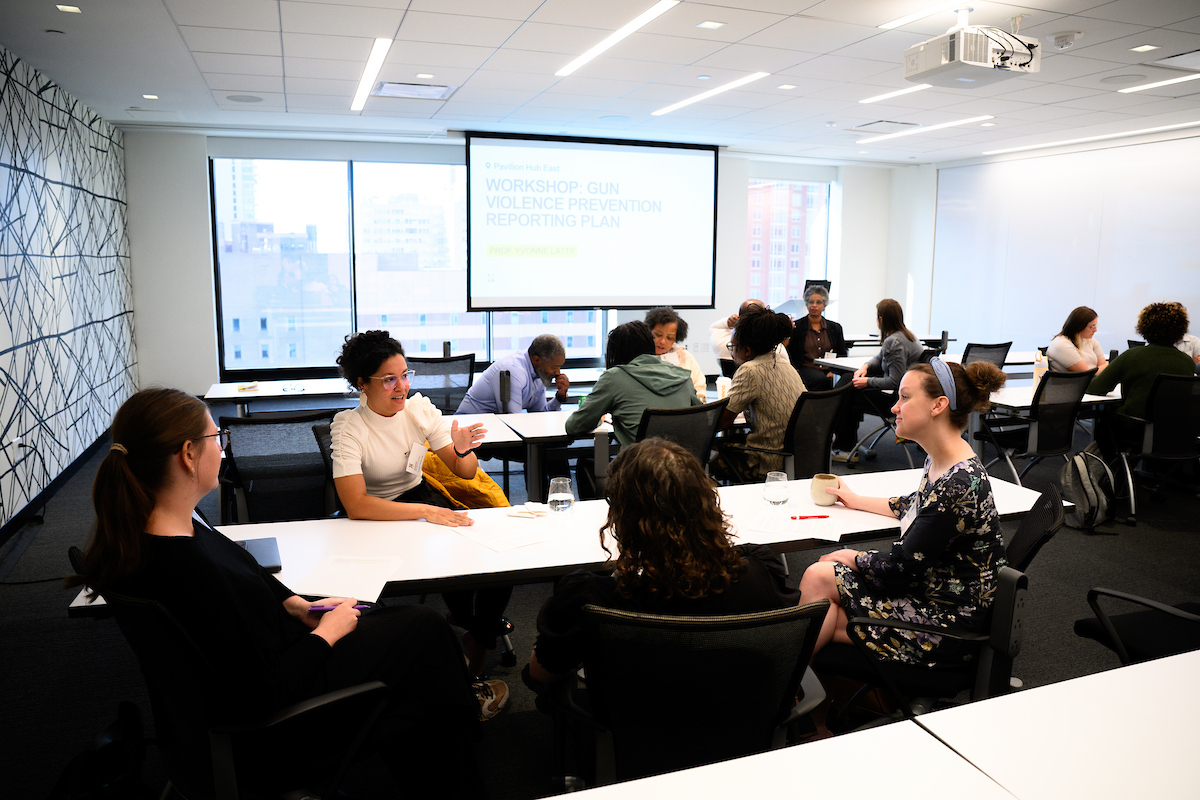
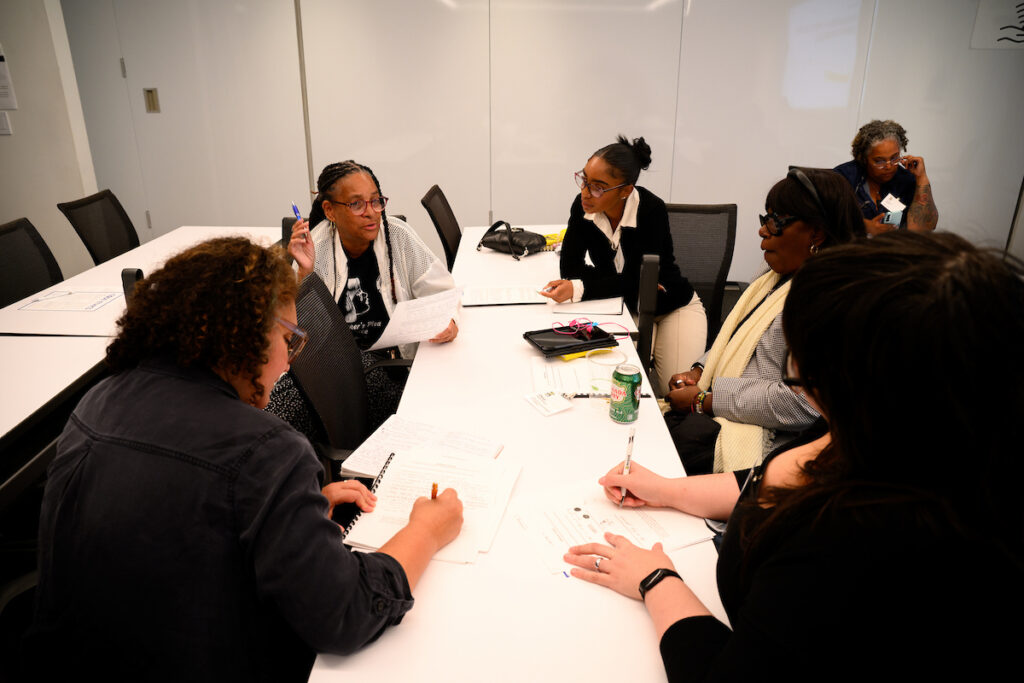
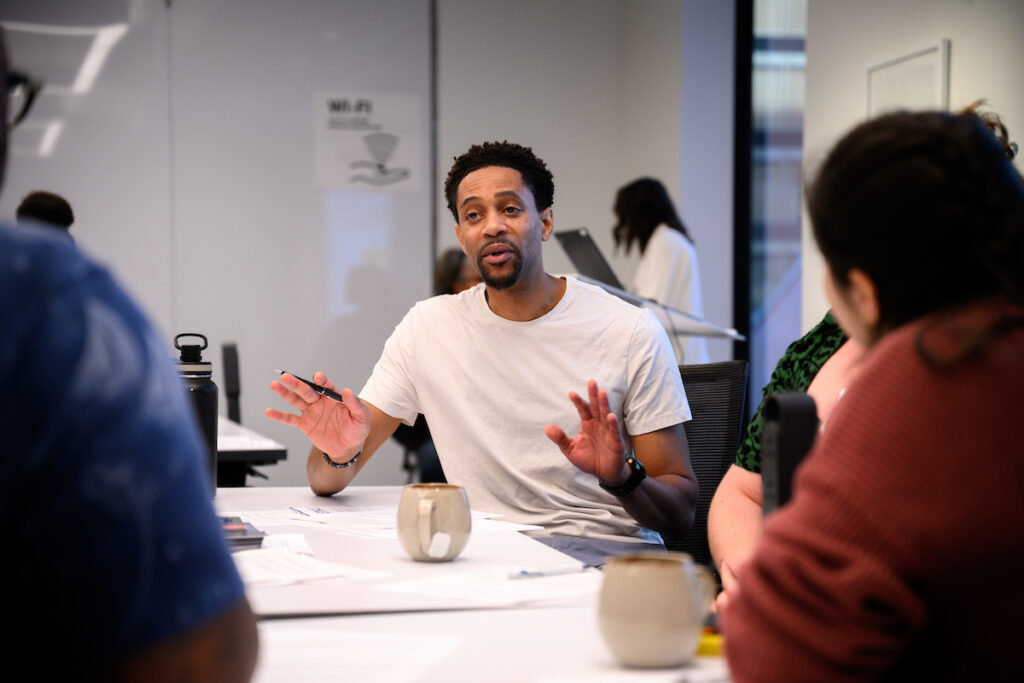
The breakout sessions, brimming with enthusiastic curiosity, complemented the speaker content perfectly. Curated activities led to thoughtful and lively discussions about what gun violence reporting is, what it could be, and how we can get there, together.
Academics, journalists, community organizers, and victims and survivors of gun violence pushed their chairs together, listened intently to each other’s experiences, then blended those experiences with the lessons they learned from the conference speakers.
“I loved that this conference split attendees into breakout groups to discuss topics in further depth and bounce ideas off of each other in a judgment-free environment, all with the mutual goal of improving our coverage and understandings of gun violence reporting,” journalist Jesse Fraga told us.
The final breakout session challenged participants to create a coverage plan for a story about a shooting that would easily risk lending itself to harmful reporting. This workshop, one attendee noted in their feedback survey, combined with the actionable lessons from Cheryl Thompson-Morton’s presentation, “left me feeling motivated and reassured me that it is possible to make real change to the crime beat.”
Another attendee wrote: “Having the breakout sessions and lots of time to unwind and mingle gave me the opportunity to have meaningful discussions about what survivors want to see from journalists, how city leaders can help play a role in better public safety coverage and how advocates have been working to move the needle.”
Back on the main stage, The Second Trauma documentary, followed by a panel discussion with documentary participants and producers, captivated. As one attendee remarked, it “put the entire conference into perspective [with] real-life experiences.”
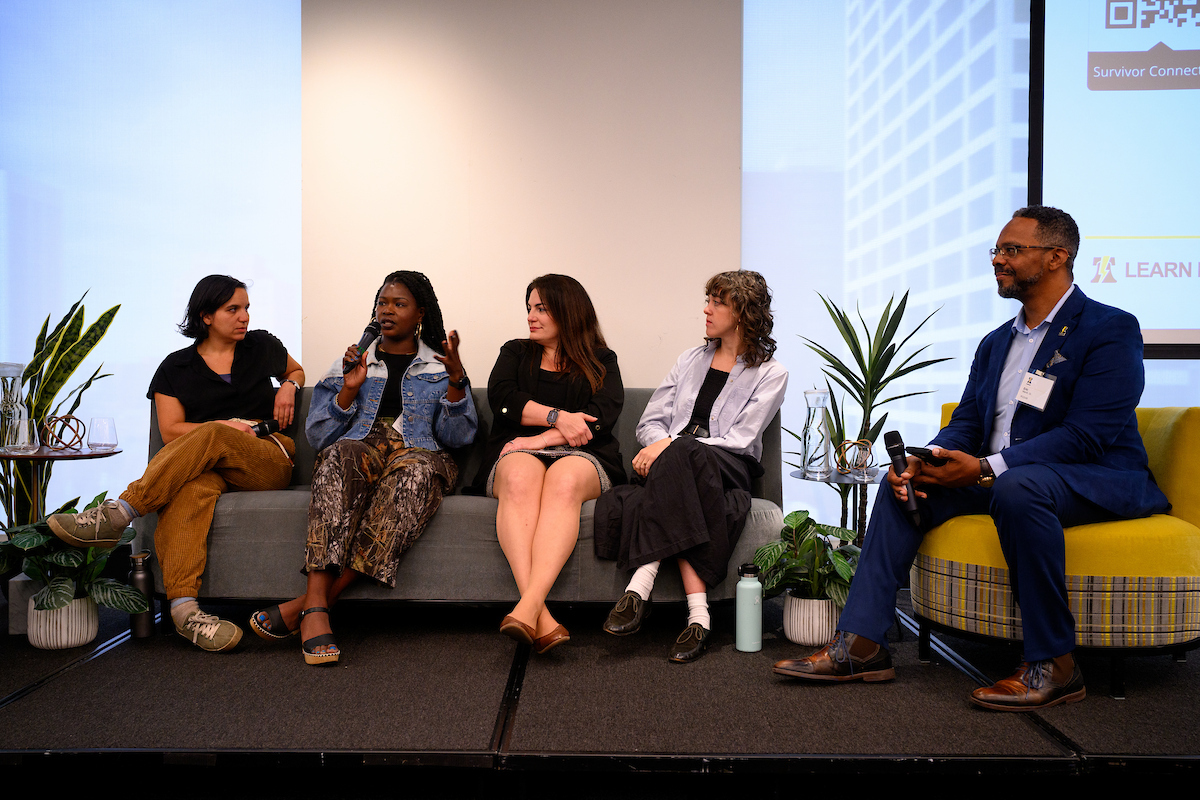
A final panel discussion with members of AGVR sparked a flurry of questions and this comment from one anonymous attendee: “I would like to take this time to thank everyone who put this together. I was a very biased person towards journalists due to being a family member of both victim and accuser. These workshops help me have an open mind about journalists covering gun violence and the openness some may have covering the stories when it comes to the Family suffering. I really appreciate the small groups because I also feel like it was my free therapy to state my biased opinions and for my opinions to be addressed without negative response.”
Following this final panel, journalist attendees flocked to AGVR leadership, eager to become members.
PARTICIPANT TESTIMONIALS
When communities feel as though the violence they experience is inevitable, change can feel impossible. The magic of our conference was that it not only sparked hope for a new path forward, but created the connections and provided the tools (including our Better Gun Violence Reporting Toolkit, which every participant received) for immediate change.
One journalist told us they planned to apply a public health framing to their stories of gun violence moving forward, along with trauma-informed practices, inclusive storytelling, and a focus on context and solutions. Another said they would be “making sure my stories are a resource and not a source of fear.”
“I took away so much!” wrote attendee Jenna Mayzouni. “I learned extremely helpful reporting techniques and frameworks that have fundamentally changed the way I tie together gun violence reporting and health reporting. I found hearing the stories of victims and co-victims so meaningful and it just gave me a lot of great material to walk away with and apply to my future work.”
From journalist Karen Fischer, we heard this: “I walked away with numerous ideas to pitch and connected with so many survivors and their families that are eager to tell their stories and work with journalists to extend the gun violence narrative beyond ‘X crime at X corner at X time.’ Journalists of all stripes are under pressure in these days, but incorporating more long-term or nuanced coverage into our work is a step towards healing for survivors, and reckoning for our society.”
A non-journalist wrote in their conference survey, “the value of cross-sector collaboration showed that addressing gun violence requires journalists, community leaders, and public health professionals working together.”
“I found the conference to be extremely helpful primarily because it brought people from all walks of life together to share their knowledge and ideas about gun violence and prevention,” one attendee wrote. “I learned a lot just from listening to the survivors, advocates, and city leadership.”
Another wrote that the conference “sparked new hope that not all media is sensationalized and influenced by partisan interests. It also enforced the belief that we as citizens can and should hold journalists and media to ethical standards that prioritizes community circumstances, mental health and morals, while still upholding journalistic principles and foundations of reporting.”
“This was an eye opener for me,” wrote one attendee. “I have a better appreciation for journalists in general and how they report the story in particular. Thank you.”
Wrote another: “Location was great. Food was exceptional. The new contacts made, priceless.”
INTERRUPTING THE NARRATIVE
With its endless reproduction of stories and discussions, America’s gun violence narrative is, in a word, prolific. It is so prolific that news consumers have been led to believe the inexhaustible scroll of violence they witness on their televisions, in their newspapers, and populating their social feeds is inevitable, when in fact, it is preventable.
For two days in Philadelphia, we changed that narrative alongside stakeholders from across the country, who then fanned out to their home states and their home countries to change the narrative further.
“Like one of the presenters said, reading a constant reel of crime news can make communities feel scared,” one attendee told us. “But reading about solutions can make them feel empowered and that’s a big step in the right direction.”
This was our first national gathering since our Better Gun Violence Reporting Summit six years ago. Since then, we have seen a growing number of gun violence reporters and gun violence prevention reporters emerging from our network across the country. Most recently, AGVR co-director Sammy Caiola took a new position reporting on gun violence for Chalkbeat Philadelphia, in partnership with The New York Times.
And we have no doubt that outcomes from this latest gathering will ripple for years to come.
Our PCGVR team concluded this conference bursting with ideas for future events and collaborations. But critically, we left with a reaffirmation of the intense hunger for this work, for these conversations and for the systemic change we can accomplish together.
And so, as we continue to support and guide the conference attendees from afar, we can’t wait to see what magic unfolds as we broaden our scope and gather together again.
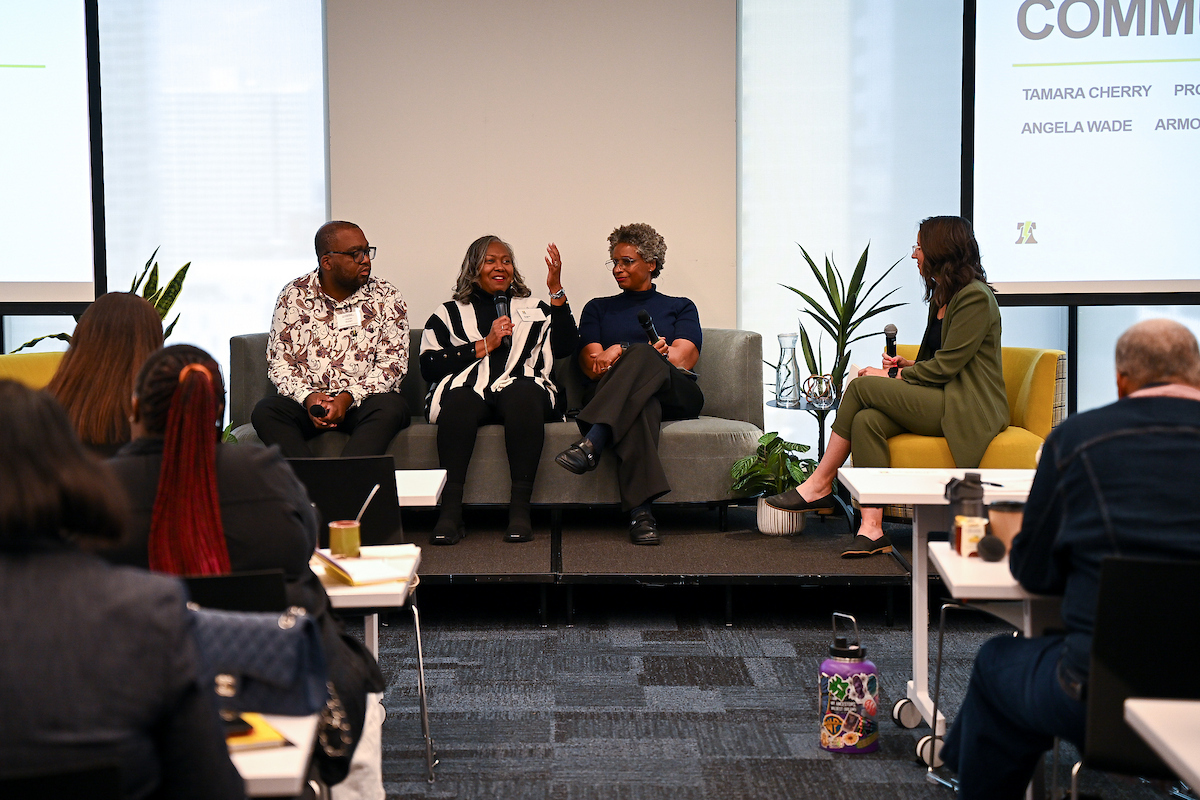
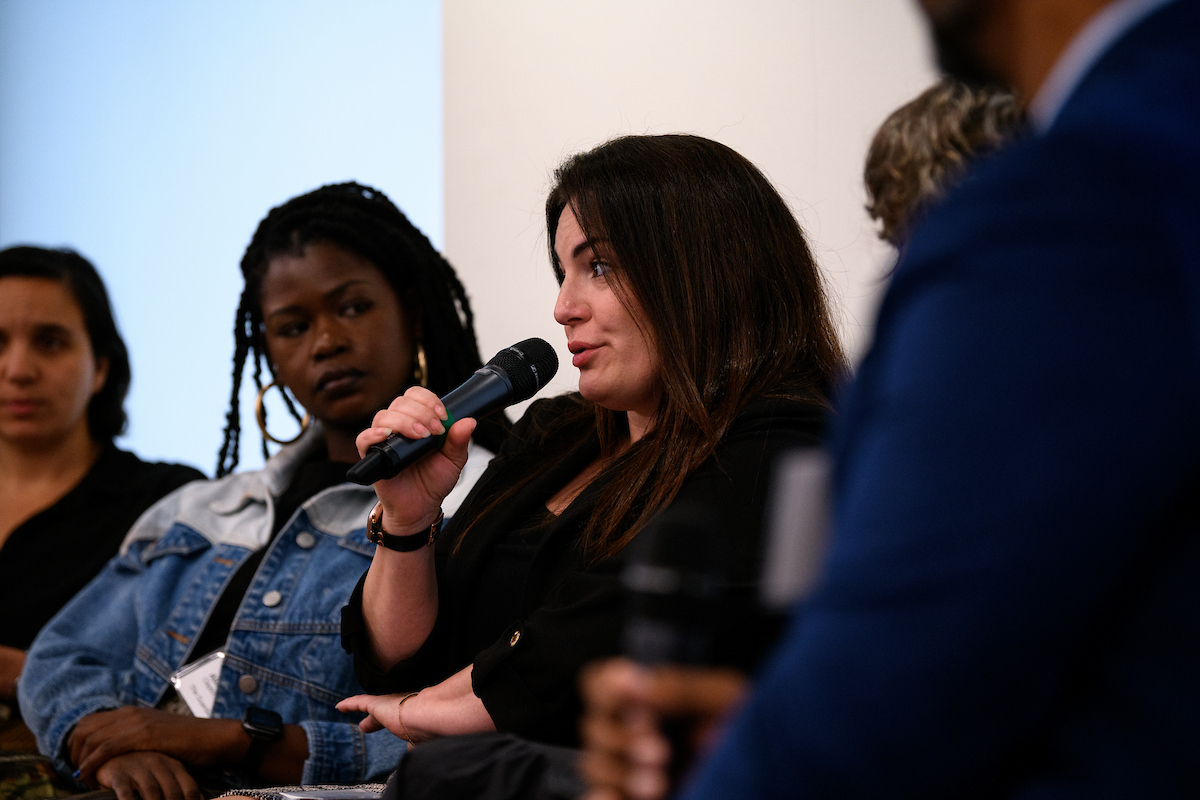
CONCLUDING PANEL: ASSOCIATION OF GUN VIOLENCE REPORTERS
PCGVR Director of Operations Eric Marsh, Sr., moderated this conversation with Association of Gun Violence Reporters Co-Directors Abené Clayton and Sammy Caiola and regional chapter leaders Jennifer Mascia and Paige Pfleger.
DIVE DEEPER: CONFERENCE AGENDA, SESSION INFO AND SPEAKER BIOS
What Now? Gun Violence Reporting in Unprecedented Times
OCTOBER 2-3, 2025 IN PHILADELPHIA
AGENDA
THURSDAY, OCTOBER 2
8AM-5PM
8:00 a.m. Breakfast
9:00 a.m. Welcome, Goals and Program Overview
• Tamara Cherry, journalist, author of The Trauma Beat and founder of Pickup Communications
Tamara Cherry is an author, journalist, and founder of Pickup Communications, a boutique consultancy that supports trauma survivors and relevant stakeholders. She spent the bulk of her career as an award-winning crime reporter in some of Canada’s largest newsrooms, including the Toronto Star, Toronto Sun, and CTV News Toronto. Her latest book, The Trauma Beat: A Case for Re-Thinking the Business of Bad News, was described in a Quill & Quire starred review as “a stunning work that should be required reading for journalism students, news reporters, true crime junkies, and anyone who wants to write narratives that heal, instead of harm.” Part-memoir, part-journalism, The Trauma Beat draws on the experiences of more than 100 trauma survivors across the U.S. and Canada — from homicides to traffic fatalities, sexual violence to mass violence — while exploring all the ways Tamara got things wrong as a crime reporter when she thought her very good intentions were good enough. The Trauma Beat podcast, hosted by Tamara, expands on these critical conversations. Tamara advocates for a creates trauma-informed storytelling from her home in Saskatchewan, Canada.
9:05 a.m. Preparing Yourself and Finding Support During the Conference
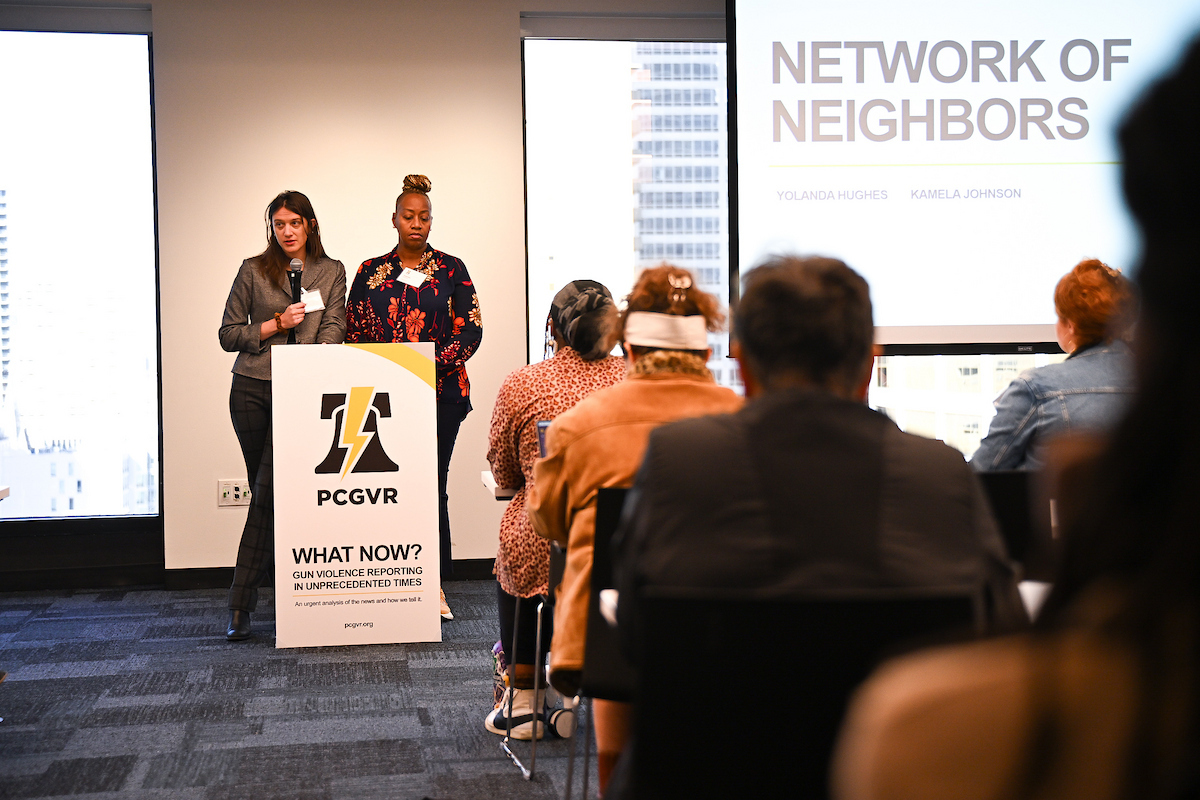
• Yolanda Hughes and Kamela Johnson, Network of Neighbors Trauma Response Team
Yolanda Hughes (MSW, MSH) and Kamela Johnson (LSW) run the Network of Neighbors Trauma Response Network: a free, community-directed trauma response network for Philadelphia’s neighborhoods, schools, workplaces, city departments–or any group of people in Philadelphia with a common affiliation. Over the past eight years they have supported hundreds of communities and thousands of individuals impacted by overwhelmingly stressful or potentially traumatic experiences.
9:15 a.m. Answering the Call for Better Gun Violence Reporting
• Abené Clayton, Reporter for the Guns and Lies in America project at The Guardian and co-director of the Association of Gun Violence Reporters
Abené Clayton has been covering gun violence for the past six years. In that time, she has built a relationship with PCGVR that has only proven to be more valuable as the years have passed. Right now, between the deployment of the National Guard troops in cities like Washington and New Orleans, and a seemingly endless stream of high profile shootings, Abené is proving that smart, nuanced reporting on the dynamics of gun violence is critical.
Abené Clayton is a reporter in the Guardian’s California office and is currently the lead reporter on the newspaper’s “Guns & Lies in America” series, which launched in 2019 and focuses on the impacts of and solutions to community violence. She started covering gun violence in her hometown of Richmond, California, and is now based in Los Angeles, where she covers the evolving dynamic of gun violence through the people closest to the issue.
9:25 a.m. Welcome to the Workshops
• Prof. Jennifer Midberry, Temple University Department of Journalism, partner in PCGVR multidisciplinary research collaborative and former photojournalist.
9:40 a.m. Workshop: What is the Value of Gun Violence Reporting?
• Multiple facilitators
Participants will discuss how typical news coverage of gun violence can be both beneficial and harmful to news audiences and to the people directly affected by the epidemic. This session will also be an opportunity for participants to share ideas about how to improve such reporting.
10:25 a.m. Coffee Break
10:40 a.m. What Now? Going Beyond Trauma-informed and Cultural Awareness to Trauma-responsive and Cultural Healing
• Keynote address: Dr. H. Jean Wright II, Executive Deputy Commissioner, New York City Department of Health and Mental Hygiene.
Keynote speaker Dr. H. Jean Wright will focus on acknowledging the efforts by journalists, researchers, behavioral health professionals, and others who engage regularly with people from marginalized communities, and challenge attendees to add to those efforts by implementing lessons learned through their education and experiences in their respective fields of work. The take-home message is that to simply learn the language of trauma, recovery, or meaningful supports is only partially impactful if one does not continue to do the hard work of actually recognizing the value of listening to the people and community in which you find yourself engaged.
Dr. H. Jean Wright II, PsyD. MDiv, was appointed as New York City’s Department of Health and Mental Hygiene’s Executive Deputy Commissioner of the Division of Mental Hygiene, which Oversees the Agency’s Work on Mental Health, Alcohol and Drug Use Prevention, Health Promotion for Justice-Impacted Populations, Care and Treatment and Children Youth and Families, Among Other Bureaus on August 23, 2024.
Wright is a clinical and forensic psychologist who brings two decades of transformational leadership experience in behavioral health in government, private practice, rehabilitation, and academia to his new role at the Health Department.
During his time in Philadelphia, Dr. Wright was the Deputy Commissioner for DBHIDS, and the Director for the Behavioral Health and Justice Division at DBHIDS where he helped develop and oversee programs and initiatives to support people returning from state psychiatric hospitalization, state penitentiary, and county jail. This work involved alliance-building across sectors, implementing trauma-focused practices to deliver behavioral health care to target populations, as well as trainings of service providers.
He is an Adjunct Professor at Temple University in the Department of Psychology and has served on a variety of boards, including The Mayor’s Task Force on Reintegration and The Philadelphia Board of Mental Health.
Dr. Wright earned a bachelor’s degree in psychology, English literature, and cultural studies from The Ohio State University, a master’s in divinity from the United Lutheran Seminary, and a doctorate in psychology with focus in clinical and forensic psychology from Wright State University. He continued with post-doctoral work at Wilberforce University and Cincinnati VA Medical Center.
11:10 The Second Trauma Screening
• This 25-minute documentary shows the effects of episodic gun violence reporting on survivors and co-victims. The documentary offers solutions on how we can do better to shift the narrative to a public health focus and give power back to the community to advocate for their safety.
11:40 The Second Trauma Panel Discussion
• Prof. Yvonne Latty, Director of the Logan Center for Urban Investigative Reporting at Temple University and producer and director of the film.
• Oronde McClain, PCGVR Survivor Connection director, Stoneleigh Foundation Emerging Leader Fellow, co-producer and host of film, and a gun violence survivor.
• Angela Wade and Armond James, who appear in the film.
Prof. Yvonne Latty is a professor at Temple University’s Klein College of Media and Communication and the Director of the Logan Center for Urban Investigative Reporting. The Center specializes in multimedia community-based investigative journalism grounded in empathy and focused on solutions. The center’s work has received dozens of local, regional and national awards, including three Edward R. Murrow Awards. Yvonne began her career in newspapers and is the author of two books highlighting veterans’ stories. She has also produced award-winning documentaries and podcasts. Prior to joining Temple, she was a journalism professor and multimedia graduate director at NYU’s Arthur L. Carter Journalism Institute.
Oronde McClain is a Philadelphia-based gun violence survivor, mental health advocate, and nationally recognized speaker on trauma recovery and survivor empowerment. At the age of 10, McClain was shot in the head in a drive-by shooting. He was clinically dead for over two minutes, spent weeks in a coma, and had to relearn how to walk, talk, and live with partial paralysis and the lasting effects of PTSD. Today, McClain serves as the Survivor Connection Director at the Philadelphia Center for Gun Violence Reporting, where he leads Survivor Connection, a pioneering program training and linking survivors with journalists to reshape how media covers gun violence.
Armond James is a dynamic, award-winning educator, consultant, and instructional leader who has dedicated over a decade to reshaping the future of education. As the founder of Empyrean Teacher Club Consulting, Armond empowers educators to transform their classrooms, cultivate elite teaching practices, and drive measurable academic growth. Honored with the prestigious 2024 Lindback Distinguished Teaching Award and featured in the Philadelphia Inquirer, Armond’s leadership and expertise have elevated students, schools, and communities. His career is driven by a simple but powerful belief: students deserve teachers who inspire excellence, build confidence, and prepare them to win at life.
Angela Wade is a dedicated psychiatric registered nurse with over 25 years of experience, driven by a profound personal journey as a co-victim of gun violence. On December 7, 2019, she tragically lost her son, Joseph Emmanuel Daniels III, which inspired her to create JEDlll Inc., a 501(c)(3) organization dedicated to supporting children aged 11-17 who are grappling with grief and loss. JEDlll Inc. focuses on mentorship, mental health and wellness, gun violence prevention, and offers basketball programs to empower youth in their healing process. I am in the process of writing a book that my son requested two weeks before he was murdered. This life altering process has been very difficult to navigate, but through prayer, great faith, and having a strong will have allowed me to turn pain into purpose.
12:15 p.m. Lunch
1:20 p.m. Trauma-Informed Journalism Practices
• Sammy Caiola, Special Projects Reporter at the Kensington Voice in Philadelphia, co-director of the Association of Gun Violence Reporters, former gun violence prevention reporter at WHYY public radio in Philadelphia and Ochberg Fellow, Global Center for Journalism and Trauma, formerly the Dart Center
It is necessary for journalists to engage with survivors and co-victims of gun violence carefully to avoid retraumatizing them. This presentation will offer practical strategies for interacting with subjects in a manner that prioritizes their wellbeing throughout the newsgathering and publishing processes.
Sammy Caiola is a Philadelphia-based journalist covering police accountability, sexual violence and mental health/substance use for Kensington Voice. She most recently served as the first gun violence prevention reporter for WHYY News, where she co-hosted a national Edward R. Murrow award-winning podcast about stop and frisk. She is passionate about bringing trauma-informed journalism and community engagement into newsrooms.
2:10 p.m. Framing Theory, Solutions Journalism, & Peace Journalism
• Prof. Jennifer Midberry, Temple University Department of Journalism, partner in PCGVR multidisciplinary research collaborative and former photojournalist.
Framing theory is one way to understand how differing news narratives can shape audience attitudes about social issues like gun violence. Solutions Journalism and Peace Journalism are two approaches that aim to report on difficult social issues more constructively. These three concepts inform PCGVR’s Gun Violence Prevention Reporting.
Dr. Jennifer Midberry is an associate professor in the Journalism Department of Temple University’s Klein College of Media and Communication. Her research program explores how to improve journalism to create more ethical reporting on marginalized groups and to more effectively evoke audience empathy and engagement with important social issues. As a former photojournalist and photo editor, her projects are intended to have practical insights for journalists in addition to advancing visual communication and journalism theory. Previous to academia, she worked as a visual journalist for organizations such as The Philadelphia Daily News, the Associated Press, AOL News, and ABC News.
3:00 p.m. Coffee break
3:15 p.m. Public Health Framing, Prevention, & Gun Violence Prevention Reporting
• Dr. Jessica Beard, PCGVR Director or Research, Stoneleigh Foundation Fellow and Temple University Hospital trauma surgeon.
News coverage of gun violence often inadvertently perpetuates stereotypical narratives about the people and communities most impacted. Typical coverage focuses on individual episodes of gun violence and often lacks an explanation of what causes it and what could be done to prevent it. These reporting practices can further stigmatize marginalized communities and promote fatalism around gun violence prevention. By changing the way gun violence is covered, reporters can take an active role in minimizing harm to injured people, communities, and society—and even make an important contribution toward preventing gun violence.
Dr. Jessica Beard is a trauma surgeon and public health researcher at Temple University Hospital, where cares for gun violence survivors every day. At Temple, she serves as the Interim Trauma Program Medical Director and Director of Trauma Research. Dr. Beard is also the Director of Research for The Philadelphia Center for Gun Violence Reporting and a Stoneleigh Foundation Fellow. She holds a BA from Columbia University, MD from Yale School of Medicine, and MPH from University of California-Berkeley. She completed general surgery residency at the University of California-San Francisco and surgical critical care fellowship at the University of Pennsylvania. Her novel research focuses on gun violence epidemiology, media framing of gun violence, and measuring harmful gun violence reporting. Through this work, she hopes to support journalists to tell stories of gun violence that are complex, humanistic, trauma-informed and focused on prevention. Her multidisciplinary research with PCGVR is currently funded by the National Institutes of Health.
4:15 p.m. Workshop: Reflecting on New Ideas
• Multiple facilitators
In the final activity of the day, participants will reflect on which ideas in the presentations they found most beneficial. Through small-group discussions, people will have the chance to exchange thoughts and to collectively evaluate PCGVR’s Gun Violence Prevention Reporting approach.
5:00 p.m. Reception
Sponsored by Knight Foundation
• Dr. Jessica Beard, PCGVR Director of Research
• Oronde McClain, PCGVR Survivor Connection Director
• Eric Marsh, PCGVR Director of Operations
• Jim MacMillan, PCGVR Founder and Director
• Sammy Caiola, AGVR co-director
• Abené Clayton, AGVR co-director
6:00 p.m. Evening on your own. Enjoy Philadelphia. Optional: AGVR Meetup to be announced
FRIDAY, OCTOBER 3 AT CONVENE CITY VIEW
30 SOUTH 17TH STREET, PHILADELPHIA
8AM-1PM
8:00 a.m. Breakfast
9:00 a.m. From Theory to Practice
• Cheryl Thompson-Morton, Head of Advisory Programs, Lenfest Institute for Journalism, adjunct faculty member at the Poynter Institute and formerly the Black Media Initiative Director at the Center for Community Media at the Craig Newmark Graduate School of Journalism at CUNY.
Implementing trauma-informed journalism and gun violence prevention reporting calls for the adoption of modified newsgathering and production methods. This session will present strategies and practical approaches for incorporating these theories into newsrooms.
Cheryl Thompson-Morton is the Head of Advisory Programs at the Lenfest Institute for Journalism, where she leads efforts to support news organizations in developing strategies for financial sustainability and audience growth. She is also an adjunct faculty member at the Poynter Institute, where she co-leads the Transforming Crime Coverage to Public Safety Journalism program. This change management course helps newsrooms rethink their approach to crime reporting and develop new policies to cover public safety in more effective and responsible ways.
Prior to her current role, Cheryl led the Black Media Initiative at the Center for Community Media at the Craig Newmark Graduate School of Journalism at CUNY, designing programs to support Black-owned newsrooms through research, training, and networking opportunities. She also previously worked at the Lenfest Institute for Journalism, where she developed initiatives to strengthen the news ecosystem and support journalists of color. In her free time, Cheryl and her husband run BellMax Electric, tackling business challenges together and keeping the lights on—literally and figuratively.
9:50 a.m. Workshop: Gun Violence Prevention Reporting Plan
• Multiple facilitators
This is your chance to get started with gun violence prevention reporting, whether you are a journalist or not. Participants will work in small groups to draft plans for covering a hypothetical shooting, incorporating the concepts and practical approaches presented throughout the conference.
10:45 a.m. Coffee Break
11:00 a.m. Panel: Association of Gun Violence Reporters
• Sammy Caiola, Special Projects Reporter at the Kensington Voice in Philadelphia, former gun violence prevention reporter at WHYY and fellow at the Global Center for Journalism and Trauma
• Abené Clayton, Reporter for the Guns and Lies in America project at The Guardian
• Jennifer Mascia, founding staff member and senior news writer at The Trace
• Paige Pfleger, Senior Criminal Justice Reporter at WPLN News, Nashville Public Radio
• Moderator: Eric Marsh, PCGVR Director of Operations
Abené Clayton is a reporter in the Guardian’s California office and is currently the lead reporter on the newspaper’s “Guns & Lies in America” series, which launched in 2019 and focuses on the impacts of and solutions to community violence. She started covering gun violence in her hometown of Richmond, California, and is now based in Los Angeles, where she covers the evolving dynamic of gun violence through the people closest to the issue.
Sammy Caiola is a Philadelphia-based journalist covering police accountability, sexual violence and mental health/substance use for Kensington Voice. She most recently served as the first gun violence prevention reporter for WHYY News, where she co-hosted a national Edward R. Murrow award-winning podcast about stop and frisk. She is passionate about bringing trauma-informed journalism and community engagement into newsrooms.
Jennifer Mascia is a senior news writer and founding staffer at The Trace, the only newsroom in America exclusively covering gun violence, which launched in 2015. She is also a contributor to CNN’s Guns in America team. She previously reported on gun violence for The New York Times. She is a graduate of Columbia Journalism School and CUNY Hunter College and the author of a memoir, Never Tell Our Business to Strangers, which details her investigation into her late father’s criminal past.
Paige Pfleger is the senior criminal justice reporter for WPLN News, Nashville Public Radio, and the southern chapter leader for the Association of Gun Violence Reporters. She has investigated gun dispossession, domestic violence and juvenile justice as a fellow with ProPublica’s Local Reporting network. Her investigative work has resulted in policy proposals at Tennessee’s state capitol and has been recognized by IRE and the Livingston Awards.
Eric Marsh, Sr.: A community leader, supporter, activist, outreach and engagement specialist, and advocate for healthy fathers and families for more than 20 years, Eric currently serves as the Director of Operations for the Philadelphia Center for Gun Violence Reporting. His previous role was Manager of Community Engagement for WHYY overseeing a portfolio of outreach and engagement efforts that includes the News & Information Community Exchange (NICE), a mutual-aid journalism collaborative for grassroots news and information content creators. He has also served as the Director of Union and Community Engagement for Councilmember At-Large Kendra Brooks for the city of Philadelphia, building relationships with citizens, constituents, stakeholders, union members and their leadership across the city to help build a more equitable and just city for all.
11:50 a.m. Closing Comments
• Dr. Jessica Beard, PCGVR Director of Research
• Oronde McClain, PCGVR Survivor Connection Director
• Eric Marsh, PCGVR Director of Operations
• Jim MacMillan, PCGVR Founder and Director
• Sammy Caiola, AGVR co-director
• Abené Clayton, AGVR co-director
THANK YOU TO EVERYONE WHO PARTICIPATED
Nearly 120 journalists, researchers, experts from the survivor community and others came from 16 states, as well as the District of Columbia, Canada and Mexico.
THANK YOU TO OUR CONFERENCE FACULTY AND STAFF
• Dr. Jessica Beard • Sammy Caiola • Tamara Cherry • Abené Clayton • Yolanda Hughes • Armond James • Kamela Johnson • Prof. Yvonne Latty • Jim MacMillan • Eric Marsh, Sr. • Jennifer Mascia • Oronde McClain • Prof. Jennifer Midberry • Paige Pfleger • Cheryl Thompson-Morton • Angela Wade • Beth Warshaw • Dr. H. Jean Wright II • BG Coaching and Consulting • The 5 Shorts Project • Convene City View • CultureTrust Greater Philadelphia • Kriston Jae Bethel Photography • Network of Neighbors • Pickup Communications • Witty Gritty
THANK YOU TO OUR CONFERENCE SPONSORS
• The Lenfest Institute for Journalism’s Every Voice, Every Vote Coalition • PhillySafe • Knight Foundation • The Blue Shield of California Foundation • The Medill School of Journalism
THANK YOU TO OUR KEY SUPPORTERS
• The Stoneleigh Foundation • Independence Public Media Foundation • Spring Point Partners • Knight Foundation • The William Penn Foundation • HFGF • The Lenfest Institute for Journalism
IN CASE YOU MISSED IT: